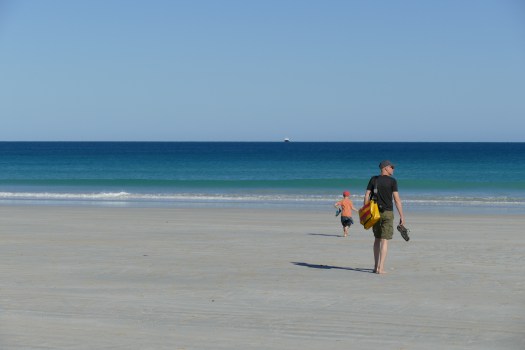
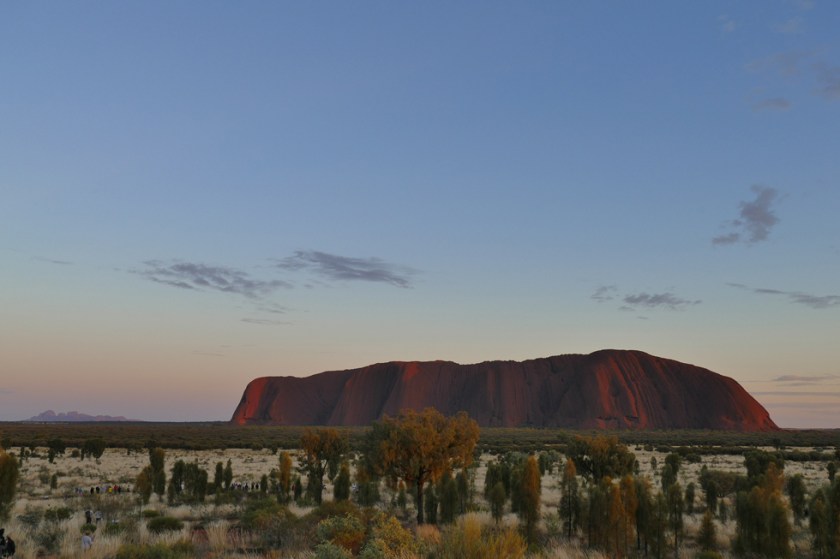
 Travelling in the Red Centre to places like West MacDonnell Ranges, Uluru and Kata Tjuta came almost as a little shock to us. After many days in remote outback areas, having the road and campsites to ourselves, we were suddenly met by lots of travellers from Asia and Europe in their big motorhomes, crowded campsites and parking lots at the different sights. It’s easy to understand though why so many choose to travel here – it’s here in the Red Centre where you find the most known, most photographed and most iconic attraction of Australia: the Uluru. Or just the Rock, as the Aussies often call it.
But before we got that far, we spent some days in the West MacDonnell Ranges, visiting Glen Helen, Ormiston and Redbank Gorge. At Ochre Pits we went to see the colourful cliffs where Aboriginal people obtain different coloured ochres. Aboriginal people use ochres for ritual body decorations, and the ochres are also considered to have magical properties and are used as medicine. We continued to Gosse Bluff, a spectacular crater that formed when a comet crashed to earth some 140 million years ago. We were quite impressed with the dimension, the diameter of the crater being about 5 kilometres.
In Hermannsburg we visited the historic mission settlement, first settled by German Lutheran Missionaries in 1877. Hard to imagine what life was like in those days, as we wandered about the whitewashed walls of the church, school and other restored houses.

We didn’t feel like staying at this Aboriginal community and drove on to Palm Valley, an outstanding 4WD destination. There we stayed at the most beautiful campsite, did some great walks and relaxed in these beautiful surroundings.


Next stop – one of the must-sees in the Red Centre – was Watarranka National Park with Kings Canyon. There is only one campsite in the area, which means they can pretty much do as they like. We felt it was quite a tourist trap, expensive and not the best service. We had hoped to get some food at their little supermarket, but the fridge in the shop was out of order, so they didn’t get any supplies. Of course, the guests are welcome at their restaurant… Luckily, we had just enough food to make it through the next couple of days, but I really missed some fresh fruit and veggies!
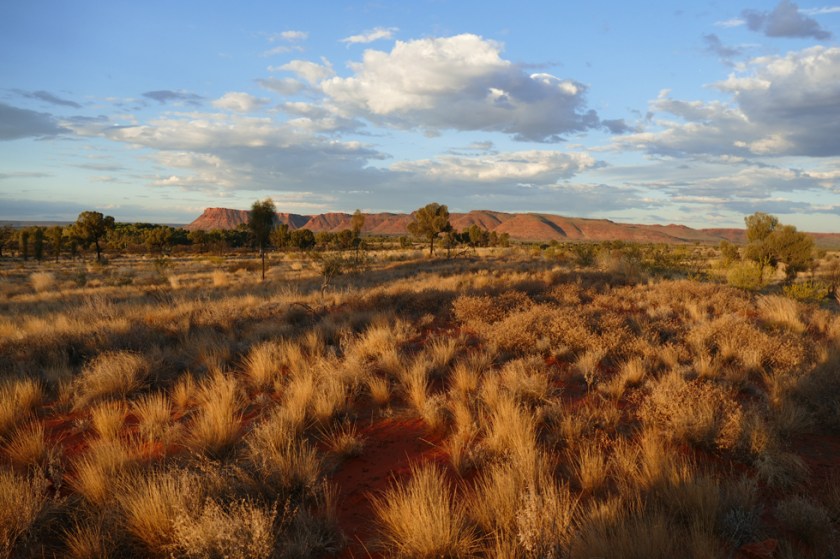
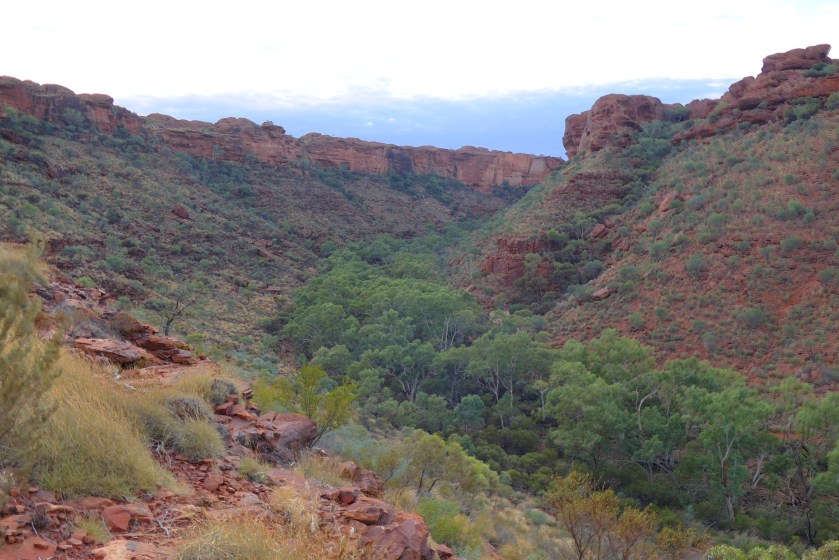
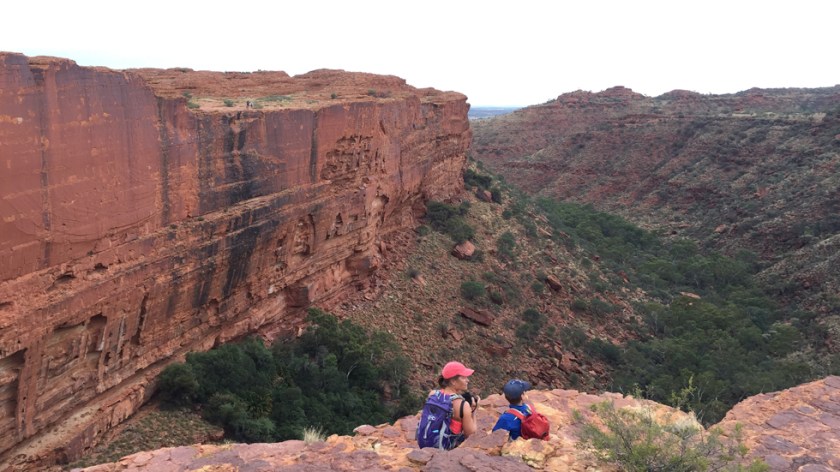
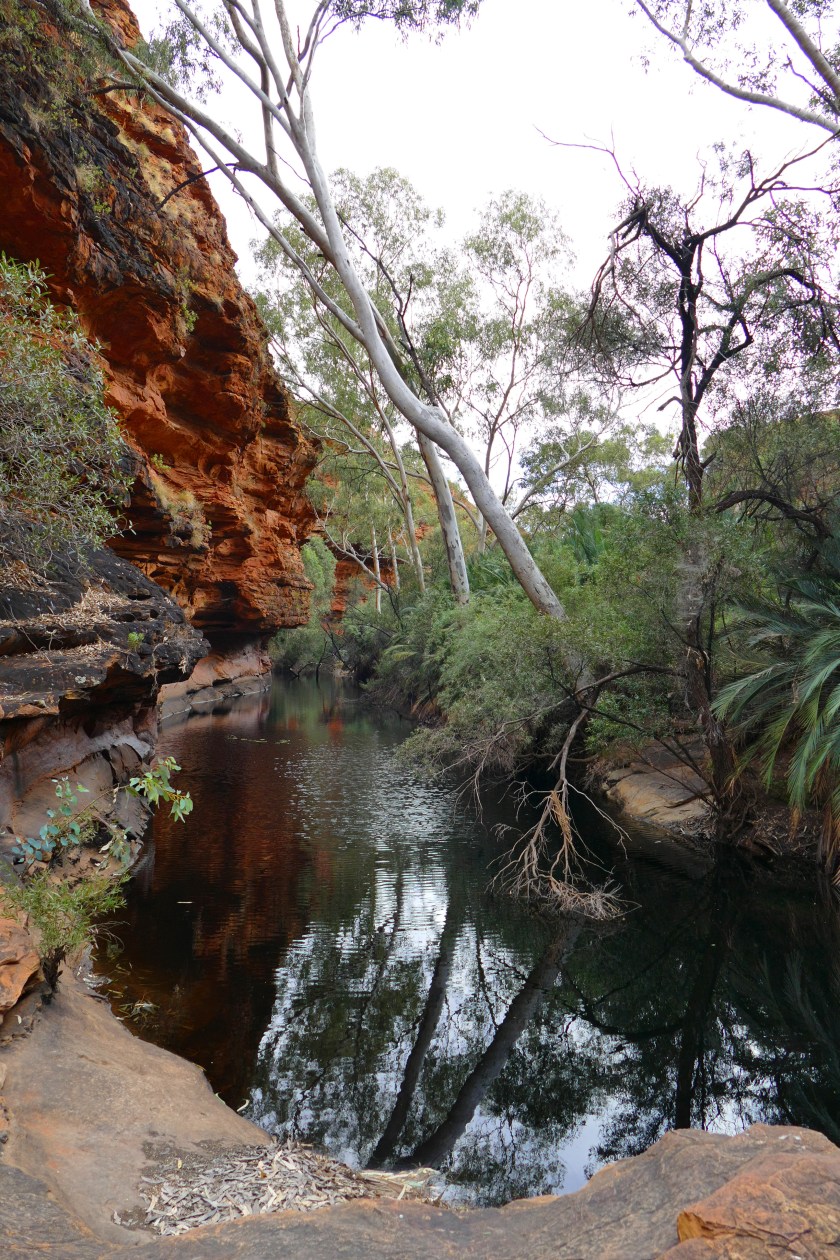
One morning we did the stunning Kings Canyon Rim Walk, starting with a steep climb up tough rocky steps to the rim of the canyon, from where we enjoyed fantastic views. We walked through the massive weathered domes of the so-called ‘Lost City’ and admired the soaring red cliffs rising 100 metres above the surrounding plains.

On our way to Yulara, the tourist town next to Uluru, we stopped at Karrke Aboriginal Cultural Centre, where we did a one hour crash course in Aboriginal culture. We watched spear and boomerang displays, learned about bush tucker and bush medicine, local languages and dot painting.


The small town of Yulara was established in the eighties to cater for the ever increasing numbers of tourists. We were very positively surprised, not only by the town itself, but most important by the fact that the town seems to be run mainly by the indigenous population. There is information about their culture everywhere, signs are written in English and their own language, indigenous rangers do tours telling about their history. When travelling to Uluru and Kata Tjuta, it is very important in my eyes to know about the significance of the creation story. I will not go too much into details, but I would like to tell you this: The land was created by the creation ancestors. In their travels they left marks in the land and made laws for the indigenous people to keep and live by. The details of their activities and travels have been taught in stories, songs dances and ceremonies. When the Aboriginal people travel across the land, they can see the physical evidence of the activities of the ancestral beings and use them as landmarks to find their way. Some of these places are sacred. That can mean that we as foreigners are not allowed to go there, or sometimes should not take pictures. I find it easy to respect that and wouldn’t ignore their wishes. I find it on the other hand very hard to understand why still so many people chose to climb the Uluru. The Anangu people ask very clearly that we respect their wishes, culture and law and don’t climb it. Unfortunately, it is not illegal yet (it will be from next year) and many people see it as their last chance to climb it.
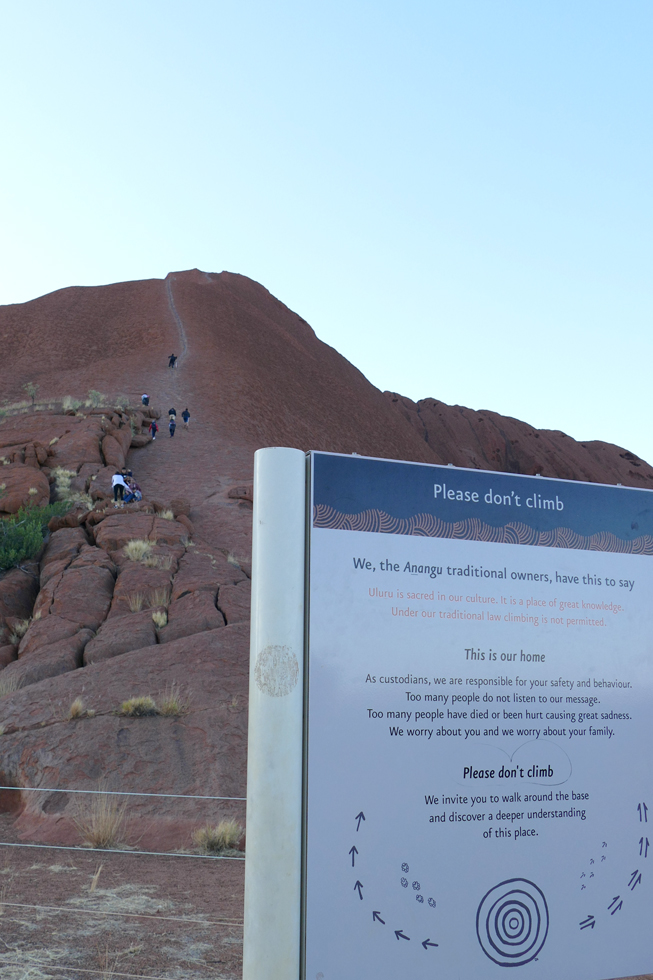
We did the base walk instead, which was quite beautiful as well. At first glance, Uluru may appear as one large smooth monolith but up close we saw numerous interesting rock formations, gullies, caves and crevices. As we walked around it we tried to imagine the fact that we were not just looking at rocks and walls; we were walking in the middle of a creation story the Anangu people tell.


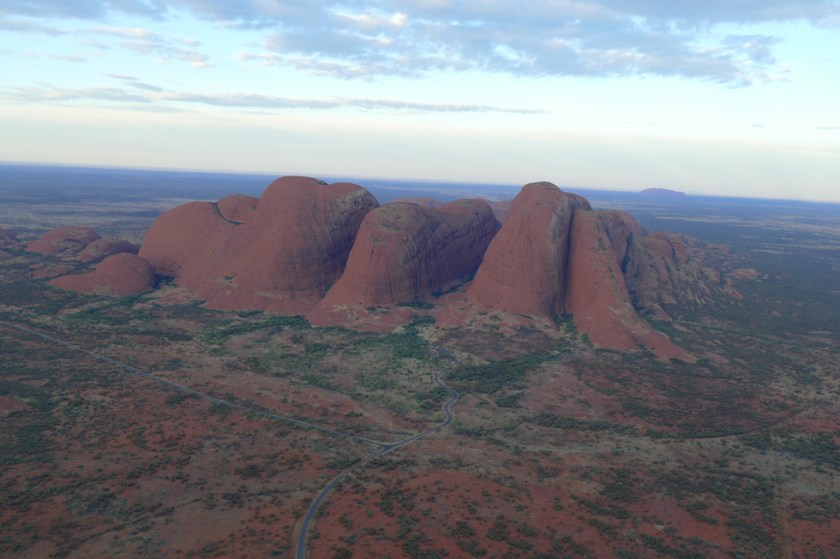
Even more spectacular was the ‘Valley of the Winds Walk’ through the Kata Tjutas, which means ‘many heads’. It includes 36 domes of different sizes, the highest one rising 546 metres above ground level, which is 198 metres more than Uluru. It was quite amazing to walk through this landscape of red rock, lush green valleys and stunning views.


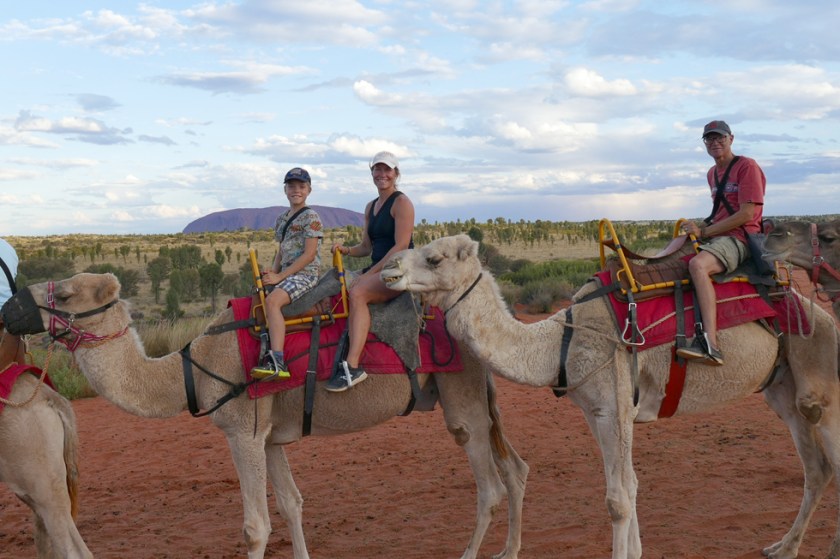
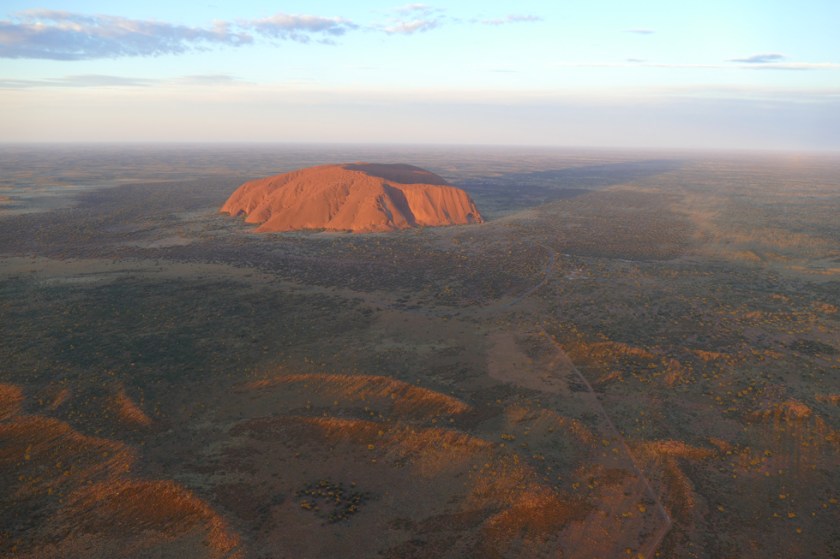
There is plenty to do in Yulara, exclusive outdoor dinners, dot-painting courses, balloon flights etc. We chose to ride on camels one evening and went on an unforgettable helicopter flight the other. Everything costs a lot of money, but I guess it is only once in a lifetime that we’re here, so we didn’t want to miss out on something. We’ll soon enough get back to our pretty simple and modest lifestyle.



 RCD on Walkabout
So simple, honest and magical!
LikeLiked by 1 person