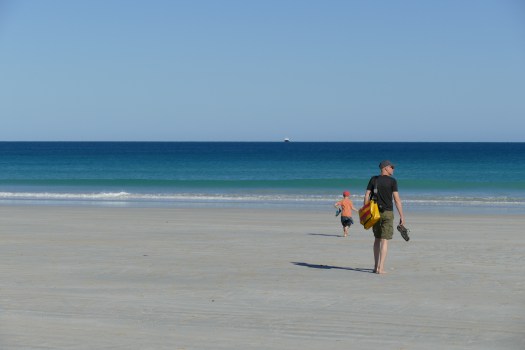
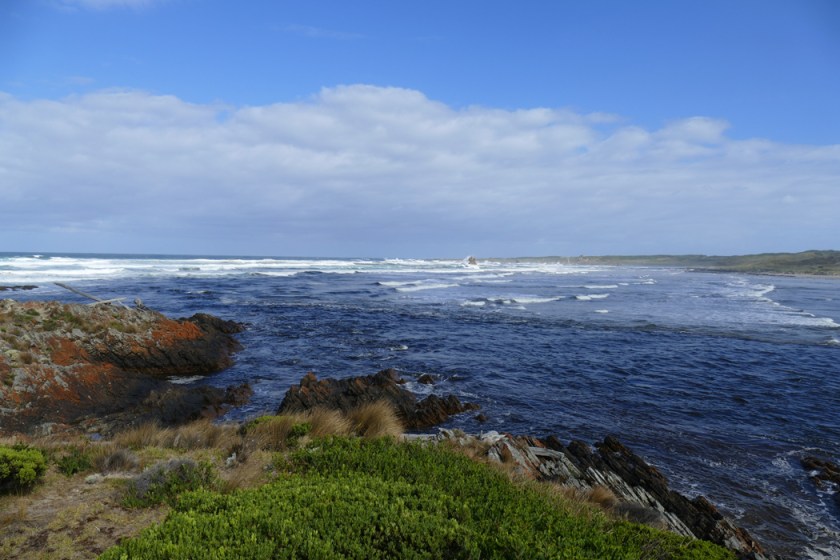
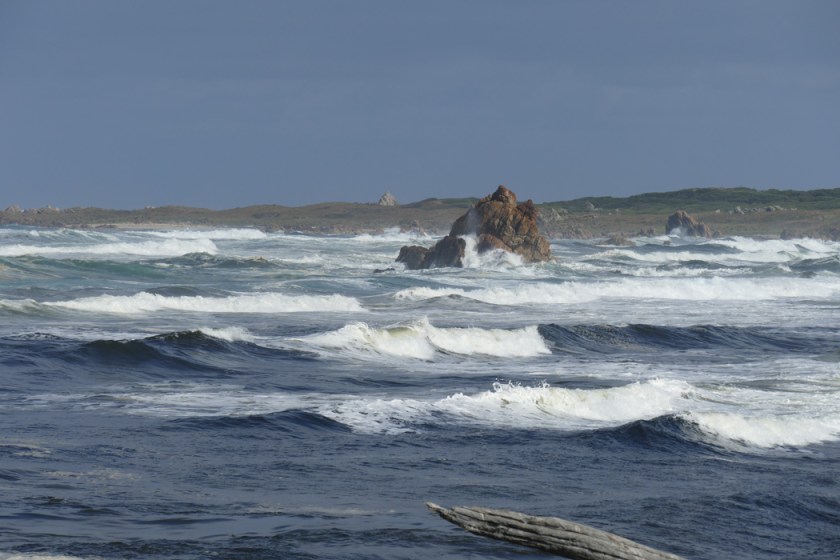
After a couple of days in Stanley we headed west to the very end of Tasmania. There’s quite a few famous surf spots like Green Point and Bluff Hill Point. We saw the waves, wild and powerful, but no surfers in sight. I would hardly dare getting into the water until my knees, so the thought of surfing here is quite frightening for me (apart from the fact that I’m not a surfer at all…). But we loved strolling along the beach, watching the ocean and feeling the remoteness of the place.
Then we left the coast and drove into the Tarkine. The Tarkine is an ancient landscape of rainforests and rugged button-grass plains, said to be the most diverse wilderness area in Tasmania. It’s a globally significant ecosystem that encompasses the largest intact area of temperate rainforest in the southern hemisphere. We followed the Tarkine Drive to the East, stopped here and there, doing short walks into the forest. Without the marked path, you would be completely lost within a few minutes. The forest is extremely dense, and there is no point for orientation. We loved all the shades of green, all the tree-trunks overgrown with moss, fungus in different shapes and colours, and birds calling. Often, we heard the Kookaburra, an absolutely incredible noise (if you’re not familiar with it, make sure you listen to one on Youtube!).
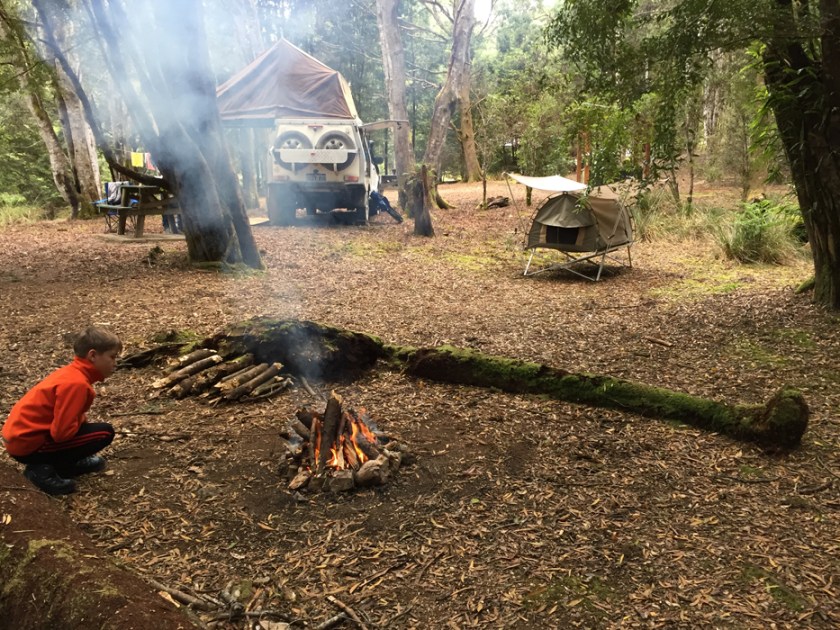
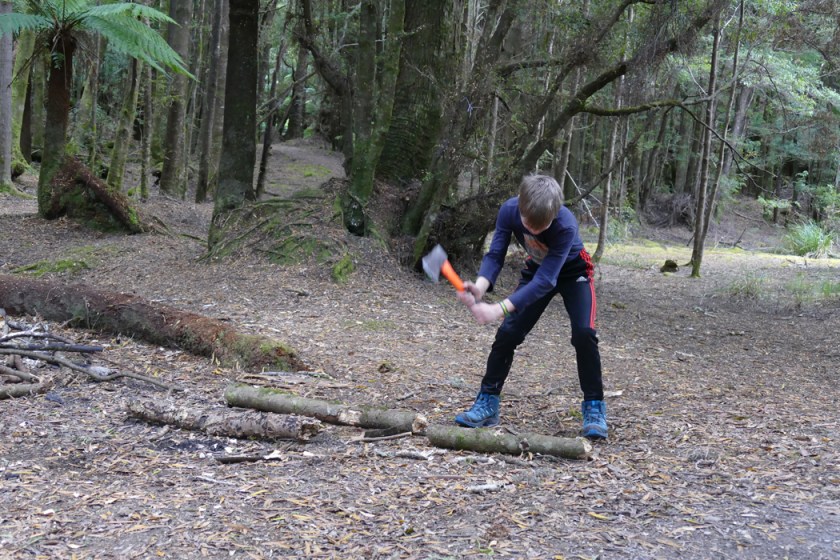
We put up our camp for the night in the wilderness, made a campfire and were so happy being here and experiencing this. It was chilly but the fire warmed us. We didn’t have a bathroom but I could wash myself in the close rivulet (Dag and Robin thought it was too cold). And in the morning it was drizzling, but we have rain jackets. Still it was beautiful, we had all we needed and the warm coffee tasted even better.


Next on our trip we drove along the Western Explorer, or ‘Road to Nowhere’, as it was called before. It is supposed to be Tasmania’s most excitingly remote road journey, though since its upgrading to a wide gravel road its now a well-established means of traversing this rugged part of Tasmania. The views over the buttongrass wilderness of the Arthur Pieman Conservation Area are splendid.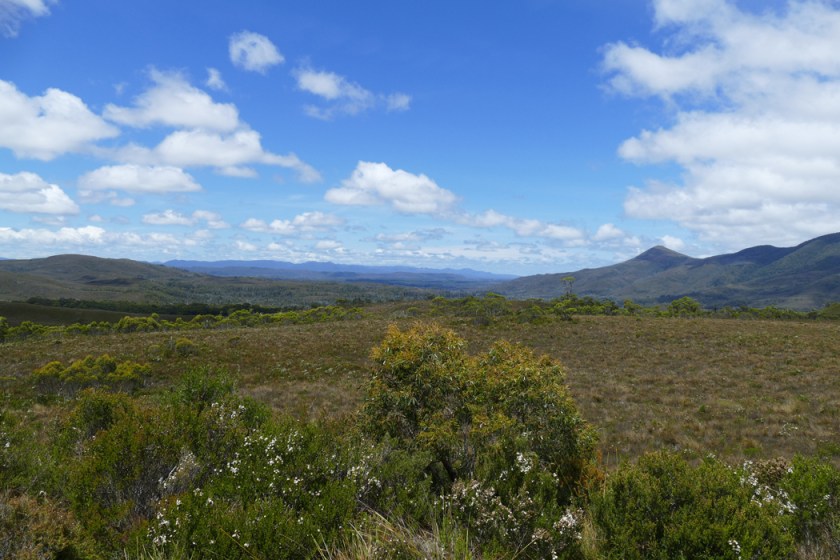
One night we spent by the beach in Granville Harbour. The afternoon was warm and the ocean wild with waves up to 4 metres. We made a campfire but were unlucky with the wood we had collected – it smoked more than it burned. After a while we put in our Australian cooking pot filled with meat and cut-up vegetables. It was the first time we tried this – and it turned out that we need some more practice… The meat was good, but the vegetables were pretty black. Not enough liquid I guess. Luckily, we had some other food in reserve.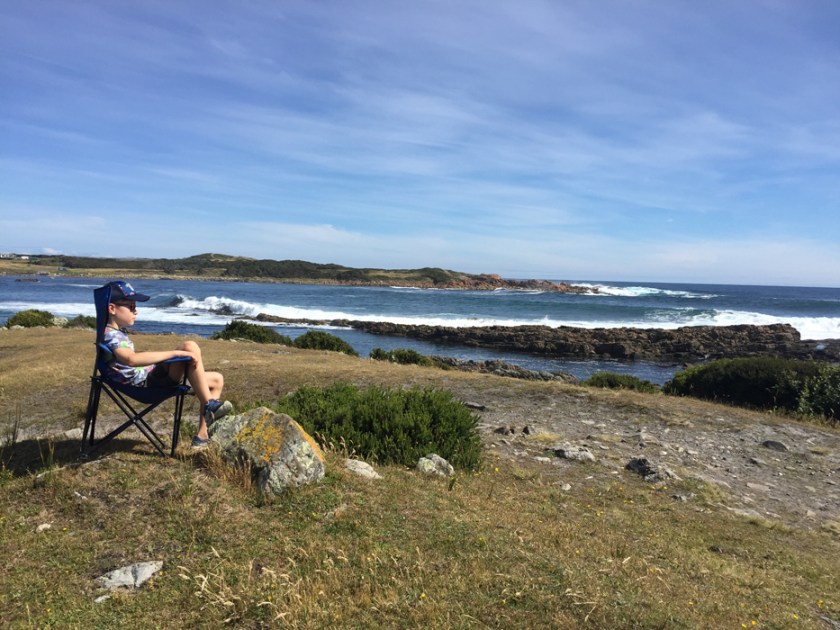
That night turned out to be quite a challenge: at midnight, I woke up for the first time because of the strong wind shaking my swag. The storm got stronger and stronger, and some hours later we decided to take down our roof tent, worried that it could get damaged. Robin and I spent the rest of the night together in the swag, listening to the howling wind. Dag tried to get some sleep in the car. Next time we’ll try to find a spot which is a little less exposed!
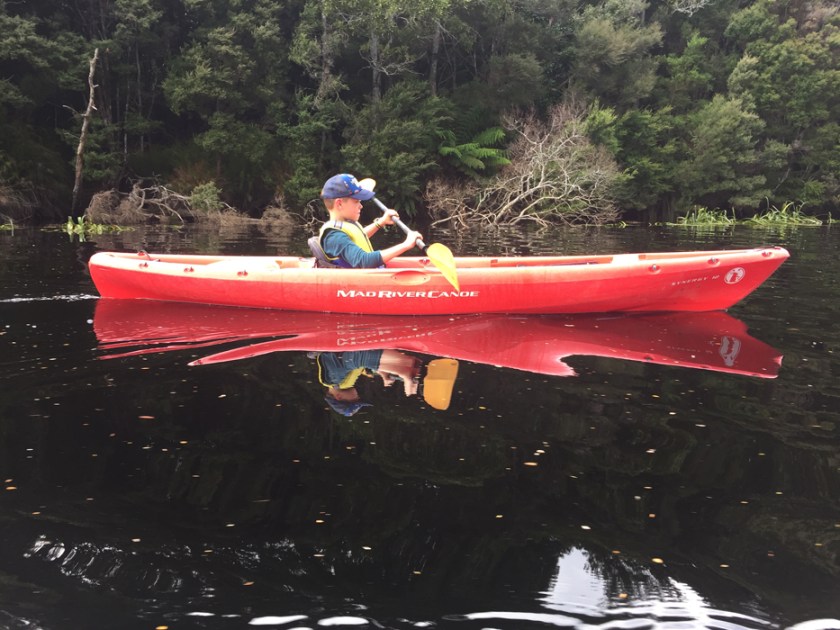
Good thing we had booked the next 2 nights on the little campground in Corinna, a totally remote place on the riverbanks of the Pieman River, a humming town during the gold-rush, now more or less abandoned. Here we didn’t just enjoy a good dinner at the little restaurant, we also learned the following: Corinna means ‘Young Tasmanian Tiger’ in the local Aboriginal language. Pretty cool name I must say!
From here we we’ll continue southwards along the west coast. After many days in remote areas, what we need now is a camping site with washing machines. We’ll find that in Strahan, where we also can stock up with food and diesel and publish this blog post.

 RCD on Walkabout
Bildene tar pusten av meg. Nydelig. Herlig å se Robin kose seg. For en opplevelse..
Giga klem
LikeLike
Så hyggelig med hilsenene dine, Jasmina 😘
LikeLike
Liebe chline tasmanische Tiger! Lässig zum mitverfolge was ihr mached. Es richtigs Abentür! Va cool dass es au Herusforderige gitt, dass ihr mit de Natur läbed mit allne Vor- und Nachteil wo das bringt. Wind, Wätter, dusse choche… tolls Lerne für de Robin und ganz sicher es fantastischs Erläbnis au für eu, nur scho kein Ziitdruck z’ha. Gönn es eu vo ganzem Herze! Aber vermisse eu au…
Ganz liebi Grüess
LikeLike
Danke für din liebe Gruess! Ja, ois gahts würklich guet, au wänn de Robin gern echli warmers Wätter hetti. Da in Tasmanien isch es halt sehr wächselhaft und au relativ chüel. Aber d’Landschaft isch fantastisch.
Alles Liebe vo ois drü!
LikeLike
Hi Corina! We are loving the posts. I feel inspired every time I read them. 🙂
I got curious with the Kookaburra and went to youtube to checked it out…Constance loved it and made me repeat it again and again! Eheh!
A big hug to you, Dag and Robin. We miss you all already 🙂
LikeLike
Hei Ana og takk for hyggelig hilsen! Håper alt går bra med dere! Og at alt er under kontroll på jobben 🙂 Hils alle masse fra oss!
LikeLike