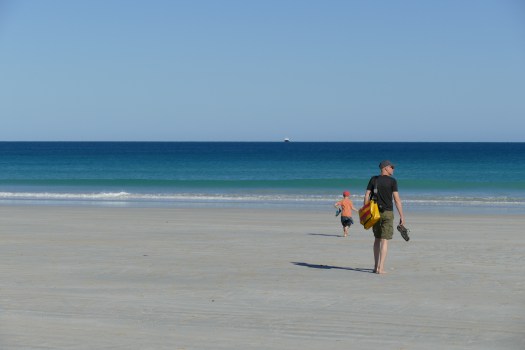
We get a lot of questions from concerned friends about the dangers of travelling through Australia. Everybody seems to know about the fact that many of the world’s deadliest creatures are home in Australia.
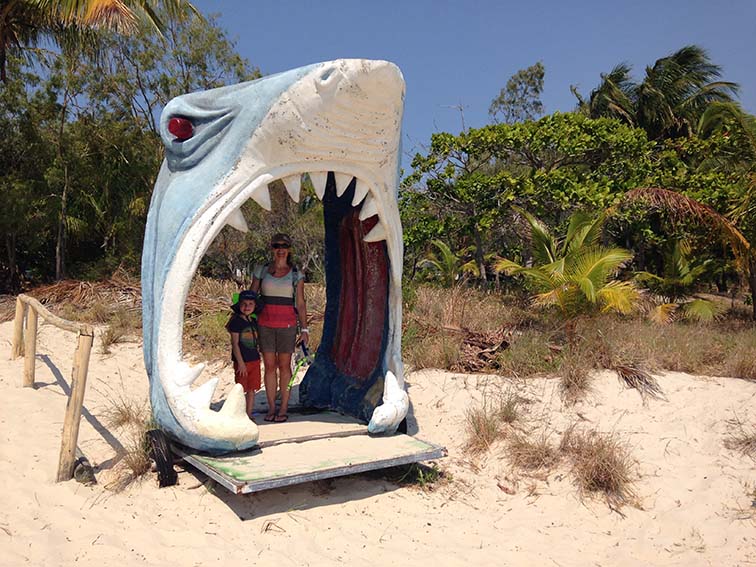
It is time to help dispel the myth that all Australian wildlife is out to kill us!
We will be travelling through many different climate zones from the driest desert to tropical forest. Spiders will be everywhere, so I start with them.
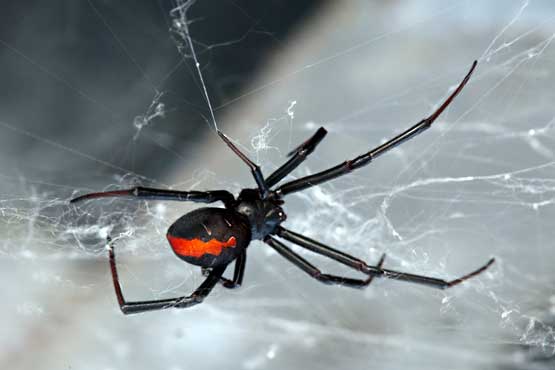
Of all the spiders (approximately 840 different species), only two are deadly: the Redback and the Funnel Web Spider. On our first trip, we saw a Redback in Grampians National Park, but since it was sitting quietly in its web it wasn’t any scary. It is much more likely that we’ll encounter a Huntsman Spider (again!), which can be traumatizing due to its size (up to 15 centimeters across the legs) and hairy, fat legs and body. But those are not poisonous, a bite just causes local swelling and a little bit of pain.
To sum it up: bites from spiders are incredibly rare, and fatal bites are rarer still. There have been no recorded deaths from spiders since anti-venom was introduced in the 1970’s.
Wherever we travel, there will be snakes, though they are very uncommon to see. We saw snakes on both of our trips, but only while driving. Like most of the animals in Australia, they fear us humans. Since they can feel the vibrations in the ground, it is wise to walk with a firm step. We will avoid walking through tall grass in flip-flops and we’ll make as much noise as possible while walking to scare them away.
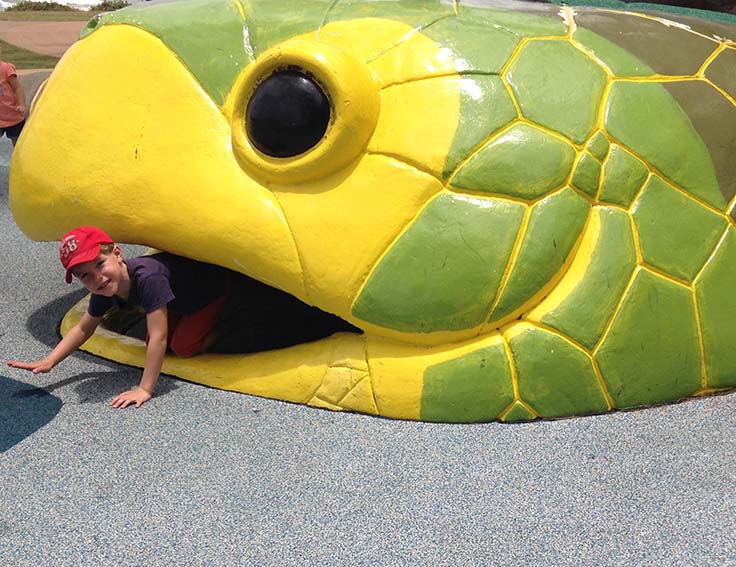
In the very rare case that one is bitten, anti-venom is widely available and highly effective if you receive it quickly (within a few hours of the bite). So that’s why we have bought a satellite telephone and will be able to call for help even in remote areas without mobile phone coverage. While waiting, we know what to do: place a firm (not too tight) bandage around the wound and immobilize the limb. Important also to remember that the wound is not supposed to be washed, as the venom is used to identify the type of snake, in order to provide the correct anti-venom.
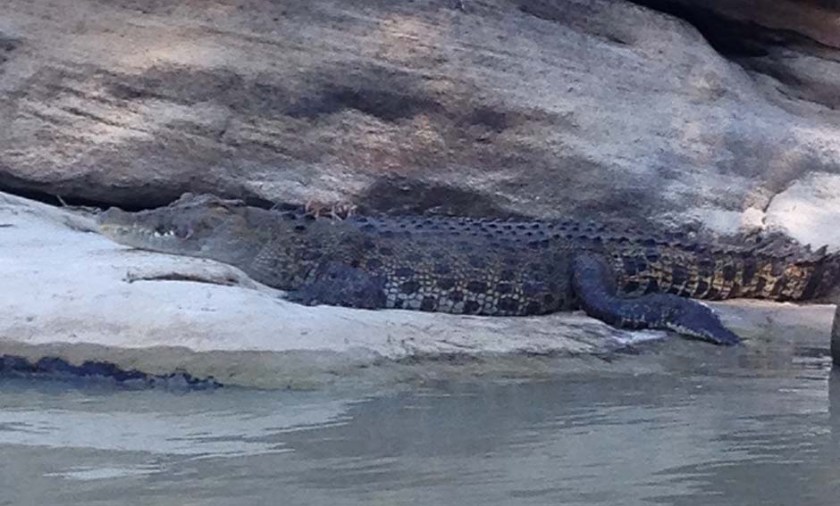
Saltwater crocodiles inhabit the Northern coastline of Australia, where we’ll spend the last couple of months on our trip (Northern Queensland). They are the only animals in Australia that are actively looking to kill you, they literally eat anything that moves. The best advice is to heed warning signs and to seek information from locals. If there is a sign that warns “Crocodiles inhabit these waters”, we will neither swim there, nor walk too close to the water’s edge.
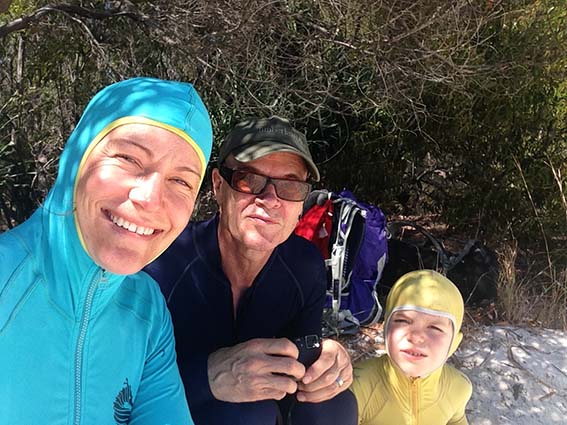
There are a few marine creatures apart from sharks (we’re not surfers, so chances are tiny that we would be attacked by one) that we want to avoid: Box jellyfish and the so-called Irukandji jellyfish. They are in tropical waters from November to May so we won’t be swimming in the ocean at this time of the year (we’ll reach the Tropics in May). Alternatively, we can get into a very fancy stinger suit, as we did in the Whitsunday Islands during our first trip.
Other dangerous animals like the Blue Ringed Octopus, Stonefish, Cone Snail and Stingrays have only killed a handful of people in recorded history, so I am quite relaxed about those.
While you have got a lot of useful information about all the exciting animals we’ll be surrounded by, me on the other hand have come one step forward with my preparations. As you might have understood, spiders are not really my favorite animals, at least not the big ones. As a part of my preparations I’ve been to Oslo Reptile Park and held a Tarantella. My friend Anja (she’s a doctor) explained me that this kind of exposure therapy is called ‘Flooding’, a psychotherapeutic method for overcoming phobias. Anyway, my main goal is not to lose control next time I find myself face to face with one of these lovely species. Wish me luck…

 RCD on Walkabout
I was worried when I realized that you were going to the wild, but not as close as I did when I read your blog about how much these dangerous creatures actually exist there. You are my hero
LikeLiked by 1 person