Our way home

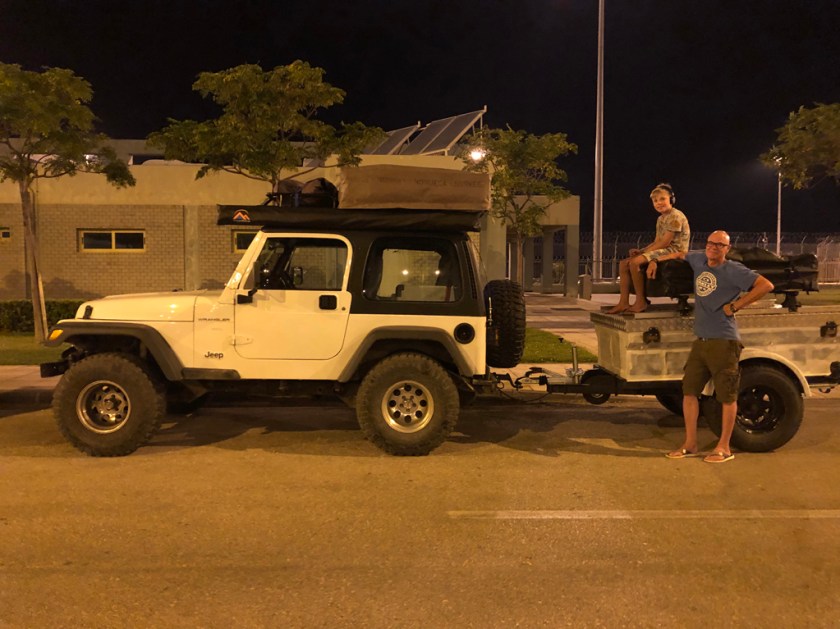
And suddenly it is time to start our way home. We enjoy a last swim at the beach together with my parents, have lunch and then slowly but surely pack our stuff. It is only a two hours drive from Kyparissia to Patras in the northern Peloponnese. Here we are going to board the ferry to Venice. It is supposed to leave at 1 a.m. though we hope that we might be allowed to go onboard a little earlier. After a wonderful last dinner in a small taverna on the coast just before Patras, we are at the ferry terminal around 10 p.m. Getting our boarding passes we’re also being told that embarking starts one hour later.At the port in Patras We hang around on the parking until 11 and are allowed through the gate, neither car nor trailer being checked. On the other side is another large parking just next to the quay where the boat is supposed to land. But there is no boat in sight yet. We wait, and wait, and wait, getting more and more tired. Finally, at 1 p.m. the ferry Asterion II arrives. An endless row of cars and trucks disembark, which seems to take ages. Until we’re in our cabin, it is passed 3 in the morning.Asterion II
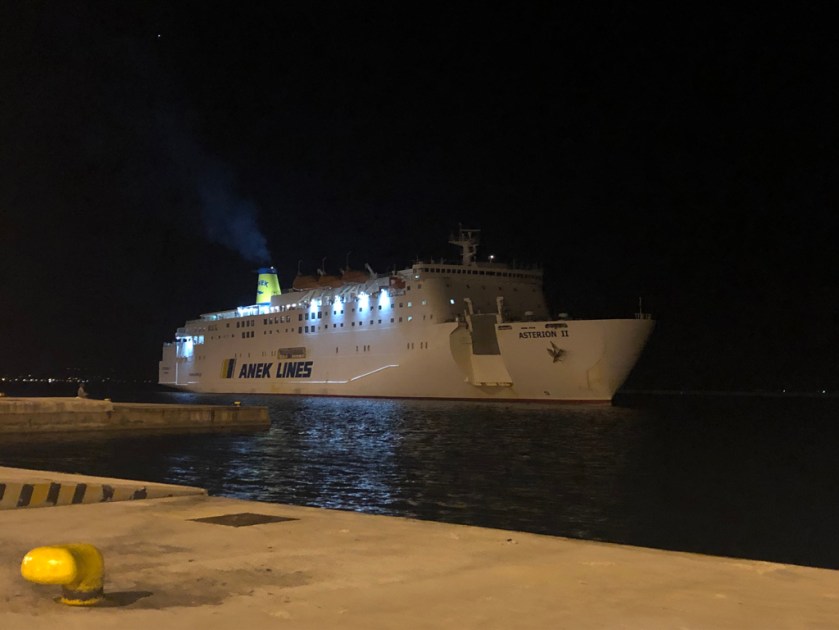
The ferry is more than thirty years old and worn down, but our cabin is huge and very comfortable. We never figure out the air-condition though, since the signs on the dashboard are in Chinese… After a good night sleep, we enjoy a beautiful day mainly on deck, first passing the Greek, then the Albanian coast where we were driving earlier on our trip.
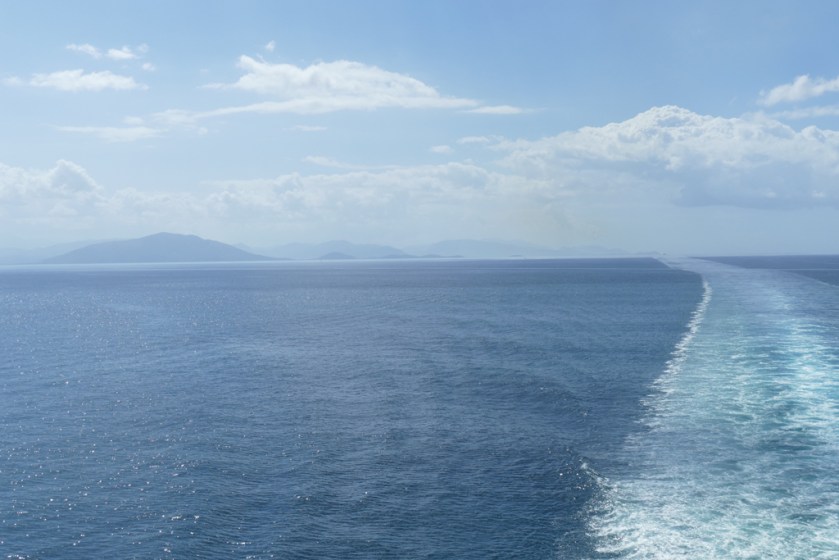
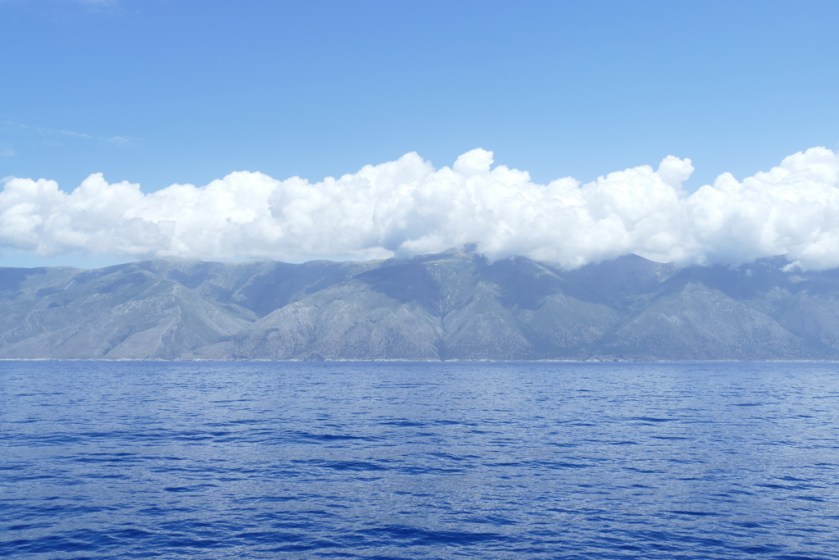
Leaving Greece
Leaving Greece
The Albanian coast
The Albanian Coast

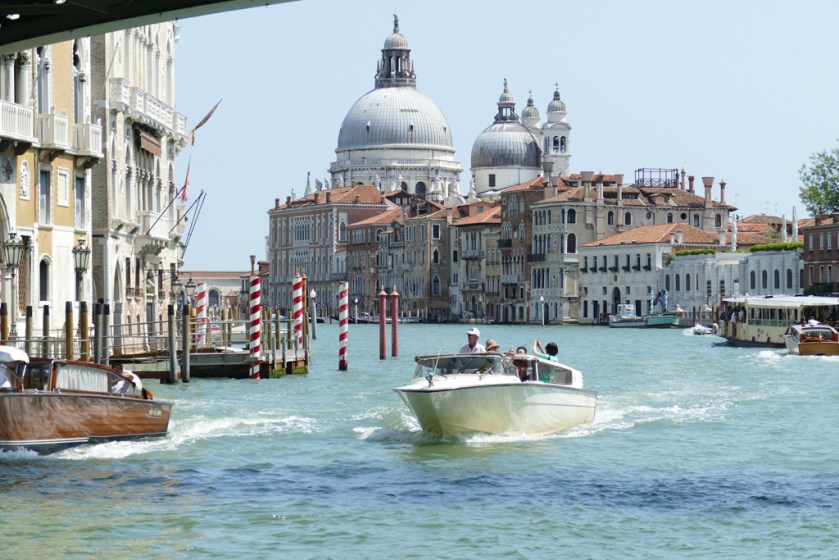
I love this way of travelling and it evokes good memories of holidays in my youth. We spend another night on board before we reach Venice next morning. Again, it takes its time until we finally drive on land. Leaving our car at Tronchetto, the big public parking at the outskirts of Venice, we take the Vaporetto line 2 to San Marco, passing through the Canale Grande. Both Dag and I have been in Venice numerous times, but it is Robin’s first time. GondoleCanale GrandeThere’s no better way to see Venice for the first time than following Canale Grande and its beautiful buildings, most of which date from the 13th to the 18th century. The facades of these palazzos tell a story of noble Venetian families, demonstrate their welfare and power.
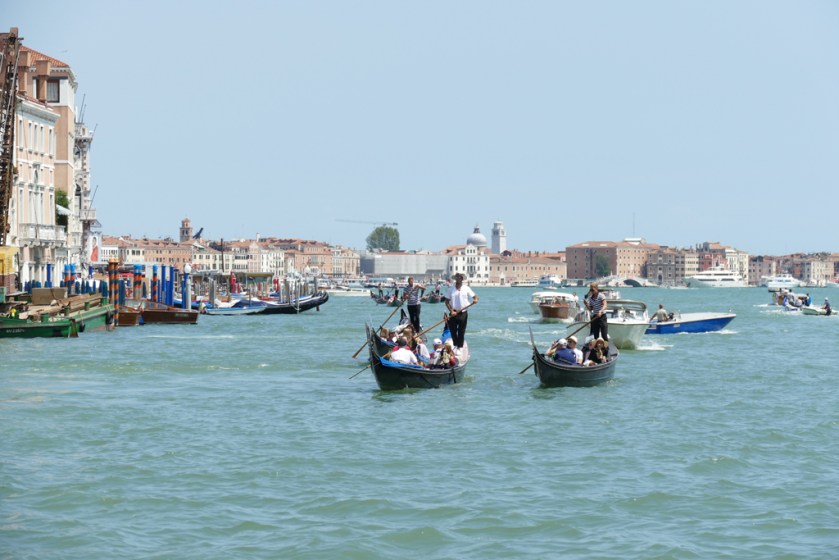
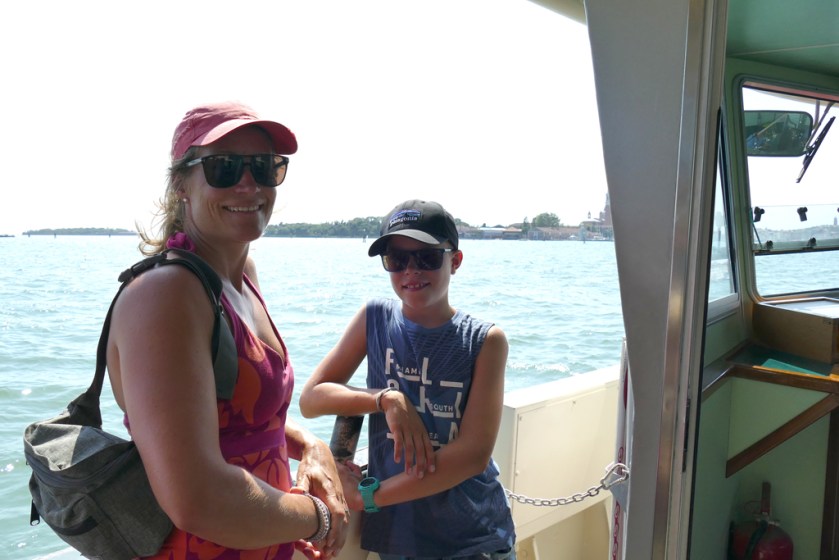
Vaporetto nr 2
On the vaporetto 2

We get off at Piazza San Marco and have a quick look at the square, the basilica and the Doge’s palace. Thousands of tourists, mainly in large groups, and temperatures around 35 degrees, make it difficult to enjoy the beauty of the city, especially for Robin. We go and have lunch instead and then return to the car the same way as we came. We’ll have to come back another time, preferably outside Venice’s peak season.San Marco
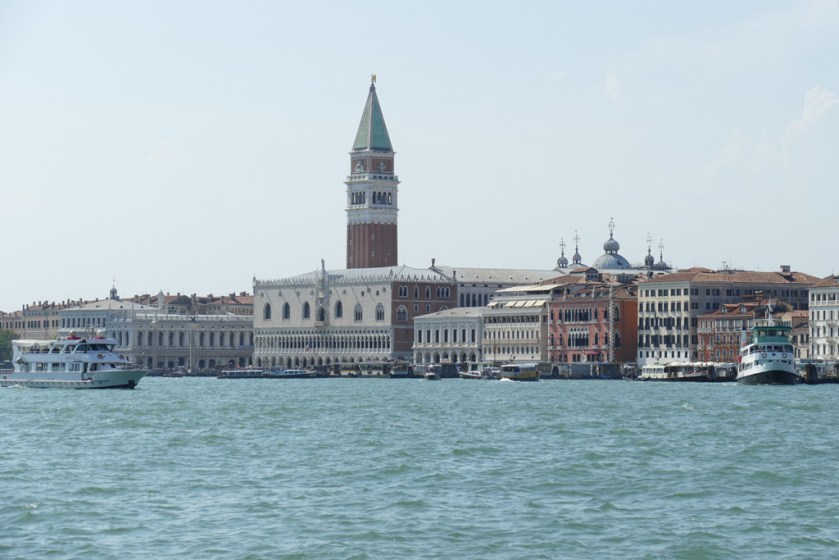
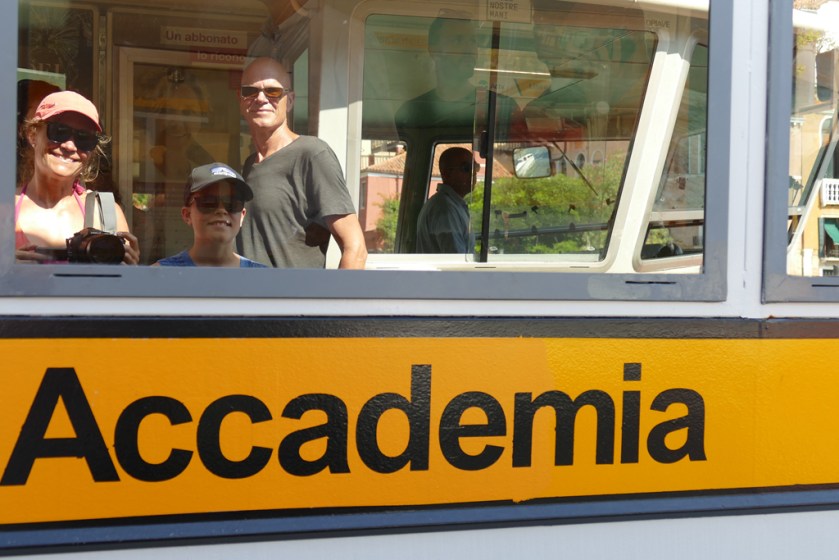
Family reflections
Family reflexions

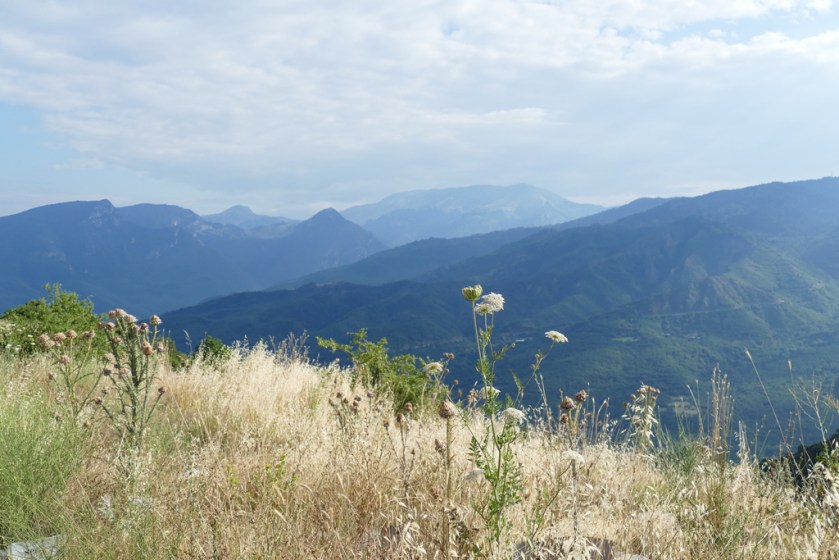
Our next goal is my parents house. However, we have to spend one more night in Italy before getting that far. Traffic is better than feared and we pass even Milano without any traffic jams. In Switzerland Dag insists on driving over the Gotthard Pass instead of through the long tunnel, and I am happy he did. The winding road leads us all the way up to 2’100 m, traversing the Saint-Gotthard Massif. The mountains are beautiful and the sights spectacular.

Late in the afternoon we reach Oberrohrdorf where I grew up. The same evening we’re invited for dinner at my best friend’s parents house. Wonderful to be met with such hospitality.

Next stop is Lörrach, just across the border from Basel, where we go onboard of the car train the next evening. Instead of driving all the way through Germany, we spend one night on the train and wake up in Hamburg.On the way to Hamburg
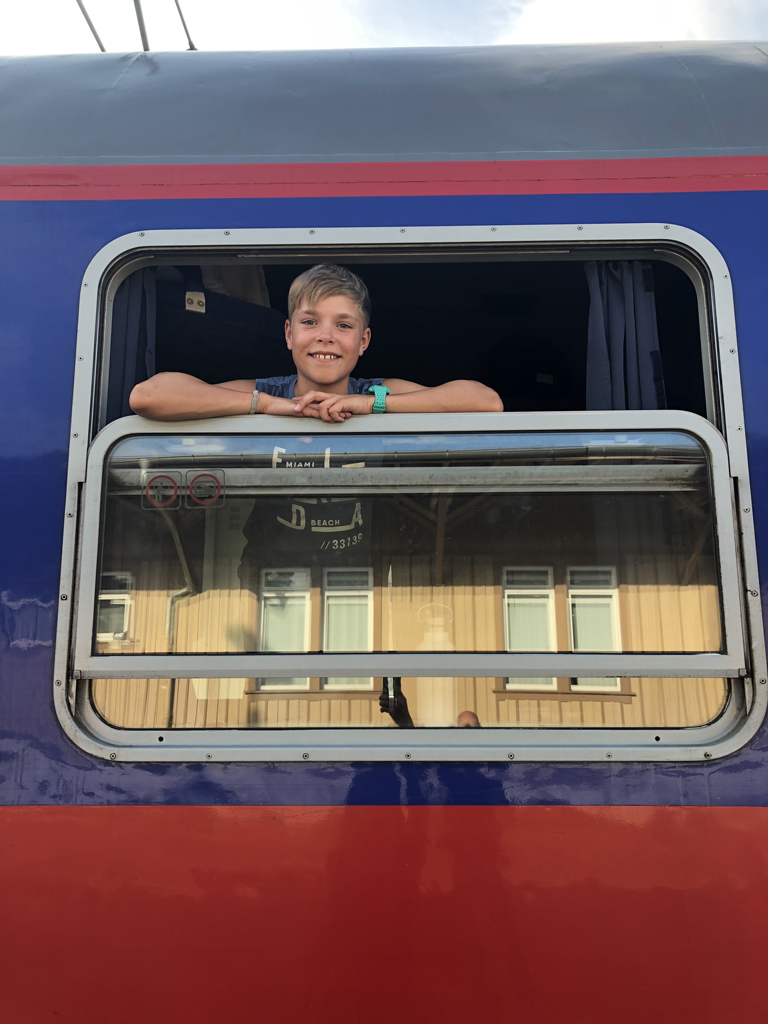
Of course, one doesn’t sleep as well on a noisy train, but it is yet another experience and absolutely worth it. We continue to Kiel and spend our last day out by the Baltic Sea close to Laboe. It turns out to be a beautiful spot with long sandy beaches and wonderful views over the sea.

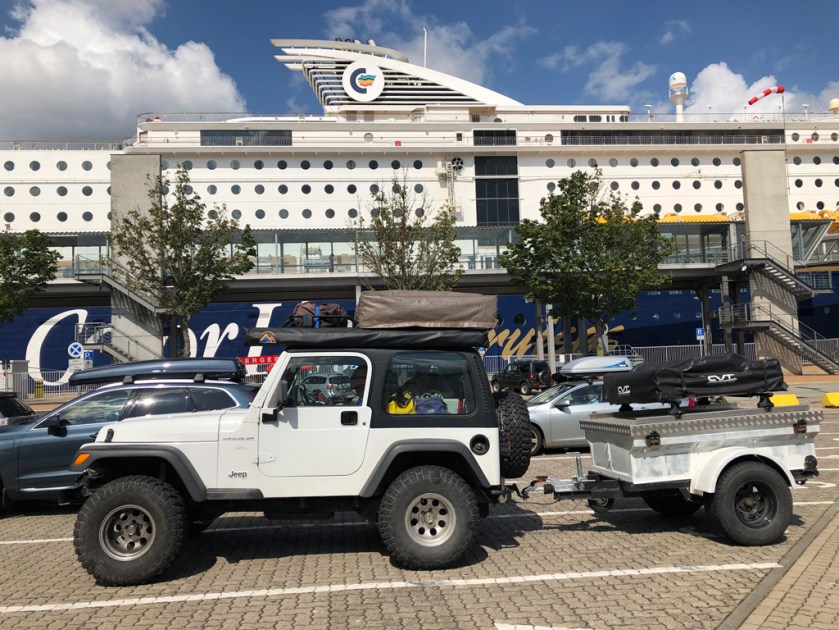
Waiting to embark in Kiel
Waiting for embarkment in Kiel

The final stage of our road trip is from Kiel to Oslo on the big Color Line ferry. Another 18 hours on the sea, before we’re home again after a fantastic five weeks, passing through 13 countries, meeting many interesting people, wonderful friends and family. There’s no doubt that the distance altogether was huge – many times we just hade to pass through places that looked interesting. However, driving through all these countries really gave us an insight of how diverse Europe is, how different its countries and people, how contrasting their culture. I guess it can be understood as a first round to get an overview. We’ll just have to return and spend more time in some of the countries we have been passing through now. The Jeep, the trailer and the roof tents will be stored in our garage, ready for a new adventure.
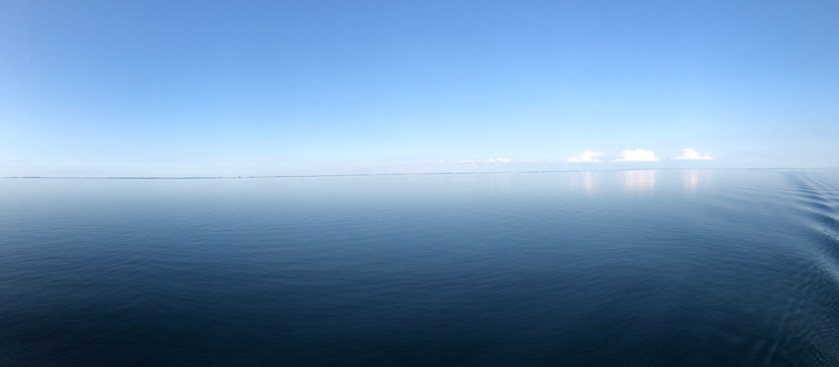
Towards Oslo
On the way to Oslo

From Greece with Love

Each time I come to Greece it feels a little like coming home. I’ve been spending my holidays here since I am a very little girl, and both my grandmother which I called Jaja (Greek for grandmother) and my parents have close ties to this country and introduced me to its beauty.Northern Greece.jpg

Crossing the border from Albania (the most secured border we’ve seen) and drinking our first Frappé (Greek cold coffee) in a little Kafenion evokes the same emotions this time. I am happy to be back!

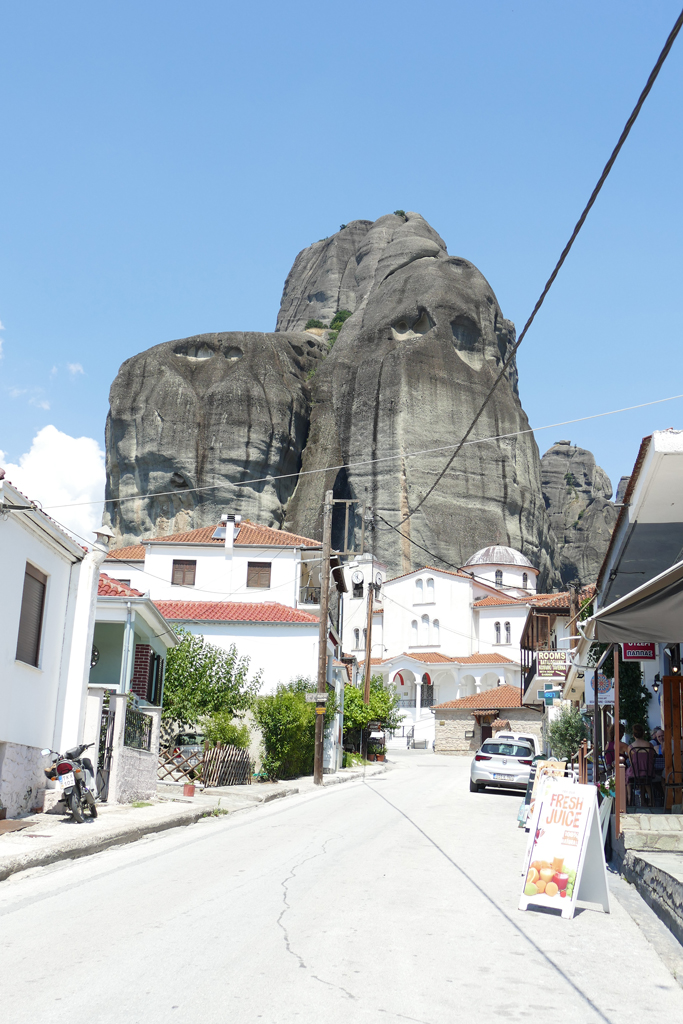
We drive mainly on the highway, first south to Ioannina, then westwards up to the mountains. We are heading for Meteora, the region that is famous for its Christian Orthodox monasteries built on immense natural pillars and hill-like rounded boulders that dominate the local area. Even if we’ve seen pictures of the area, we’re not prepared for the real sight. Approaching in the late afternoon, monoliths suddenly appear on the horizon, dramatic, magical and unreal. There used to be 26 monasteries earlier, now only six of them are inhabited by monks or nuns.

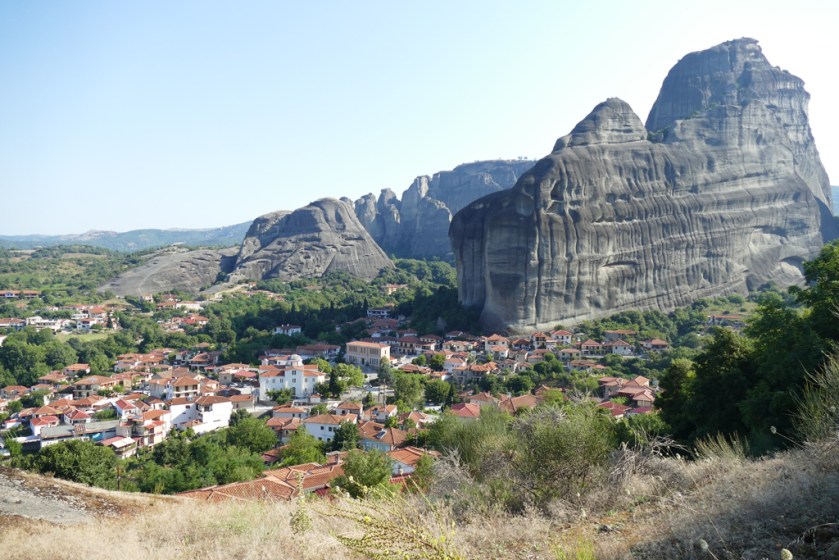
Kastraki
Kastraki with the rocks of Meteora

We spend the next day visiting a three of them. Luckily, we are out early, before the busses with day tourists from Athens and Thessaloniki arrive. At both Monastery of St. Stephen and Monastery of Roussanou we can look around quite undisturbed, but when we climb up the steps to the Monastery of St. Nikolaos after lunch, it simply gets too much. The atmosphere of peace and seclusion, and the feeling of being closer to the sky than to the earth is destroyed. Pressing ourselves through hordes of other tourists, we quickly decide to leave.

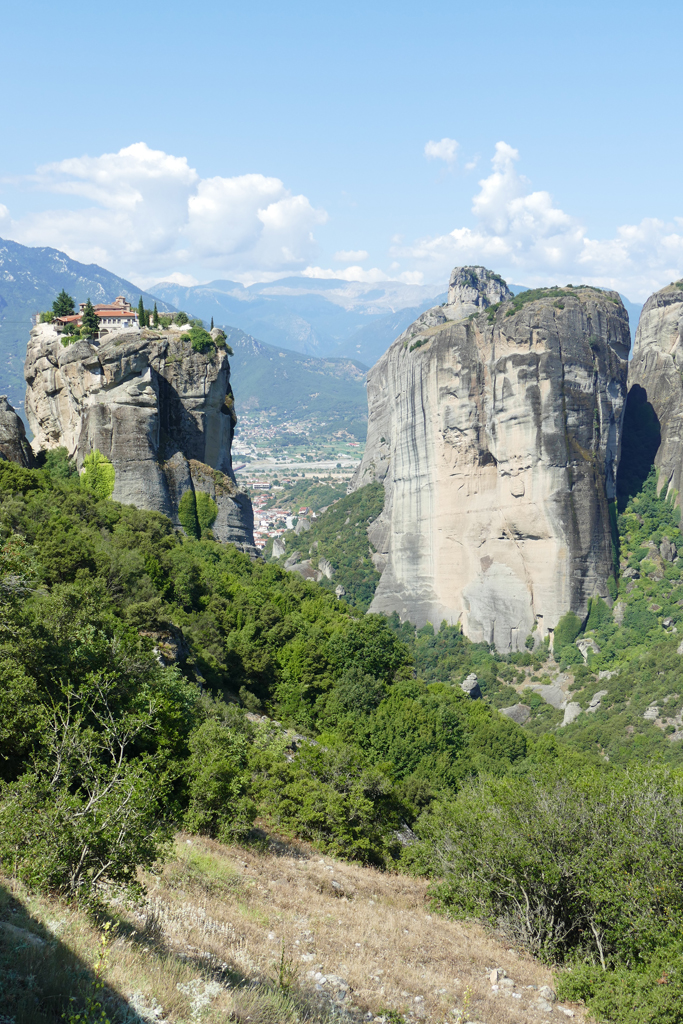
The Monastery of Holy Trinity
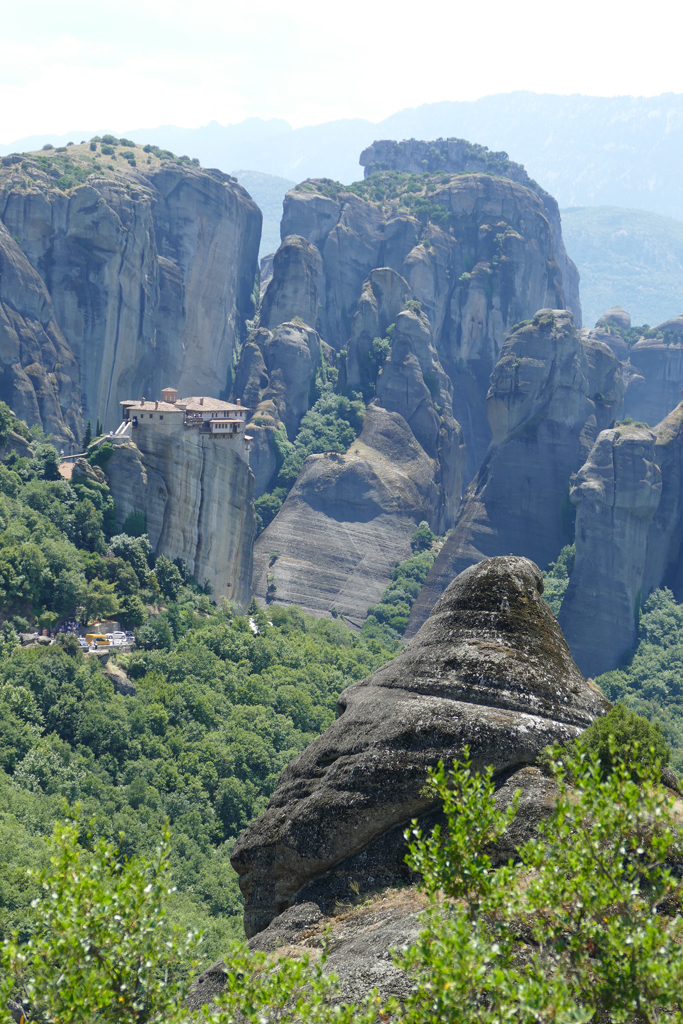
The Monastery of Roussanou


We drop the last two monasteries open today and just drive by, enjoying the splendid views. It is hard to imagine how they managed to build these places. Dag and Robin leave me next to the Monastery of Great Meteoron and I walk the 5 kilometres back to Kastraki at awe of this breathtaking landscape. We’ve got to watch the old James Bond movie “For your Eyes only”, once we get back to Oslo. Parts of it are filmed here.

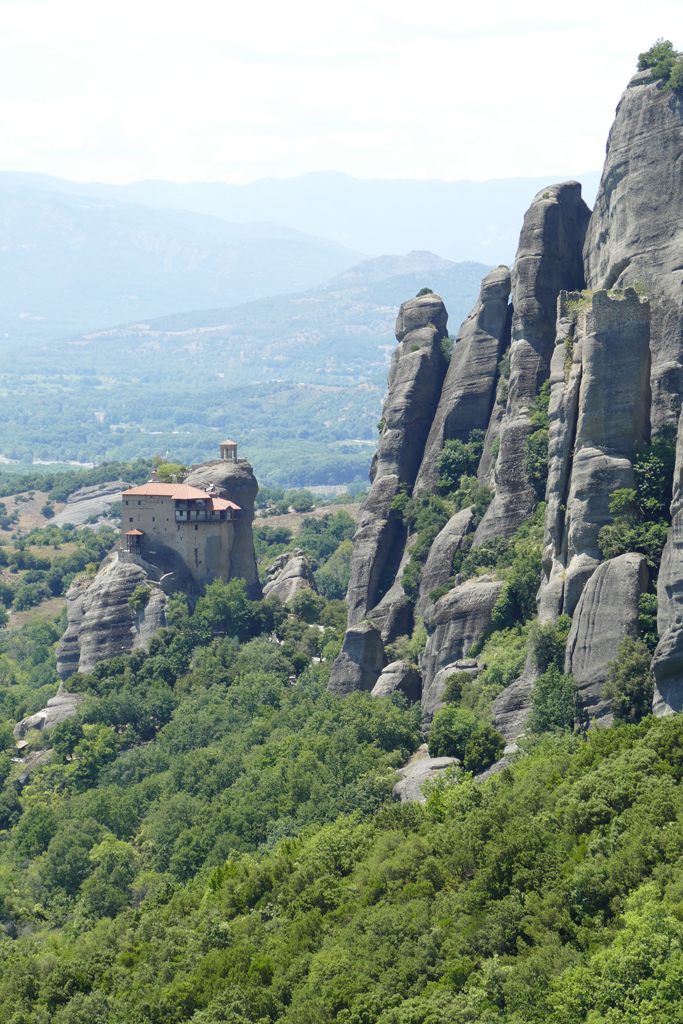
The Monastery of St. Nikolaos
Main street in Kastraki

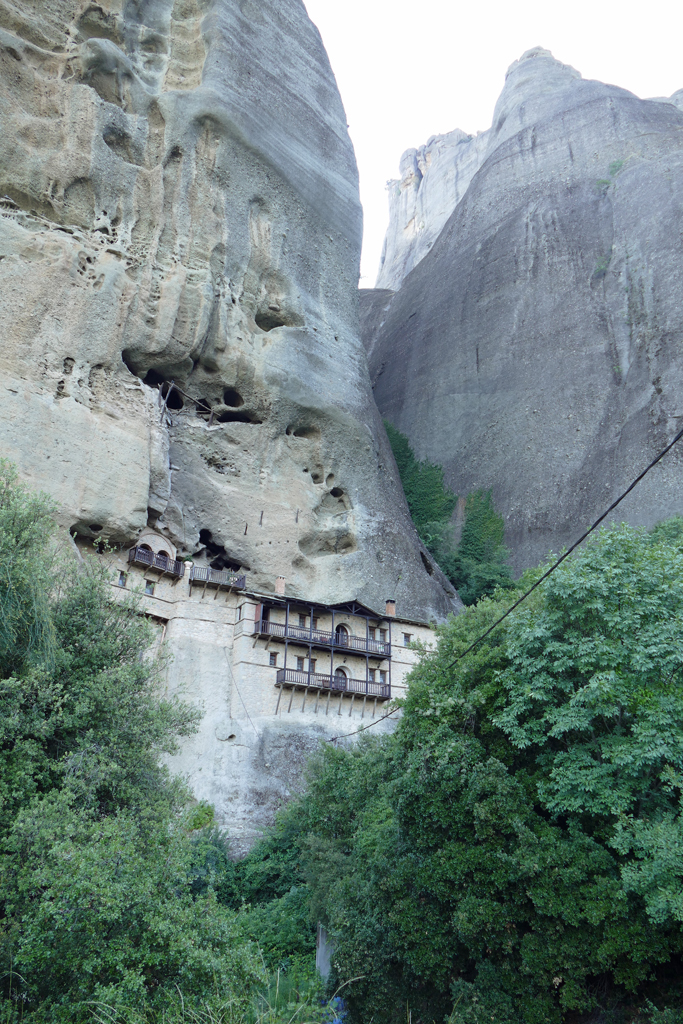
Next morning, we do a little hike from Kastraki following a small footpath leading to two smaller and less visited monasteries. They hang like birds nests high up in vertical rocks, one still being inhabited. Amazing! After a stroll through the market in the neighbouring town of Kalambaka and a good Frappé on the the main square, we leave the mountains aiming towards the coast.

The Monastery of St. Antonios

We haven’t really planned our last days before reaching the Peloponnese. The island of Lefkada seems like a good choice, being reachable by car. We’re staying at a small campsite at Dessimi Beach on the East Coast, and it turns out to be the perfect place for swimming and exploring the bay with pedalo and on a SUP. In the morning we drive to the famous beaches of Porto Katsiki and Egremni – famous for its high sandstone cliffs and certainly stunning – but they turn out to be far too crowded for our taste. Boats bring in hundreds of sunseeking tourists from the main town and we hear their load music on board all the way up to the road. Not our idea of a day at the beach…


And then it is time to continue south to Vrisses, the southernmost destination on our roadtrip. We spend a week together with my parents in their magnificent house overlooking the coast.


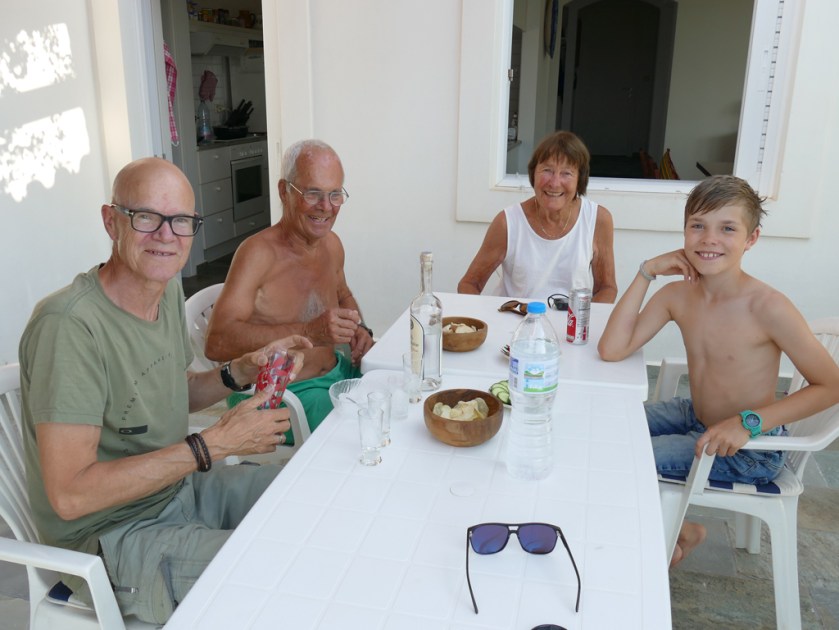
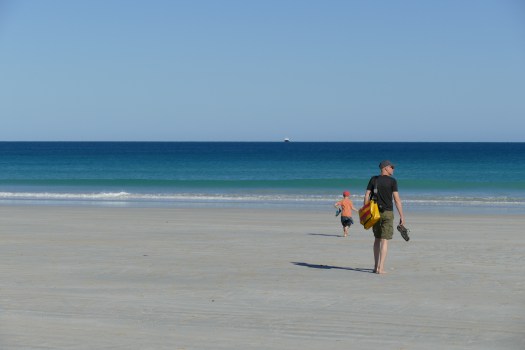
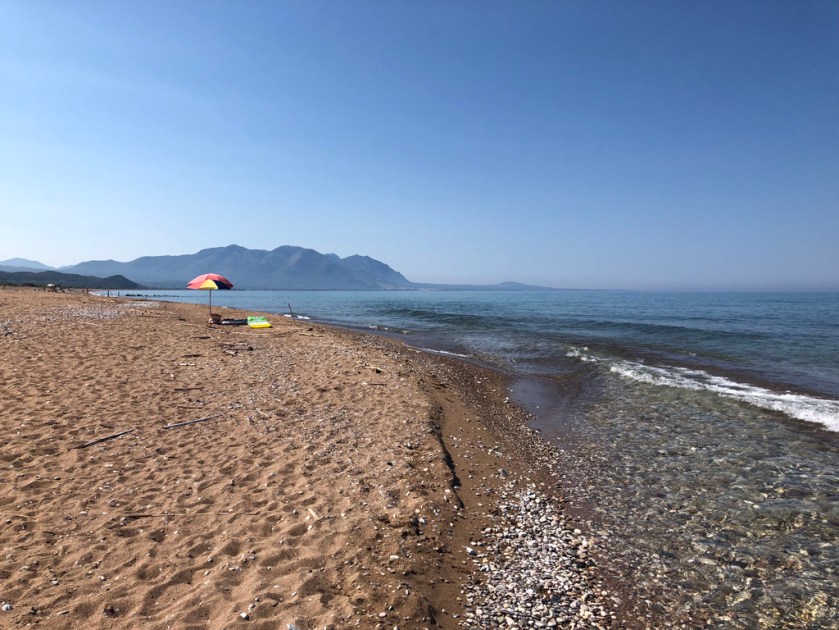
We don’t do much these days but pass our days at one of the fine beaches, strolling through the nearby town of Kyparissia, playing games, enjoying good food and each other’s company. Sunrise and sunset every day are a highlight! Sunrise usually by myself in the early morning, sunset all together, drinking our daily Ouzo.Ouzo timeWe have been here many times before and have explored many corners of the Peloponnese – recommendable if you haven’t been here yet. But this time it feels right just hanging around, relax and digest all the impressions we’ve collected on our way here. Holiday at its best!At the beach
Crossing Albania

Drina Valley
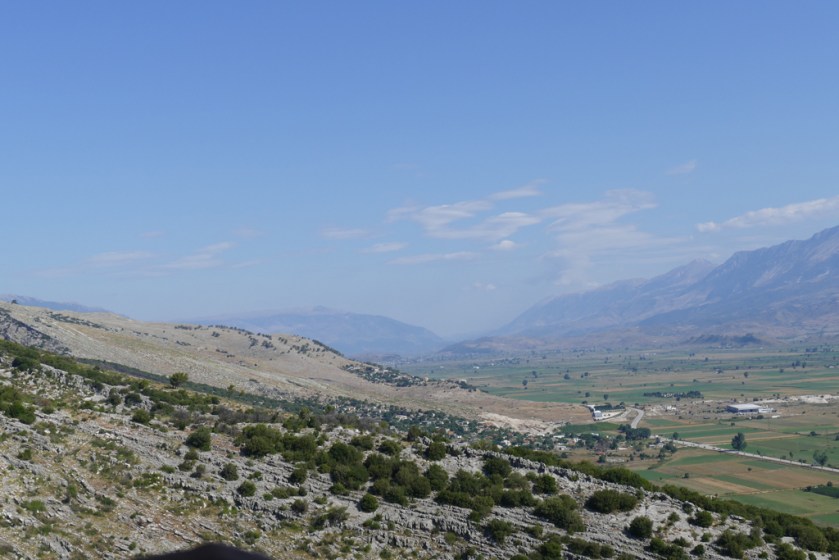
Drina Valley on the way to Gjirokaster

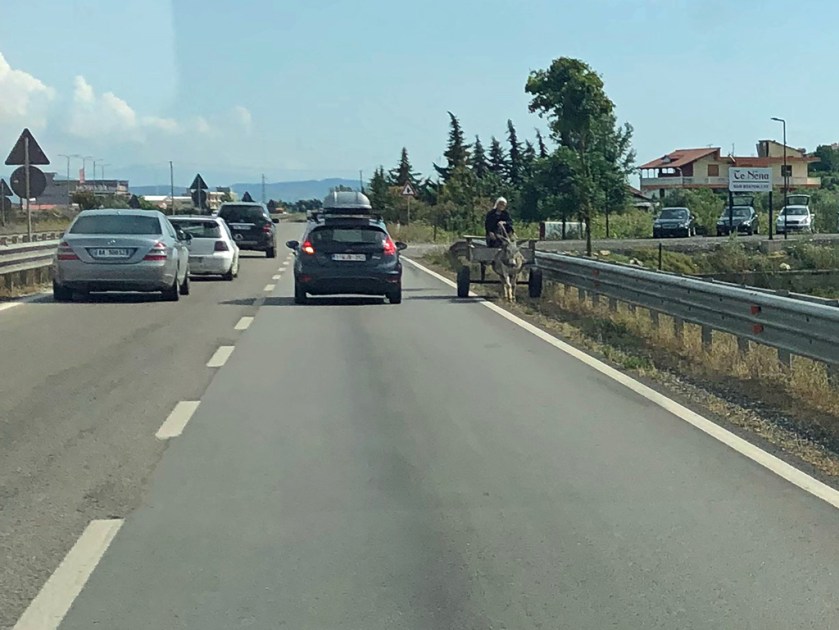
When mentioning that we we’re planning to drive through Albania, we got quite a few comments warning us about how dangerous it is to drive there. What I can say after having been there is the following: Albanians don’t drive as aggressive as we’d expect, but they certainly don’t follow the same rules as we are used to. For one, they never seem to remember that their car has got a blinker. You’ll never know if they suddenly decide to turn left or right (which they of course do). If they want to get something from a shop along the road, it’s never necessary to find a parking spot – they simply park their car on the road. When driving on the highway (2 lanes in both directions) with speed limit 90 km/h, you meet both donkey carriages, bicycles, motorcycles and people pushing a wheelbarrow, using your shoulder – driving or walking against traffic using parts of the lane.

Donkey carriage
On the highway in Albania

Along the highway there’s gas stations every second kilometre, usually consisting of a restaurant, bar and hotel, often built in a very pompous style. With a car wash at every corner in the cities and even villages, it’s no surprise that all the Mercedes and other expensive cars on the roads are shining clean. And one thing is obvious: the car is the must-have number one status symbol here in Albania.

Coming from Montenegro, we reach the border at Sukobin in the late morning. There is a long queue of cars and it takes almost 2 hours until we can show our passports. The officer takes a quick look and waves us through, without even checking our car or trailer. We continue south to Durres, through the country side.

This part of Albania is certainly more developed than the rest of country. New building developments pop up along the road, both in and outside of the cities. It all seems chaotic, without an obvious area planning. And in between are the usual unfinished concrete structures, often partly inhabited, but never finished. What we really are shocked and disgusted about is the amount of garbage everywhere. There is not a single spot along the road without plastic bottles, cans, bags etc. It is worse than anything we’ve ever seen.

Next, we reach the harbour city Vlore, which seems a little more organised. Its beach front is lined with lots of new developments in form of hotels and apartment buildings, restaurants and bars. After one night in Radhime right by the sea (no swimming though since the beach is too littered) we continue along the coast. Unfortunately, the weather has turned, and it starts raining after breakfast. Crossing the Llogara Pass we don’t see much of this supposedly beautiful National Park since we’re mainly driving through thick fog.

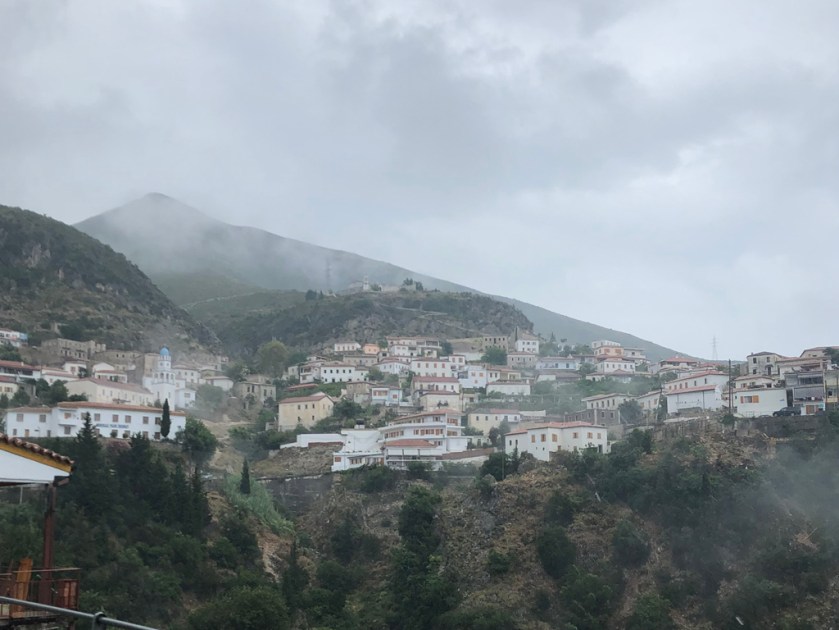
Mountain village
Mountain village in the mist

What we do see are quite a few bunkers, built during the communist government, nestled into the woods. Wikipedia tells us later that there is an average of 5,7 bunkers for every square kilometre in Albania, making it approximately 173’400 bunkers around the country.

We find a campsite south of Sarande in Ksamil. The place is definitely not worth mentioning, though I almost regret not having taken a picture of the ‘bathroom’. None of us feels like taking a shower there.

A little further south is Butrint, one of the most important archaeological sites in Albania. We visit the site in the late afternoon and enjoy the walk through these ancient walls, lying beautifully on a hill overlooking Lake Butrint and Vivari Channel, almost at the border to Greece. Inhabited since prehistoric times, Butrint has been the site of a Greek colony, a Roman city and a diocese. Following a period of prosperity under Byzantine administration, then a brief occupation by the Venetians, the city was abandoned in the late Middle Ages. The ruins on site witness therefore of many different periods, religions and typologies.

Lake Butrint
Lake Butrint

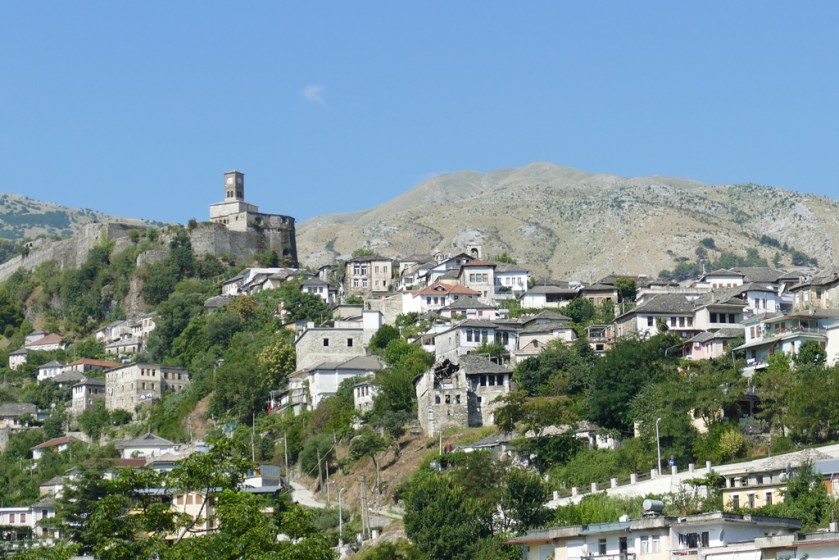
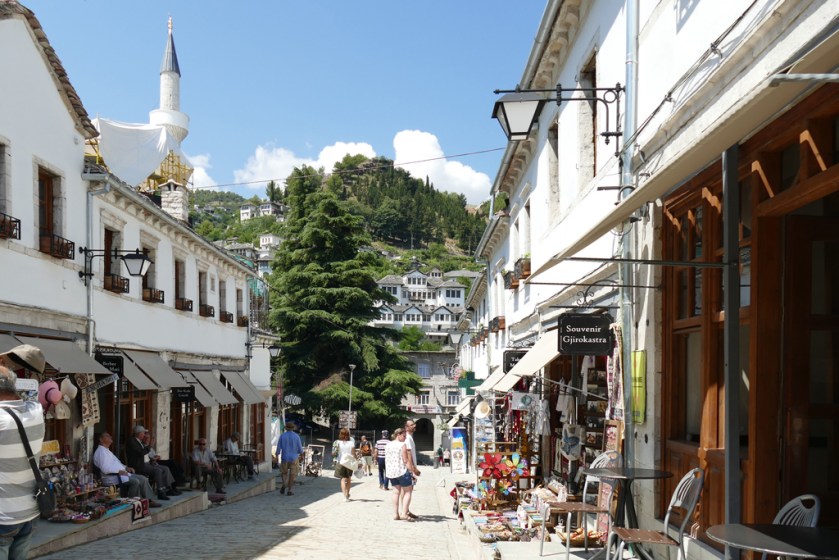
We leave the coast the next day and drive north through the mountains to visit another famous tourist attraction in Albania. Gjirokaster, which means “city of stones”, is a rare example of a well-preserved Ottoman town. The town is overlooked by Gjirokaster Fortress, which origins go back to the 1100s, but it’s been renovated and expanded multiple times in the following centuries. Perched at the summit of a hill, it overlooks an important route through the Drina valley and dominates the townscape.

Gjirokaster Fortress

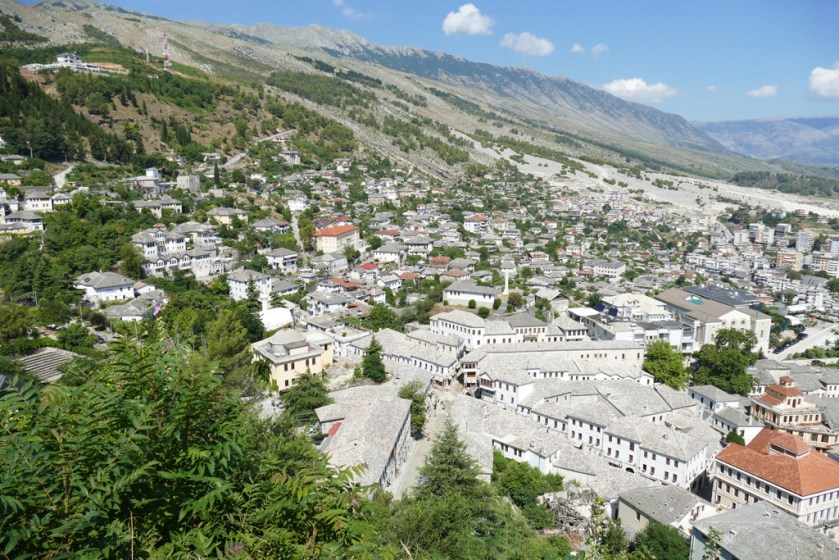
GjirokasterWe start up on the fortress, getting an overview over the town and enjoying the magnificent sight in front of us. Houses, roofs and roads are all built in the same sand-coloured limestone and fit perfectly into the landscape.

We make our way back to the old town and wander through the narrow winding streets to the Old Bazaar where they are restoring the black and white sandstone pattern on the paved road.

Old Bazaar
The Old Bazaar

We admire many of the typical fortresslike houses, consisting of two parallel tall stone block structures which can be up to five stories high.

We visit two of them: the author Ismail Kadare’s house (refurbished recently after a devastating fire) and the Skenduli house, dating from the early 1700s with many fascinating features, including a room used only for wedding ceremonies and which has 15 windows, many with stained glass. After enjoying a Byrek for lunch – best I’ve ever tasted – we slowly make our way back to the car.

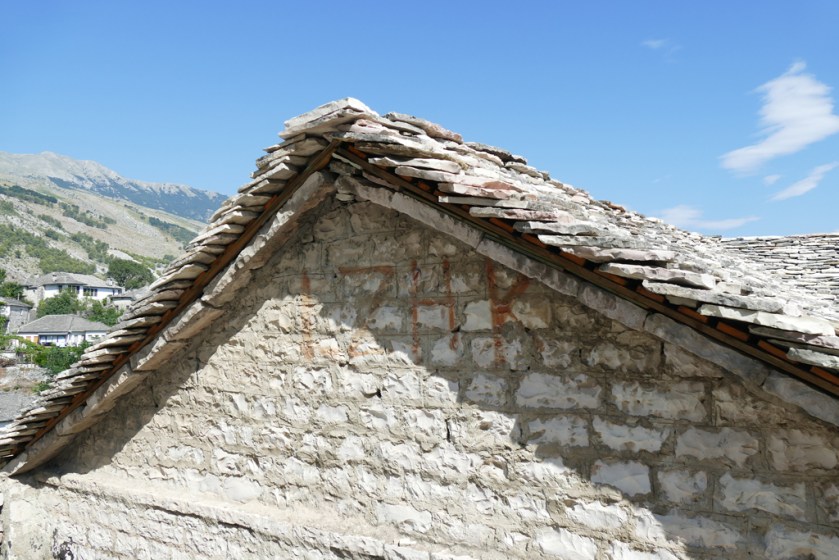
Stone roofAfter only a few days in Albania, we continue to Greece, well aware of the fact that we haven’t seen a lot of this country. Originally we had planned to travel to the mountains in the Northeast and also visit Lake Ohrid, but distances are simply to big. We therefore decide to head directly to the Meteora in Greece, our last stop on the way before we end up at my parent’s house on the Peloponnese.
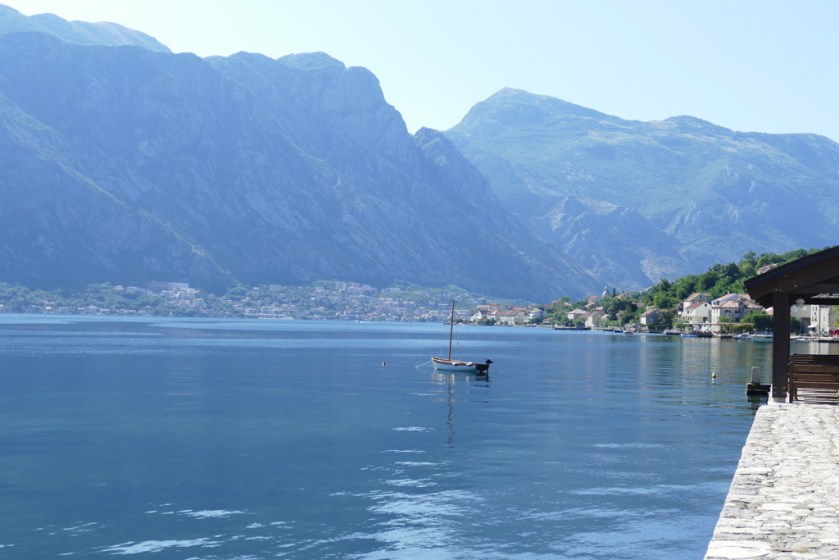
The Bay of Kotor

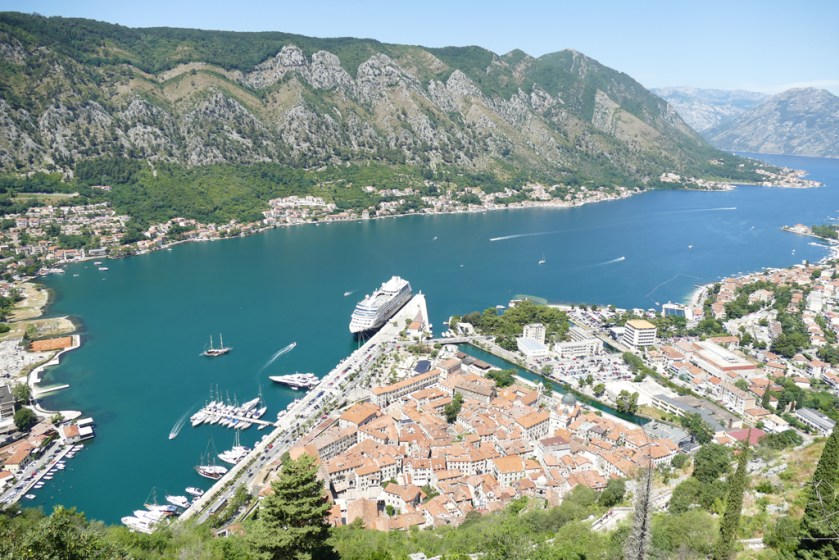
View into KotorApproaching the famous Bay of Kotor from the Northeast, we first cross the rugged and very rocky Lovcen mountains – almost impenetrable in different wars in the past. Then we get a first glimpse of water far below us. Following the winding road down, suddenly traffic in front of us comes to a stop. A car in front of us just got hit by falling rocks. The passenger side window and mirror are smashed, big rocks lie on the road. Luckily, nobody got hurt and I am relieved as we reach the bottom. Instead of driving all around the bay we chose to take the ferry from Kamenari to Lepetane. A 10 minutes ride crossing the bay at its most narrow section, only 340 metres wide. During WWII they had hidden a massive metal chain below the water surface at this very spot, to prevent hostile ships coming in.

We find a small campground in Stoliv, narrow but charming and right next to the shore. Perfect for a morning run and swim the next day.Morning swim We then drive into Kotor and spend half a day in this beautiful town which is included in UNESCO’s World Heritage Site. The old port is surrounded by fortifications built during the Venetian period between15th and 17th centuries.Main square with Town Clock Tower

We stroll through the narrow streets of the old town and visit a few of the churches, before we climb the 1’350 steps up to the Castle St. John. The view from the top is certainly worth the effort – it is awesome.The roofs of Kotor's old town

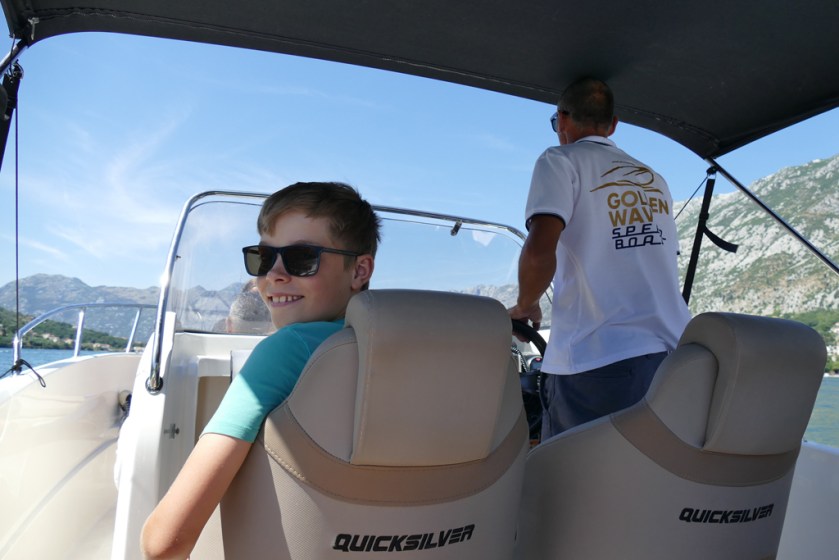
View from Castel St. JohnOn topThe castle is part of a huge fortification system that protected the medieval town, containing ramparts, towers, citadels, gates, bastions, forts, cisterns and other buildings. The size of it is simply impressive. After a small lunch in town we get onboard of a small speed boat, having booked a half-day tour. This landscape certainly deserves being seen from the water. Co-pilot on the speed boatOur guide takes us first to the two islets off the coast of Perast: Gospa od Skrpjela (Lady of the Rock) and Sveti Dorde (Saint George). Sveti Dorde contains a monastery which is not open to the public. Gospa od Skrpjela is an artificial island.
According to legend the island was made over the centuries by local fishermen who kept an ancient oath after finding the icon of Madonna and Child on a small rock at the same spot. They sank both rocks and old and seized ships loaded with rocks, until it was big enough for the church. Adjacent to the church is a small museum, which we also have time to visit. From there we continue, stopping at one of three submarine tunnels which were built by the Yugoslav Army. The outside of the opening is covered by fake rocks which makes it invisible from the air. Entering the 100 metres long tunnel feels a little bit like being in a James Bond movie.

On our way out to the open sea we pass Mamula, an uninhabited little island with an old fort that was converted into a concentration camp during WWII. Montenegro’s government has recently given green light for a luxury resort redevelopment – not the right way of preserving history if you ask me. Last stop on our tour is the Blue Cave where we enjoy a swim in the beautiful sea. What a day!

We can’t leave this area just yet and spend another day exploring the coast by car. We visit the Maritime Heritage Museum in Tivat, mainly to see the submarine put on display outside of the museum. We then cross the bay once again with the ferry and drive westwards towards Croatia. The last town before the border is Herceg Novi, another major tourist destination with its medieval old town and castle Forte Mare.

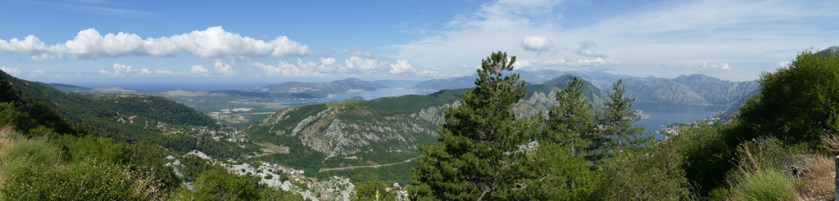
Leaving the bay of Kotor, we again chose a small road, from Tivat up the steep limestone mountains. We follow its many sharp bends and get the most dramatic views over the whole bay and the Adriatic Sea. Bay of KotorLater that day we stop at Cetinje, the old royal capital of Montenegro. Many stately mansions dating from the days European ambassadors lived here, share the same street as singe-storey cottages of very simple standard. A colourful and lively little place, again full of history.

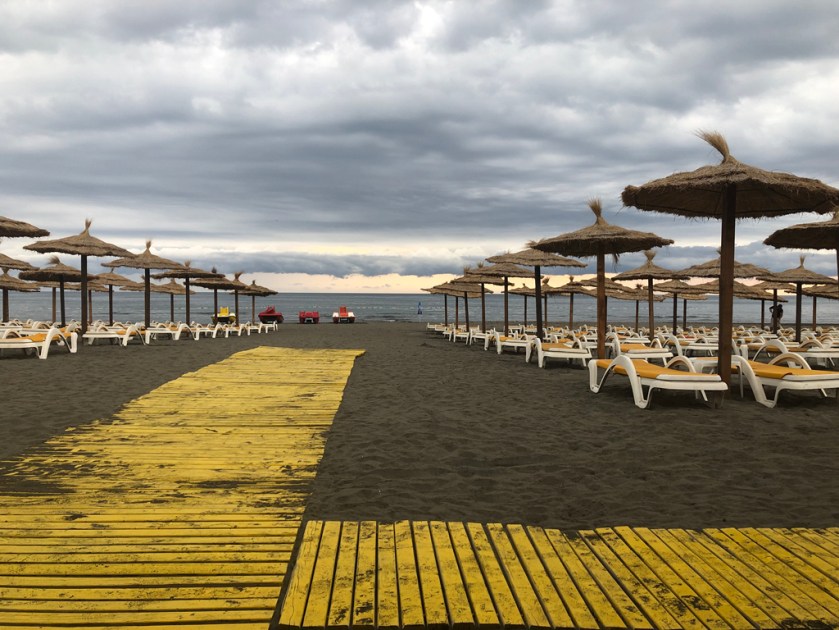
Before leaving Montenegro for good, we stay at the beach of Donji Stoj all the way in the south. For the first time we find a camping site that is well equipped and reasonably modern. Robin is suffering from stomach pain and glad we stay at a place with good amenities.

After putting up our tents under some beautiful pine trees, the guy from the reception stops by in the afternoon, recommending us moving away from the trees. Another storm is obviously approaching. We do as he says.Storm coming In the evening the sky doesn’t look promising and just after 11 pm it starts. First thunder and lightning over the mountains further inland, then getting closer and closer. An hour later we are in the middle of it, lightning close by and deafening thunder. We end up sitting in the car for an hour or so, feeling a little safer there than in our tents. It is a scary experience I must admit, but all goes well in the end and we are back in our sleeping bags for the rest of the night.
From here it’s only a few kilometres to the Albanian border. That’s where we’ll be heading next.

From Serbia to Montenegro

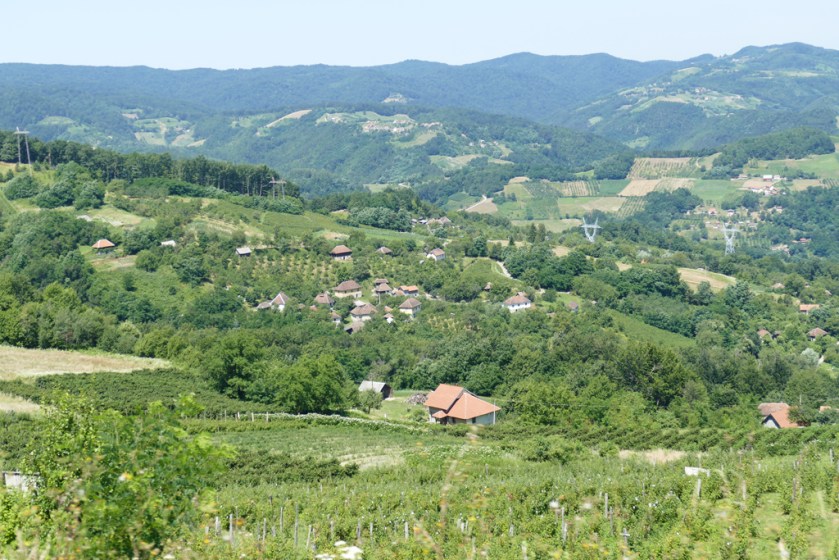
Serbian country side.jpgDriving through Serbia the next couple of days is beautiful, though finding camping turns out to be more difficult than expected, not having good maps or apps telling us where the campsites are. On the other hand, we are invited to a glass of Raki the next night, close to Sabac. The old couple owning the camping doesn’t speak a lot of English, but we sit down around their table and have some kind of a conversation anyhow. Serbian hospitality!Driving through Serbia
Continuing south through the country side to Bajina Basta, then a little upstream along the river Drina to Perucac. Again, not much choice when it comes to camping. The only place we find is a kind of parking lot with a public toilet/shower belonging to a hotel next by. We are the only guests. Luckily there is a wonderful restaurant close by, built over the river Vrelo, where we have a pleasant dinner later that evening. The river Vrelo is, according to a sign in town, Europe’s shortest river, 300 metres long, with its own power station, fish farm and 10 metres high waterfall.

The next day we drive through Tara National Park which is part of the Dinaric Alps. The mountain’s slopes are clad in dense forests with numerous high-altitude clearings and deep ravines carved by the Drina River. The scenery is truly beautiful, and we stop many times along the road to take inn the view. We stop in Mitrovac for a strong cup of coffee (they brew it like in Greece or Turkey using very finely ground coffee beans unfiltered).

In Tara National Park
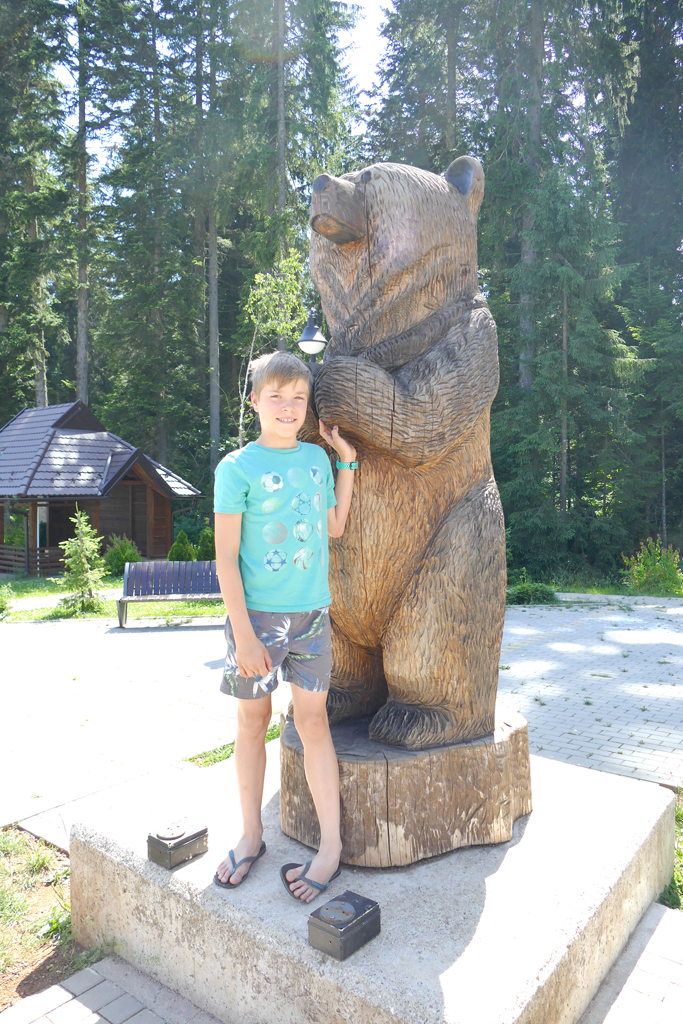
There’s brown bears in Tara Natonal Park

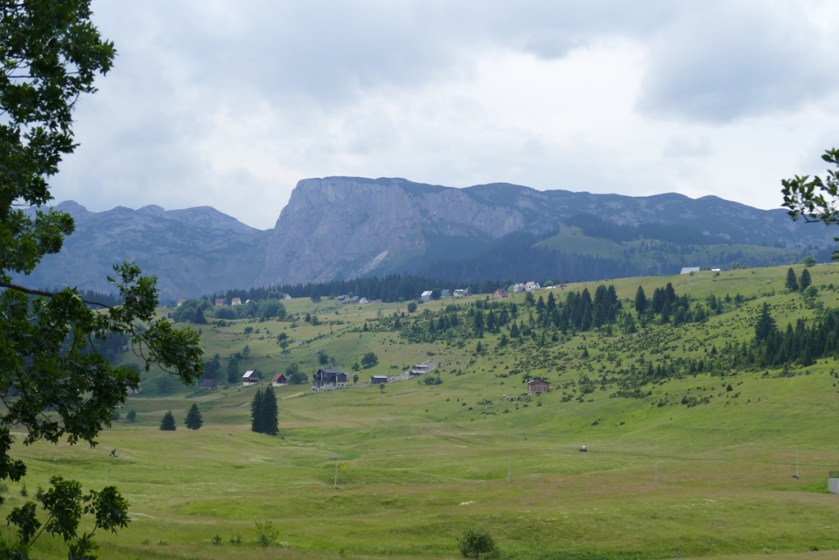
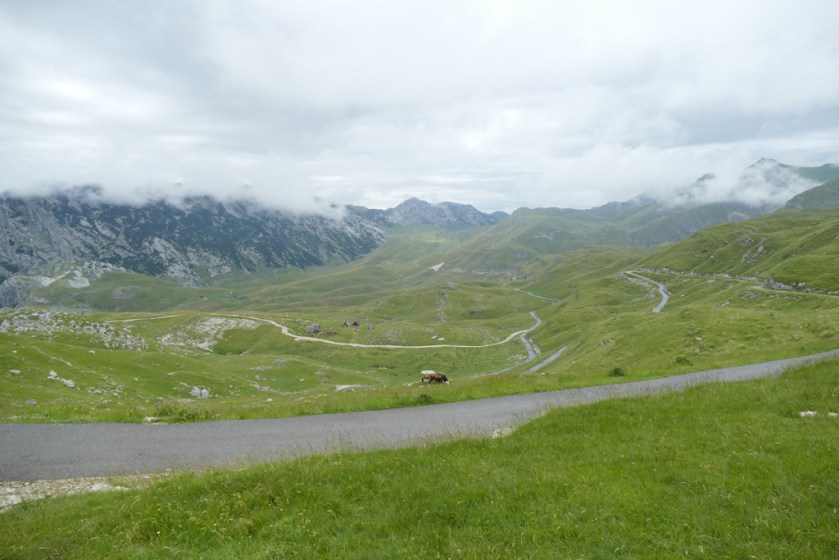
Continuing our trip through the country side, mainly choosing small roads, we first cross the border to Bosnia and Herzegovina close to Vardiste, then back to Serbia in Priboj and finally to Montenegro in Pljevlja. The landscape reminds me a bit about the Swiss Alps, with narrow valleys, small rivers and small patches of agriculture. Though the villages are poor, the houses often in bad condition. Road conditions on the other hand are better than we expected which doesn’t mean that we get on fast. With our heavy trailer we seldom drive faster the 40 km/h up the mountains, and a little more on the way down. Distances take longer than expected, we’ve obviously miscalculated a little and will have to adopt our route as we continue towards Greece.Driving through Durmitor National Park

Next destination on our trip is the Durmitor National Park. We approach the park from the Northeast and get a first impression of its dramatic landscape when crossing the Tara Bridge in Durdevica. Leaving the car on the parking lot we walk out on the bridge. 170 metres above the Tara River we watch people flying by on zip lines and others rafting on the river far below. The railing of the concrete bridge is relatively low, and we don’t really feel too comfortable standing on it.

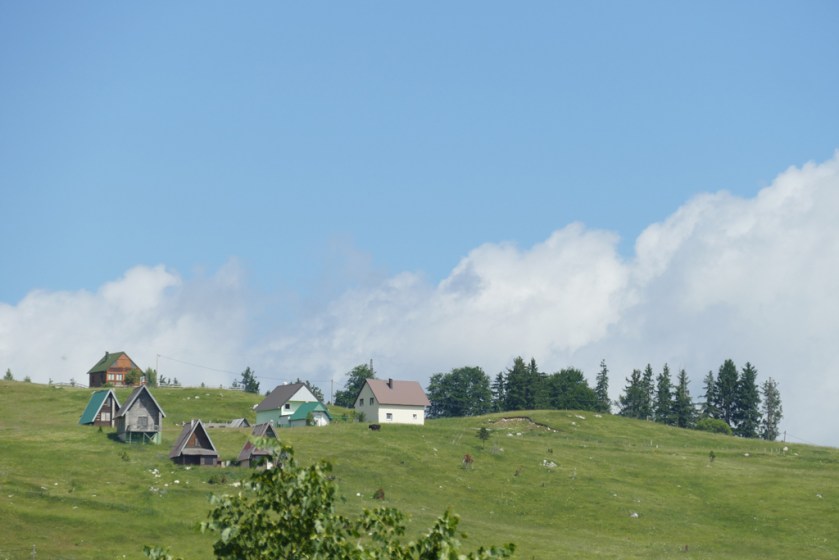
We continue to Zabljak, the highest urban settlement on Balkans (1’450 m above sea level) and the touristic hub in Durmitor National Park. It is only 5 kilometres from the bridge to the village but driving up the steep winding road takes us another half an hour. Along the road we see many of the characteristic small mountain cottages with steep roofs almost down to the ground. There must be a lot of snow in this area during winter.Durmitors typical architecture

Again, the campsite is a disappointment. Nothing wrong with the scenery – the surrounding mountain tops are stunning – but amenities are a disgrace… I am glad none of us has too big claims when it comes to comfort.

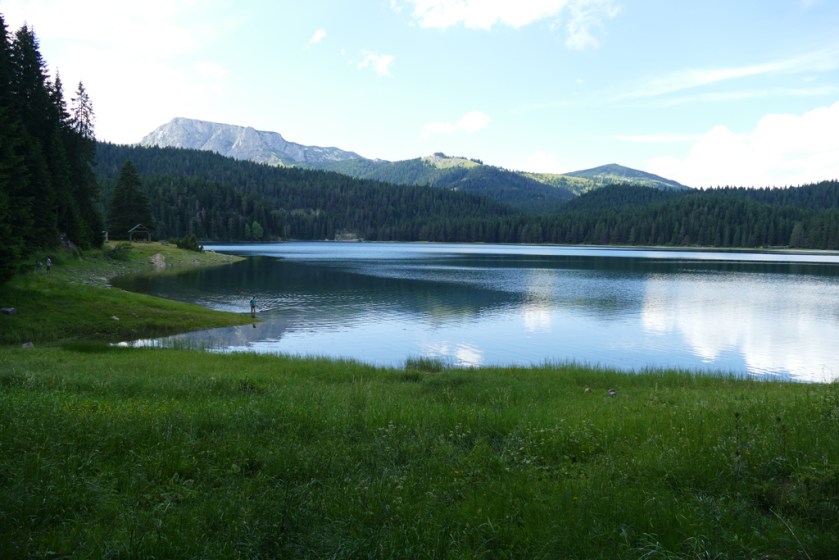
The campsite is close to Black Lake and we do the little hike around the lake in the afternoon. It is an easy 5 km walk around the two connected lakes Big Lake and Little Lake, the premium tourist attraction of the Durmitor area.Around Black Lake

Black Lake

We book a rafting tour on the Tara for the coming day – an absolutely must-do visiting this area. In some parts, the walls of the Tara Canyon are 1’300 metres deep, making it the second deepest canyon in the world after the Grand Canyon. What we don’t know when booking the trip is that we won’t be passing this part of the canyon, since one must book a longer tour than the one we are doing. Our trip down the Tara is beautiful, we cross underneath the bridge and pass a big waterfall, but the waters are very quiet (too quiet according to Robin) and we never see the famous high walls.

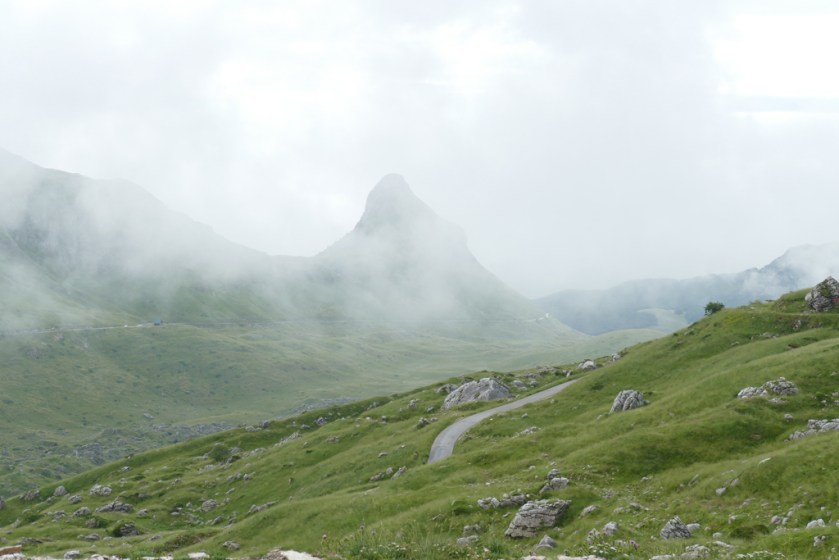
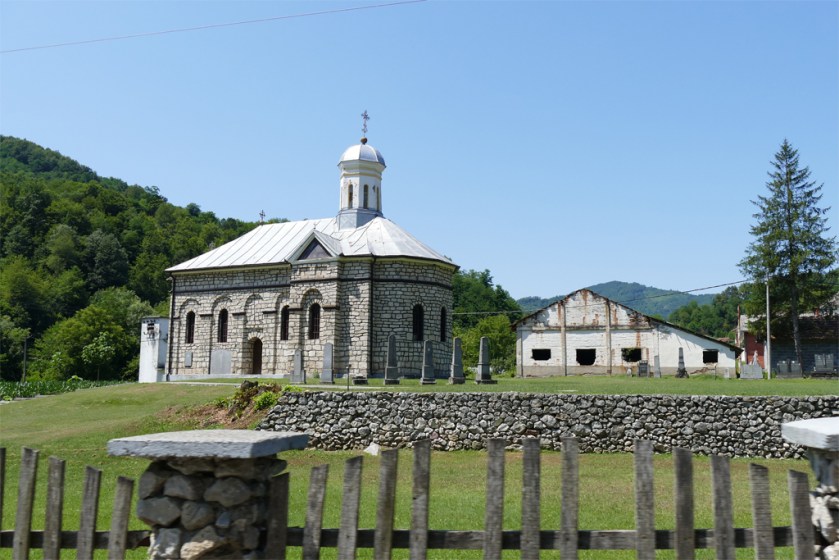
During the night we experience another violent thunderstorm with heavy rain, thunder and lightning. For nearly three hours we are in the middle of it and it is quite scary to be honest. The rain stops finally in the morning, but everything is wet when we pack together tents, tables and chairs. Driving through the mountains later that morning turns out be magnificent with clouds and fog hanging in the mountains.Durmitor in the mistMystical Durmitor mountainsRocky mountain Hoping for better weather we continue south, visiting two orthodox monasteries, Piva and Ostrog. The first famous for its frescoes, the second for its dramatic location, situated against an almost vertical background, high up in a large rock.

On our way we pass another thunderstorm with extreme rain – feels like driving through the deluge. We cross our fingers for better weather along the coast of the Adriatic Sea.


From Oslo to Stanisic, Serbia

After weeks and months of working on the Jeep and the trailer, Dag actually managed to finish it within time. We had planned to leave early Friday afternoon, though get a little delayed due to some last minor problems with the air conditioning. Instead of finishing up at work, Dag spends half the day getting a spare part to fix it.

We leave Oslo a little nervous and in the worst rush hour, not really relaxing until we reach the Swedish border a few hours later. We are lucky finding a charming little camping south of Gothenburg and spent a pleasant first night on the road.

Silverlykkan Camping
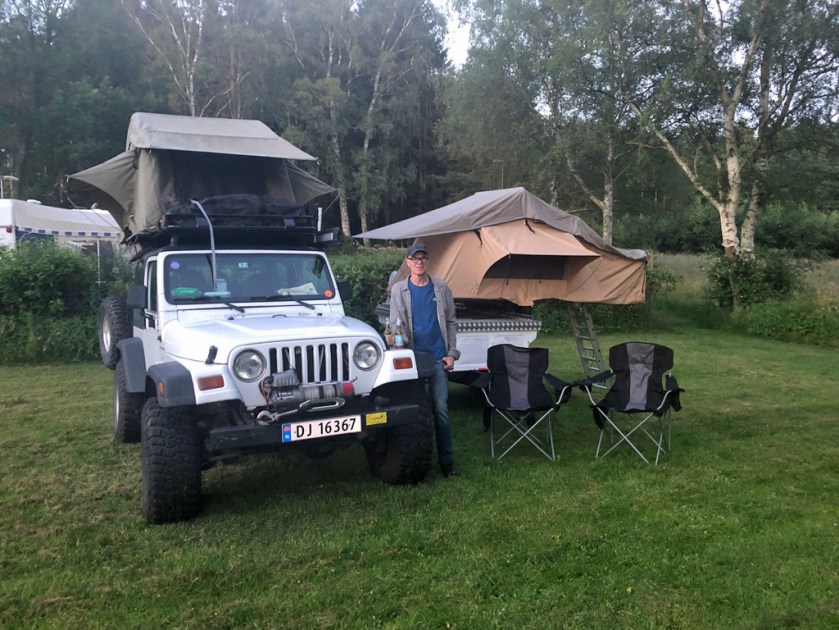
Our first setup – reminding a lot about our trip in Australia, just missing my swag.

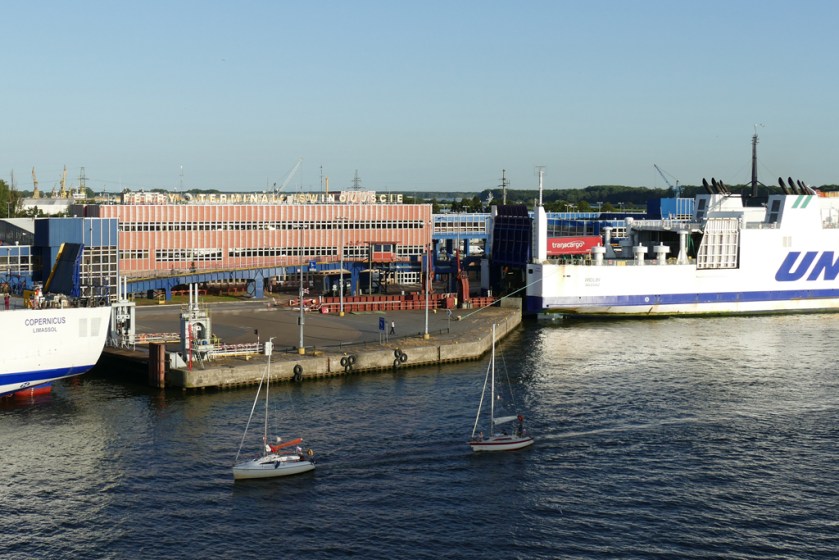
Next day we continue southwards to Ystad where we board the ferry to Swinoujscie, a city and seaport on the Baltic Sea and Szczecin Lagoon, located in the extreme north-west of Poland. The crossing takes about six hours and we spend the time sleeping, playing cards and having dinner on this rather old ferry.

Arriving Poland
Arriving in Poland in the early evening hours.

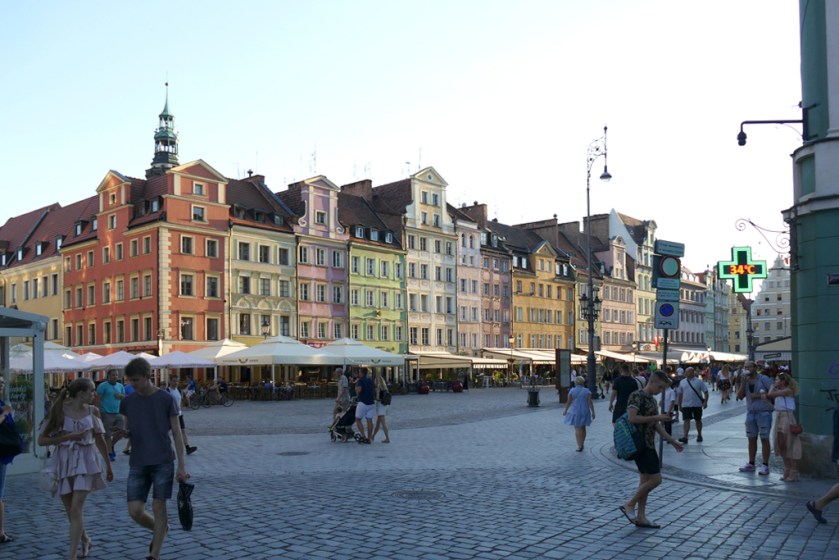
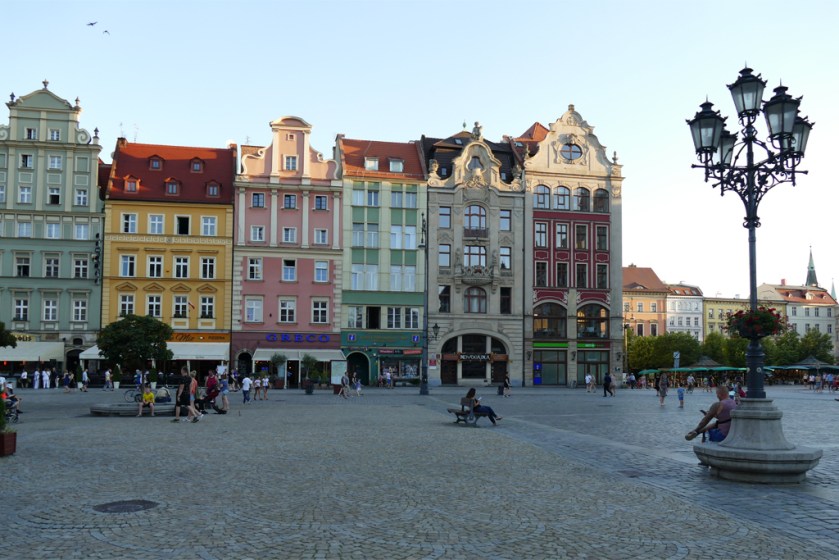
The following two days we cross Poland, happy about having air-conditioning in the car as temperatures outside reach 37 degrees (almost 60 on the bitumen according to numerous signs along the highway). Since we have agreed to be in Serbia half a week later, we don’t spend a lot of time along the road. The first stop we make is in Wroclaw. After finding a campsite on the outskirts, we take the tram back to the centre. I don’t know what I expected, but the tram was surprisingly modern, air conditioned and with a ticket vending machine only accepting card for payment. The old town is comparable to Krakow’s in beauty and size, and includes the Gothic St. John’s Cathedral, the Renaissance houses framing the market square, the city hall to name a few.

Colorful facades in Wroclaw
Market square in Wroclaw

Market Place Wroclaw

We are amazed by the squares stunning facades, rebuilt after having been razed to the ground in WWII. During dinner on the market square in one of the lively restaurants we agree to come back another time and spend several days in this beautiful country.

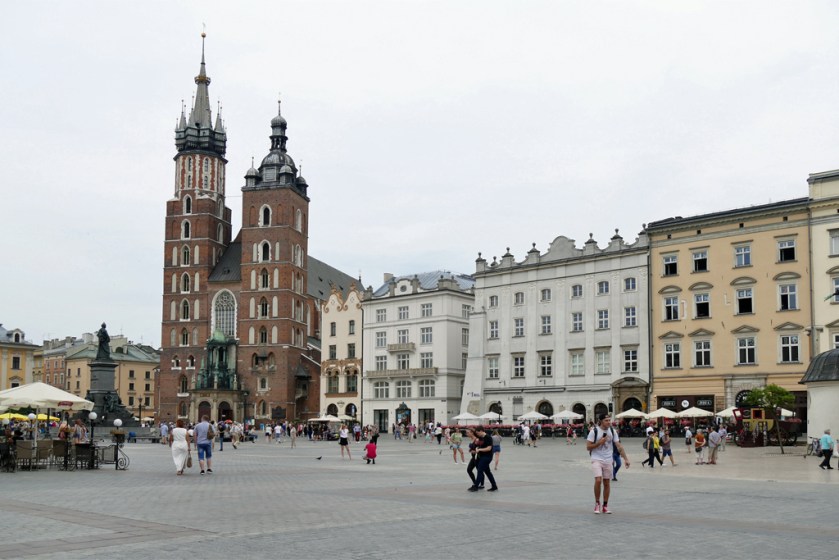
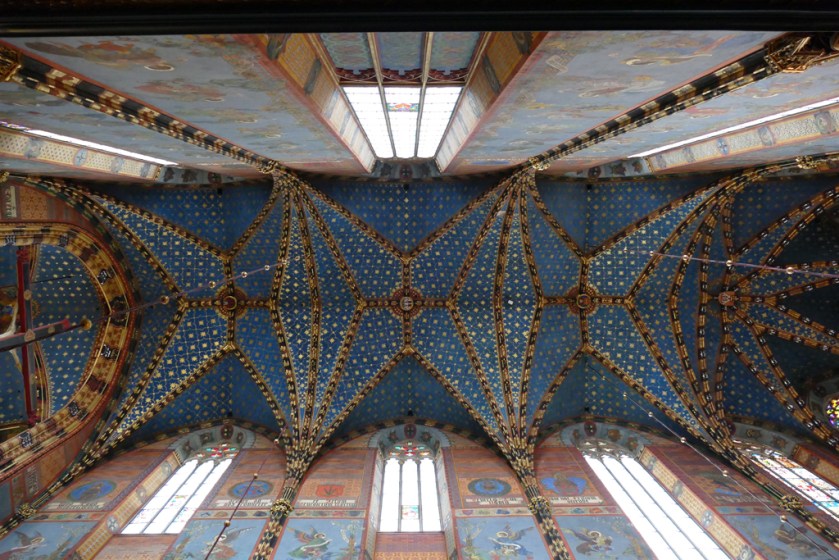
Next along our way is Krakow, the second largest and one of the oldest towns in Poland. Unlike Wroclaw, Krakow remained relatively undamaged at the end of World War II, sparing most of the city’s historical and architectural legacy. Having only a few hours available for our sightseeing, we stroll around the old town, visit the famous St. Mary’s Basilica, a brick Gothic church adjacent to the main market square, the Cloth Hall, Europe’s oldest shopping centre, and Kazimierz, the Jewish Quarter. No doubt also this city deserves a longer visit another time – we just got a small impression of all the attractions this amazing place offers.

St. Mary’s Basilica Krakow
St. Mary’s Basilica

Painted ceiling in St. Mary's Basilica

During the night we experience our first storm – one of many as we get further south. Luckily our two rooftop tents prove to be stable and waterproof, but we don’t get too much sleep that night.

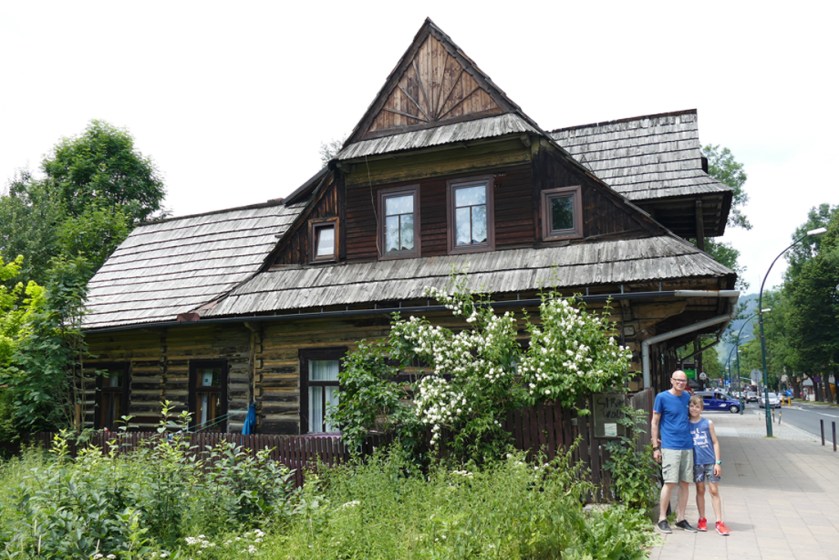
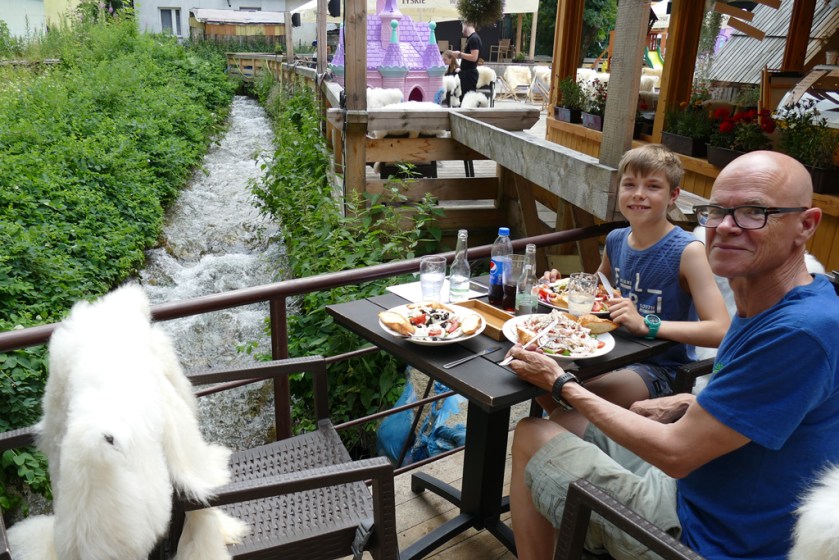
From Krakow we drive to the mountains and have lunch in Zakopane, a popular destination for both mountaineering and skiing. It turns out to be more touristic than charming.

Typical house in Zakopane
Lunch in Zakopane
Lunch in Zakopane

Crossing the Tatra Mountains, a mountain range that forms a natural border between Poland and Slovakia on the other hand is beautiful.

We cross the border and pass the national parks of Slovensky Raj and Muranska Planina. Further south, in Rimavska Sobota there is supposed to be a camping site according to one of our apps. Unfortunately, the information turns out to be wrong. We try to ask people at a gas station, but nobody speaks English. Fortunately, there is a guy with a campervan that tells us about a small camping close by in Kurinec which we find without further problems.

This is an experience we’ll have many times on our trip: the two apps that we are using are not trustworthy. We realize how spoiled we are from traveling Australia with the WikiCamp app. Always accurate and informative, and one doesn’t have to be online.

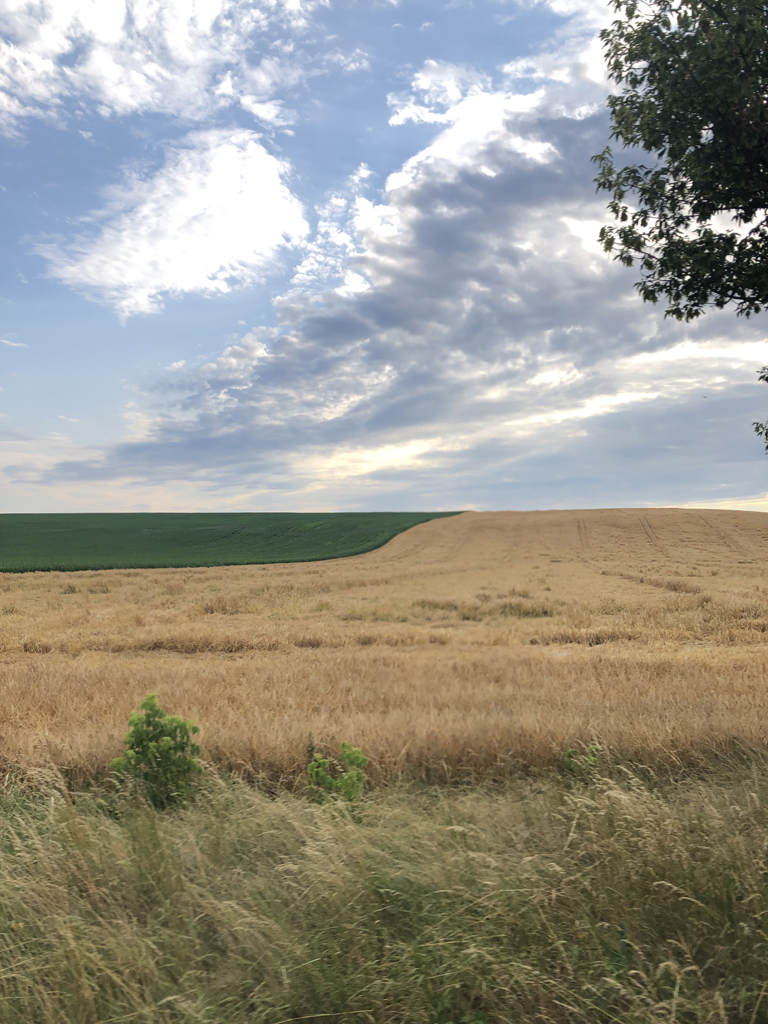
The following day we cross Hungary without any stops (except for a few gas stations). The only thing I remember is street signs with names too long to decipher before we’ve passed them. Try to read Hódmezővásárhely in a few seconds, just to name one…Fields in Hungary

In the middle of the afternoon we reach the Serbian border in Bajmok. We are being checked twice, both leaving Hungary and entering Serbia. Shortly after we arrive in Stanisic, our friend Jasmina’s hometown. Jasmina and her family live in Oslo and we got to know them through Robin’s school.

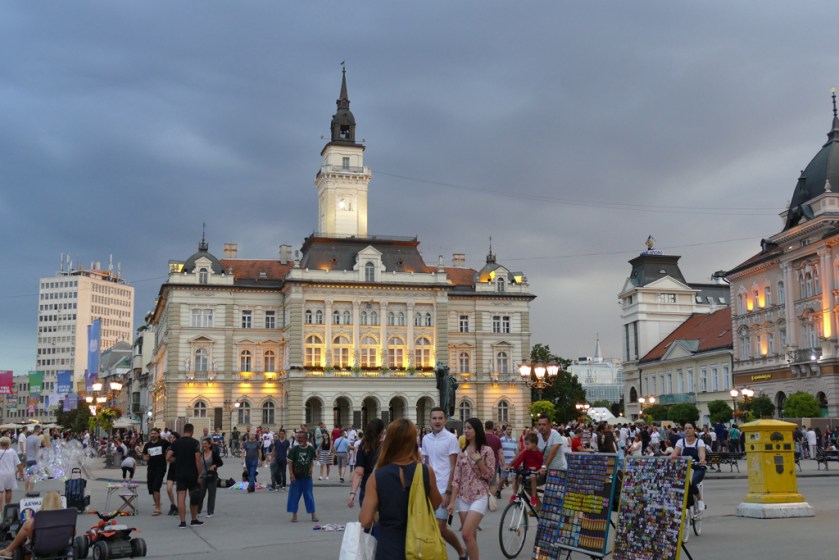
The next couple of days are cheerful, relaxing and we experience the best of Serbian hospitality. It’s a pleasure meeting Jasmina’s parents and other family members, being shown around in the area, visiting the lovely towns of Sombor and Novi Sad and enjoying good Serbian food. Robin enjoys the company of other children, including his school mate Emma.Beautiful evening in Novi Sad

Happy and thankful we leave our friends a week after we drove from Oslo, heading south.