Gold and rain

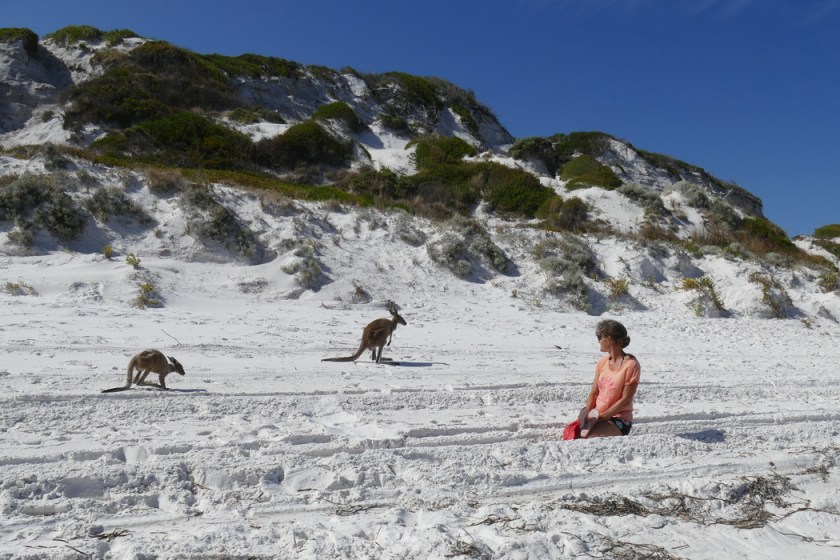
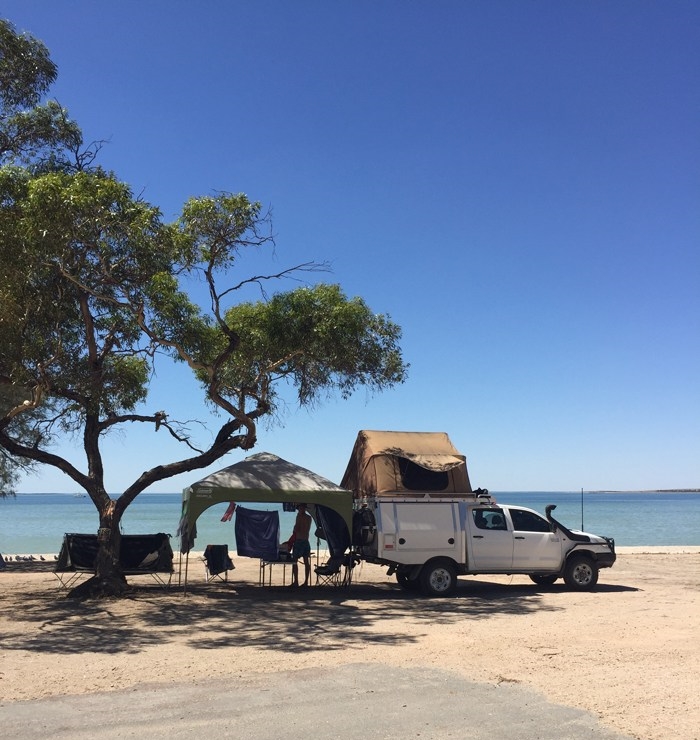
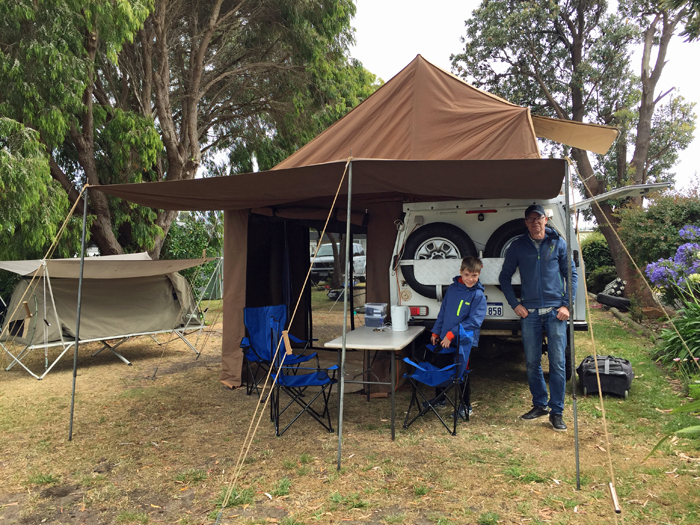
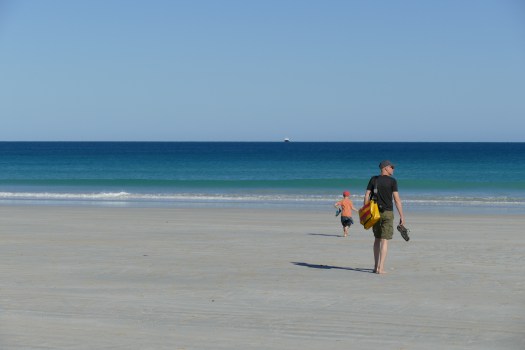
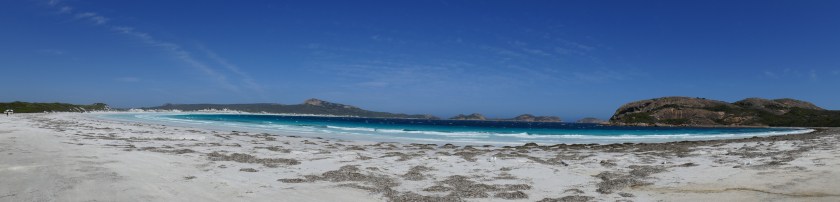
Lucky BayEsperance in Australia’s Southwest is known for its beautiful beaches, and Lucky Bay is the one everybody wants to get to. Camping is limited to 50 sites and you must arrive early, before nine, to grab a spot that might get available. So that’s what we did, left Esperance early morning and drove the 60 kilometres to Lucky Bay. We were car number three when we arrived there just after eight. And we were lucky and got a great spot in the lowest row, surrounded by low gum trees and with a stunning view over the bay. Spending the day snorkelling, reading, relaxing and playing games, we felt quite lucky at Lucky Bay.

Snorkelling

In good companyUnfortunately our happiness didn’t last too long. When it was time to go to bed it started raining, and it hasn’t stopped since. Right now I’m sitting in a barbecue shelter and the rain drums loudly on the tin roof. The night was not too bad, the bed only being humid, not wet. We had breakfast in our tent, just enough space for three chairs and a table, though not enough space to spend the day for the three of us, so I really hope the rain will stop, the sun will come out and we can hang out our humid sleeping bags and sheets.

Before we came down to Esperance, we spent a few days inland. We drove along the Woodlands and Granite Discovery Track which was a very pleasant trip through beautiful gum forests, except for the areas that recently or less recently burnt down – quite a common sight here.

Fires are usually just left to themselves and burn out eventually. Area and remoteness are too enormous that any fire fighters would stand a chance to extinguish it. We also learnt that nature is gaining from a fire now and then, some plants are even depending on it. So we’re not as shocked or impressed about it as we were on our first trip years ago; it just belongs to this country. As long as it’s not close to civilisation or us! On the way, there were lots of signposts with interesting information about the area and its history. Since the 1890’s people have been and still are digging for gold and other minerals. We also drove by very fascinating granite outcrops, huge monolithic hills lying here and there in the landscape.
McDermid Rock
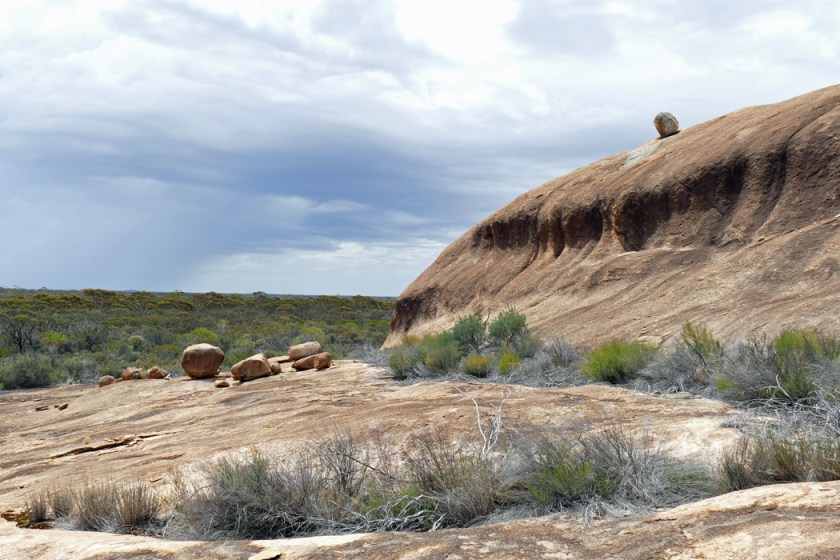
McDermid Rock
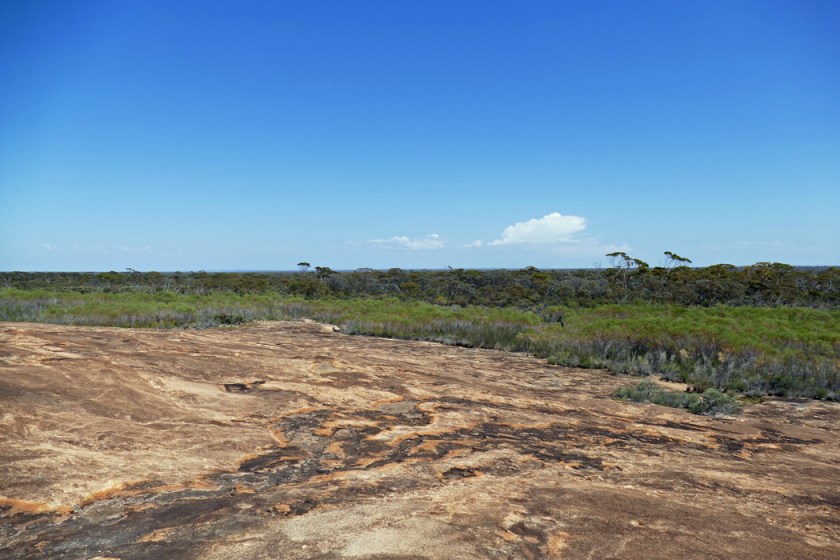
Disappointment Rock
Disappointment Rock

We did a few walks on and around them (Disappointment Rock and McDermid Rock) and enjoyed their complete remoteness. We hardly met anybody on these 300 kilometres, except for one or two road trains working in the mines. Wave Rock in Hyden was much busier, being one of the most visited tourist attractions of Western Australia. It is an impressive scene, though we agreed that we prefer places less commercialised.
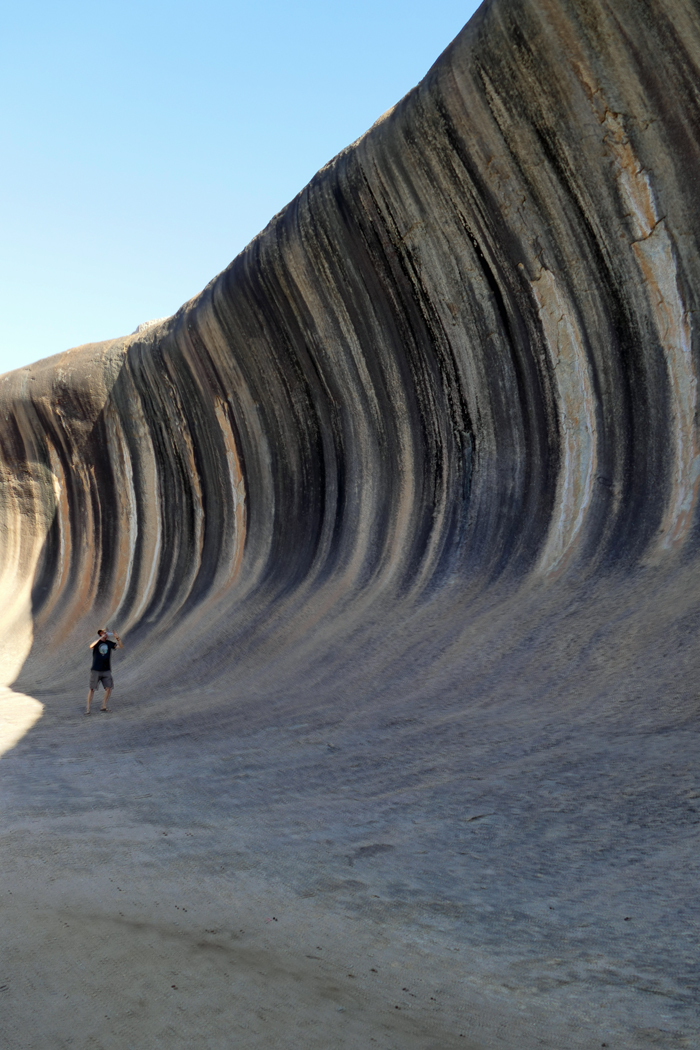
Wave Rock
Wave Rock in Hyden

At the local museum we read that there were 93 hotels here in the twenties! We also learned a lot about gold, how it originally was created, how it is processed and what it is used for today. I liked the spirit of this town, its Mediterranean flora, its architecture, the heat of the day and the cool nights.

One day we went to see the Super Pit, one of the world largest open mines (producing around 20’000 kg per year, 250 to 300 kg for every million tonnes of ore extracted). From the lookout we had a great view all the way down into the big crater, 3.7 kilometres long, 1.5 kilometres wide and 480 metres deep. Super Pit
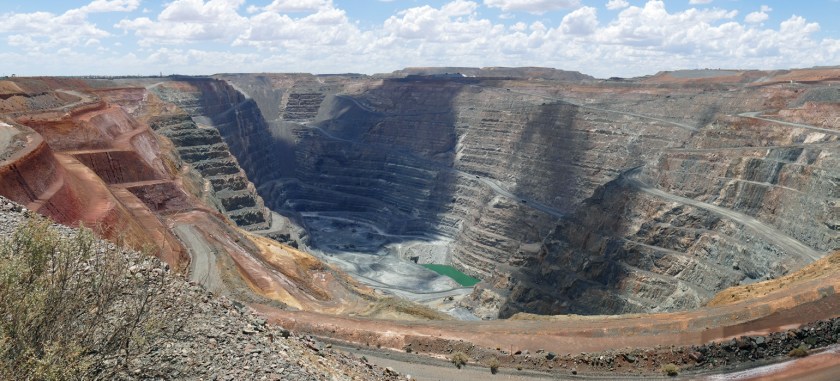
Bucket
Bucket size: 32 cubic metres. Bucket weight: 68 tonnes.

Huge, heavy loaded Caterpillars drove up along the sides at a snail’s pace. We even witnessed a blast – the times are daily published for the tourist. It was a great sight!

…It is still raining heavily and I’m afraid it is going to continue for hours. That means wet clothes, meals cramped in our 4 square metres and in the worst case humid beds tonight. But that’s part of this way of travelling, being exposed to the weather. We can’t even check the weather forecast, since there is no coverage.  We can only wait, be patient and make the best out of it.

PS: the rain actually stopped a few hours later and we got a couple of beautiful days at Lucky Bay. I used the opportunity and did a few walks, Lucky Bay to Rossiter Bay and Frenchman’s Peak. Absolutely stunning!
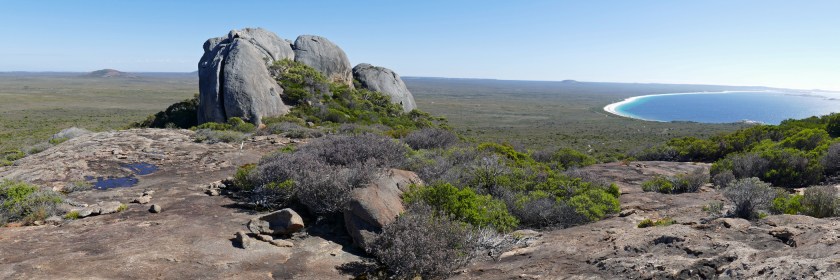
Rossiter Bay
On the way to Rossiter Bay (Cape Le Grand National Park)
Frenchmans Peak
From the summit of Frenchman’s Peak (Cape Le Grand National Park)

During our third and last night there it started raining heavily again, accompanied by endless thunder and lightning. We left this paradise with a wet tent, humid sleeping bags and sheets, and are taking in to a cabin tonight!

Hot days in South Australia

Temperatures were rising and when we reached Ceduna, the last town before the Nullarbor Plain, it was really hot. We stocked up on food and water, Robin got a haircut and we finally bought a fishing pole.

Lunchbreak
Lunch break along the road


Our friends had suggested that we stop at Cactus Bay (Point Sinclair), 100 kilometres west of Ceduna. After Penong, a charming little village with an artistic windmill park, we followed a dirt road out to the coast. WindmillsWe set up our camp on the designated site, far away from the few other people staying there. The owner of the campsite, an old surfer, told us about the caves down at the beach where it would be nice and cool. People from Penong use to spend the hottest days here, he said. So that’s what we did the following day. We brought sandwiches for lunch, walked through the magnificent dunes to the beach, cooled us down in the ocean and Robin tried his new fishing rod. It was hot in the sun, but when we reached the caves, it was just as we had been told, wonderfully cool. Other people, mainly elderly surfers were sitting there as well, taking a break from the waves.

Later we walked over to Long Beach, the most stunning beach I have seen so far. The white sands of the beach and the towering sand dunes, sandstone and limestone rocks and the deep blue ocean were absolutely breath-taking.

In the evenings we sat around the campfire under the amazing star-filled sky. The Milky Way was so clear that you could almost walk on it…

The second night I tried my luck again with cooking on the fire, after my first attempt had been quite a failure. And this time it was a success! Potatoes, sweet potatoes, onions, lots of garlic and fresh herbs together with some beef, delicious. And so much fun I must say. We all felt really happy here.

This slideshow requires JavaScript.

Next day we set off towards the Nullarbor Plain (Latin for ‘no trees’), the world largest single exposure of limestone rock (200’000 square kilometres).

Already ten o’clock in the morning it was very hot and we didn’t mind driving far that day. On the way we stopped at the Great Australian Bight Visitors Centre, where one can watch whales between May and October. Walking the few 100 metres out to the viewing platforms in almost 45 degrees was not a pleasant experience, I can assure you.

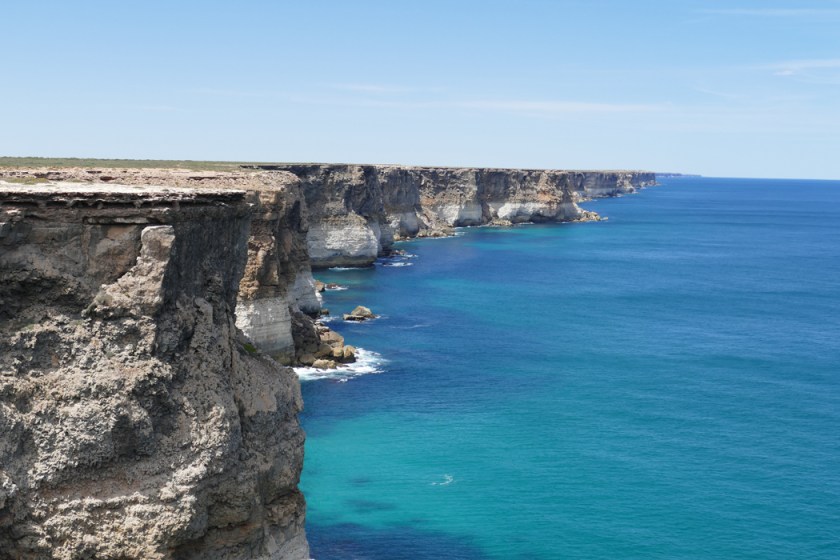
The Great Australian Bight
The cliffs at Great Australian Bight

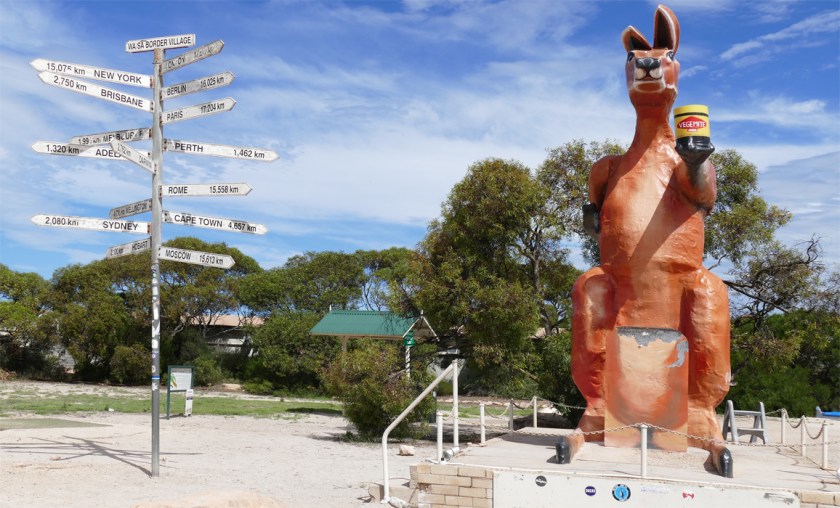
We had a short glance at the coast and returned quickly to the car. Eating lunch outside was out of the question, so we made our sandwiches in the car, motor and air-conditioning on. Continuing west, temperatures fortunately dropped and we had a cool night at the roadhouse in Border Village, next to the border to Western Australia. Border Village


The reason why we didn’t want to cross the border just yet is the strict Australian domestic quarantine rules. We had to eat up all our fruits and veggies before crossing over to the next state, otherwise we would have got an unpleasant experience with one of the officers at the checkpoint. You usually cannot bring plants, fruits and vegetables over the state border in order to avoid pests and diseases. Quarantine

Next morning, we crossed the border with a clear conscience.

Soon we’ll leave the Nullarbor behind us and move on to the Great Western Woodlands, the largest remaining area of intact Mediterranean climate woodland on Earth. It’s just about the size of England… Australia is truly full of extremes!

Emus
Emus along Eyre Highway


I find it difficult at times to choose what to write about in the blog. There’s so much more to tell, for example about yesterday when we were halfway through Australia’s longest straight road (146,6 km) and suddenly saw a car that had stopped in front of us. Dag slowed down and we saw with freight that there was another car 10 metres away, landed on its roof. The other guy that had stopped told us that the accident must have happened a few minutes ago. The two men driving that car were standing next to their totally wrecked car – they had had a guardian angel! Apart from a few scratches and shock, they seemed ok. There was no mobile coverage, so I called 112 with our satellite phone, explained what had happened and where we were. They’d send help from Norseman, 2,5 hours away. Before we continued our trip, we made sure that the men had everything they needed, especially enough water. Then we drove on, still quite agitated.

Our aim for the day was Norseman, where we stay two nights, do some laundry, fill up the car and relax. Robin and I spent the afternoon at the public pool, together with lots of kids coming after end of school. Here most of the kids are Indigenous Australians, which is very different from what we have experienced further East, where you hardly ever see Indigenous people at all.

That’s all for now, hope you enjoyed this blog. Feel free to tell me if there is anything you wonder about. I will be more than happy to answer any questions 🙂

Moving westwards

We have moved on since my last post and have crossed the border to South Australia.

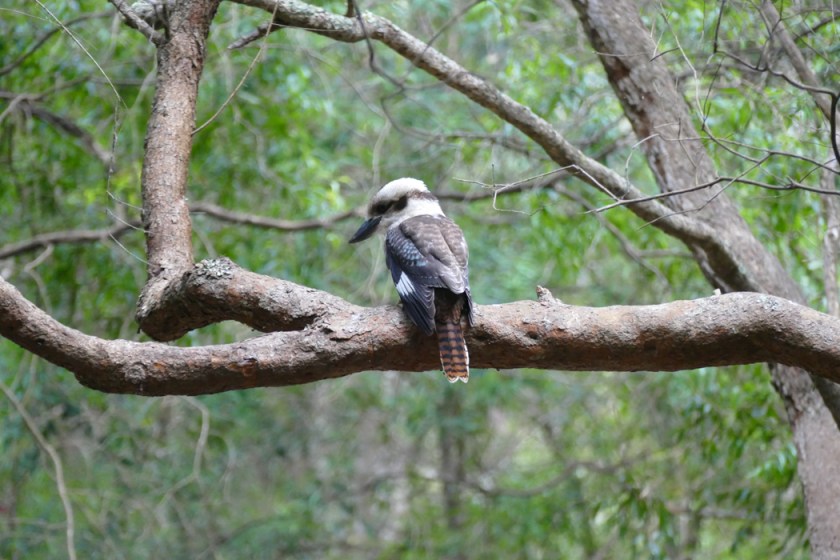
Kookaburra
Kookaburra at Cumberland River


Still in Victoria, we drove along the Great Ocean Road as we had done back in 2014. First stop was at Cumberland River, a great spot where the rainforest meets the ocean.

We did a short walk in the morning and swam in the creek, when distant thunder and first raindrops announced an approaching storm. We decided to head back to the car, speeding up a bit, when suddenly a snake crossed the path just half a meter ahead of me. I stopped immediately and told Dag and Robin behind me to move backwards. We all got a close look at the snake before it disappeared in the bush. I wouldn’t know what kind of snake it was, brown-orange and half a meter long, but it doesn’t really matter. All snakes in Australia are venomous!

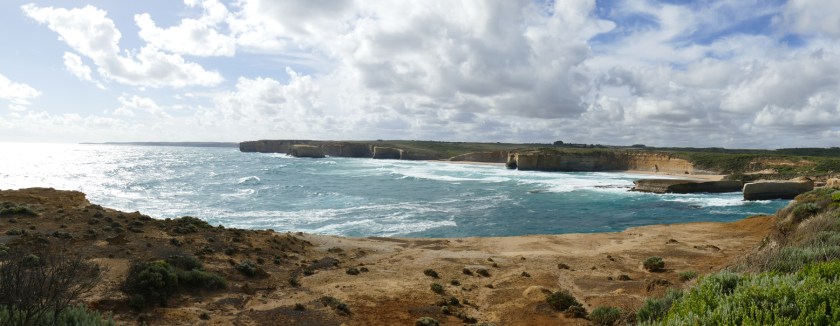
Bad weather and the need for new brakes made us stay in a cabin in Port Campell for two nights – quite nice not to have to put up our tent in pouring rain. We still got a sunny afternoon and explored all the lookouts and short walks at Lord Arch Gorge, making sure not to be there too early to avoid all the Chinese tourist groups driving down from Melbourne for the day.At Loch Ard GorgeGreat Ocean Road

Driving 1500 km the next three days meant long hours in the car, which we managed surprisingly well. Even Robin was coping well, watching films on the iPad, listening to e-books or music, sleeping a bit in between. Adelaide, we just passed through (we had spent 4 days here in 2014). Further north we had the intention to take a ferry over the Spencer Gulf to avoid driving an extra 200 km or so up to Port Augusta. The ferry is marked on our maps, going from Wallaroo to Lucky Bay. But when we knocked at the window at the small ticket booth at the pier, a friendly lady opened the hatch and informed us that the next ferry wouldn’t leave until later this year… That didn’t leave us any choice but driving all the way up to Port Augusta and continue our trip from there.

After all this driving we deserved a break and settled down on a campsite in Streaky Bay, west of the Eyre Peninsula. Our site is on the beachfront of the bay and the view couldn’t be more awesome. However, the water is very shallow and to warm for my taste (Robin wouldn’t quite agree on that, I guess).weekend.jpgOn the way to the beach

Not far from here there is a place called Point Labatt with the largest mainland population of Australian sea lions in the world. We enjoyed watching them with binoculars from the lookout above the beach, secretly hoping to spot a big white shark which are supposed to live in these waters.Point LabattSea Lions

On one of the information signs we read a beautiful dreamtime story which goes like this:

Wardu and Balgurda

Wardu the Wombat was always fascinated by the “Warna” (Sea) and all who swam in it. One day, Wardu wandered down by the cliffs near the Warna and saw Balgurda the Seal swimming and frolicking… just having such a great time

Oh! How he had wished to jump in and join Balgurda in the Warna! Wardu kept coming back day after day and sat on the cliffs watching longingly with anticipation. Balgurda noticed this and warned Wardu that it was not wise to come into the Warna as he did not belong in the ocean and would drown if he did.

One day Wardu’s urge became too strong, he ignored Balgurda’s warning and just jumped straight into the Warna. It was too late now, he could not swim and started to panic as he sank under the water, he was drowning! Balgurda saw this and quickly came to his rescue, pushing him back up on the rocks to safety. Wardu thanked Balgurda graciously for saving his life, he felt very foolish for not listening to his wise advice.

In appreciation, Wardu gave Balgurda his front legs so that he could dig burrows on the “Manda” (Land). In turn, Balgurda gave Wardu his “Yari” (Flippers), so that he could enjoy time swimming in the Warna too. In the end they both enjoyed their new surroundings so much and decided to stay where they were. Wardu and Balgurda

Hospitality

Last week we have had the privilege of staying with friends in and around Melbourne. The hospitality we were experiencing during these days was simply overwhelming!

We stayed with Joye and John from Sunday to Thursday, and the Mitchells from Friday to Sunday. We got to know them along the Gibb River Road in 2014, and kept in touch with both during the past years.

Arriving from Tasmania on Sunday evening, we were picked up by Joye and John at the pier. They had to wait a long time for us because disembarking was slow. We got an escort through the city to their house, John sitting in our car giving Dag directions, while I was keeping Joye company. How nice it was to catch up after all this time. In their beautiful house we had the basement floor to ourselves; to bedrooms and a bathroom soon felt like home.

While John spent half of the following day with Dag and Robin, driving them around to divers shops to buy some camping gear, getting our rear camera fixed and figure out why the solar panels didn’t work properly, Joye and I had other plans. We went to the Australian Open to see Roger Federer that afternoon. No need to mention how much I enjoyed that. It was really a one in a lifetime experience for me!

During the next days we went to the zoo together, visited one of their daughters in the neighbourhood – Robin enjoyed greatly jumping into their pool. When Joye suggested that Dag and I went out for dinner just the two of us, I didn’t even have to ask Robin if that was ok. He couldn’t get rid of us fast enough, and had a cosy evening with pizza, tennis and chess. It amazed me how trusting he was towards them, not really knowing them that well. It tells a lot about what wonderful people they are!Melbourne Zoo

The last day and night we spent in their weekend house in Torquay on the coast, accompanied by their oldest grandson. They never got tired showing us around, taking us to the outlet surf shops so we could buy a wetsuit to Robin, showing us beaches and rockpools, taking us walking along the amazing coast. They never got tired of all my questions about the country, flora and fauna, language and much more. And while the boys were playing, we got plenty of time to talk about our mutual passion of travelling. They gave us countless tips about where to drive and where to stop, what to do and what to avoid during our long trip around Australia.

When we had to say goodbye, it felt a bit like parting from family. Let’s make sure we meet again!

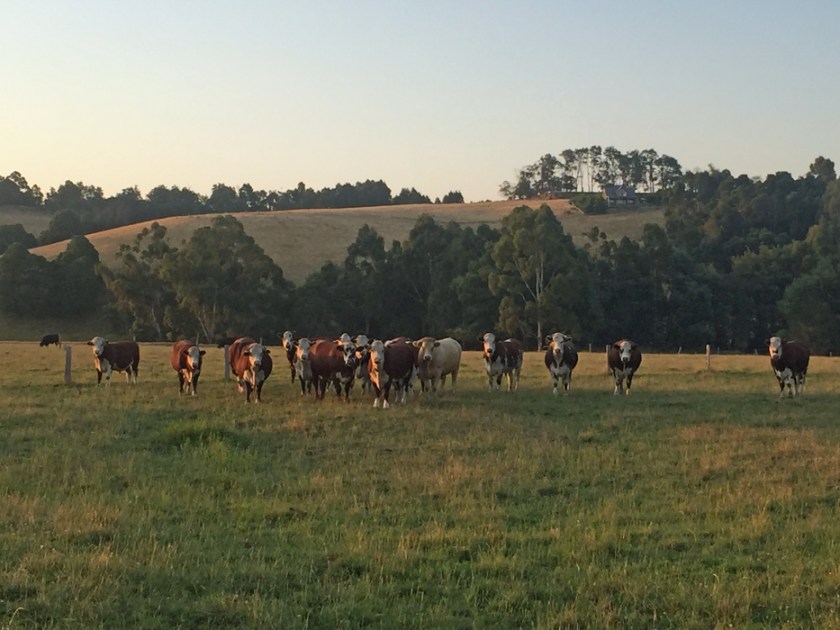
From Torquay we drove east, taking the ferry over Port Philipp Bay from Queenscliff to Sorrento. The Mitchell family have a beautiful little farm just outside Leongatha. It’s a cattle farm with about 70 cows, and we learned a lot about organizing a farm of that size. CattleWe also did some yabby fishing in the muddy pond close by, which especially Robin enjoyed a lot. Probably shouldn’t mention that all the yabbies died over night in the bucket, due to lack of oxygen.

On Saturday they took us to Wilsons Promontory National Park where we did a nice walk, spent hours at the stunning beaches and enjoyed a good picnic. Wilsons PromComing home late afternoon we all were a bit sunburned but in high spirits. The evenings we spent on their veranda, barbecuing, drinking wine and talking.
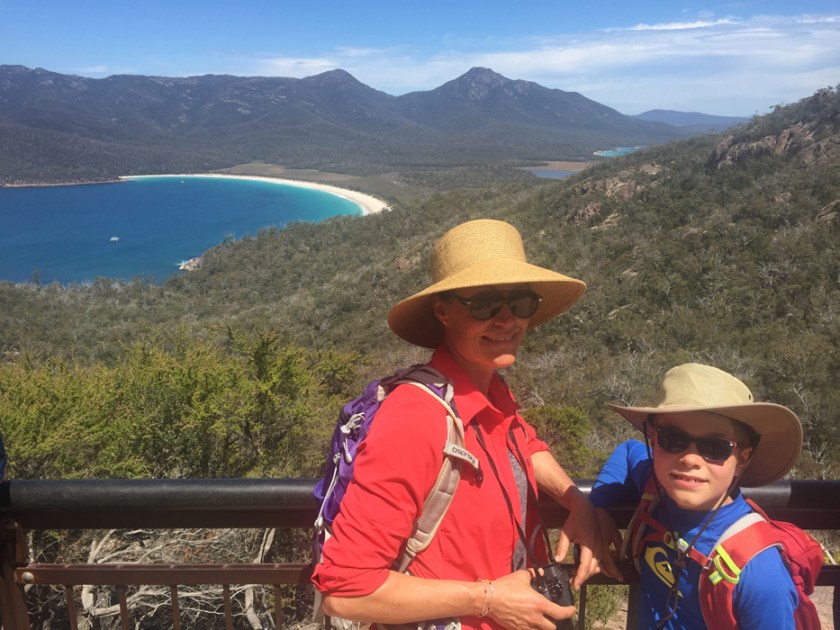
After this week I just felt so thankful and happy about all the friendship we experienced. It’s all about the people you have around you in life, isn’t it! I’ll be having this in my mind when we return to Oslo. Always open our door for like-minded people, enjoy friendship, get personal. So make sure you stop by when we’re back and stay with us for some time!

Goodbye Tasmania

We’re sitting on the ferry back to Melbourne after three wonderful and varied weeks on Tassie. Robin is doing some homework, Dag is reading and I am using the opportunity to write another post.

Before we returned to Davenport from where the ferry is leaving, we spent a couple of days around Coles Bay and Bay of Fires on the eastcoast. Near Coles Bay on Freycinet Peninsula lies the famous Wineglass Bay, voted by several travel authorities as one of the world’s ten best beaches. Crowded carparks, small groups of Chinese tourist and full campsites are the result of this. In Spite of that, we did the Wineglass Bay Walk, 2,5 hours return. It starts moderately steep, up to a saddle from where you have a stunning view over the bay, followed by nearly 1000 steps down to the beach on the other side. We got hot and were looking forward for a swim, only to be disappointed because there were a lot of Bluebottle jellyfishes in the sea. Robin wasn’t too happy on the way back.

Wineglass Bay
Walking to Wineglass Bay

In the Bay of Fires a little further north, we found a great bush camp close to the beach, and finally could jump into the waves. It was a very hot day, almost 40 degrees, and the cool water was wonderful. Shortly after, within an hour, the wind turned and temperatures dropped almost 20 degrees – this is Tasmania in a nutshell. Unpredictable and quickly changing weather!

Bay of Fires
Bay of Fires

Bay of Fires 2

The first chapter of our long trip is coming to an end. We have seen a lot of Tassie, but by far everything. I certainly wish to come back one day and discover more!

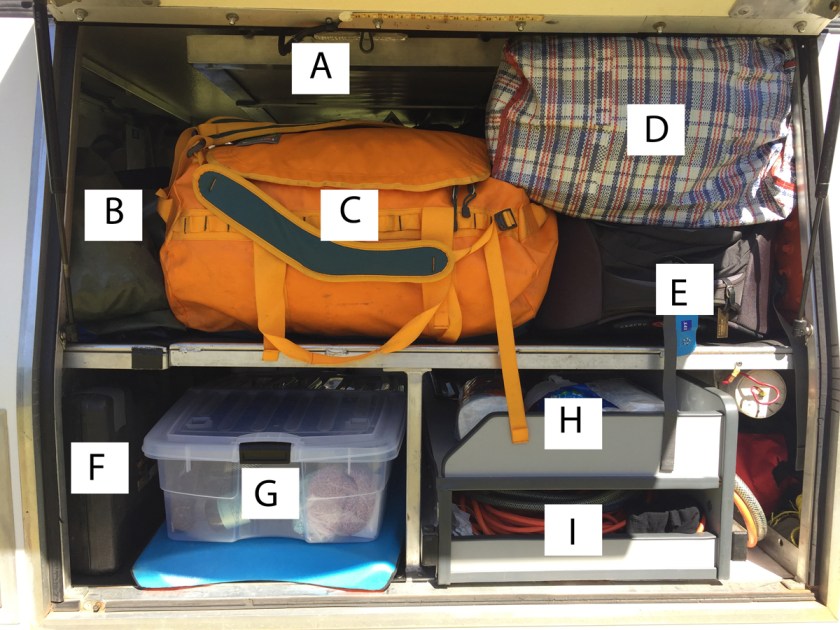
Before I let you go, I thought I could tell you a bit about our car and how we’re organized. As you can imagine, there is not too much space available, and things must be stored systematically. So here is how we live:

Kitchen
Left side of the car

1 Dry food (pasta, rice, coffee, tea, cans, olive oil etc.     2 Dishes, cutlery, pans, glasses. Behind it stand two 10 l water containers.     3 Fresh food (fruits and vegetables, bread)     4 Kitchen drawer (2 gas burners, sink)     5 Kitchen supplies (kitchen paper, serviettes, aluminium foil etc)     6 Fridge     7 Robins school books     8 3 camp chairsBag with stuff we don’t need daily

EquipmentA Camp table     B Sidewalls and floor for the tent around kitchen     C ‘Corina’s and Robin’s clothes (all organized in bags)     D Sheets and pillows     E Dag’s clothes (also organized in bags)     F Tools     G Toilet stuff and first aid     H End of kitchen drawer     I Cables and hoses

In the car we keep cameras, binoculars, laptop, maps and guidebooks for the current area etc. The swag is being fastened on the roof rack. RoofFirewood and rubbish is transported in to separate bags tied to the spare wheels on the back of the car. And that’s about it. Believe it or not, we’re not missing anything! Except for maybe an extra table to use when cooking. We’ll stop by a camping gear shop when we’re in Melbourne.


Hobart and eastwards

Time flies and we are already in our last days here in Tassie. After leaving the remote east coast we drove to Hobart where we had booked a hotel already back home in Norway. You can imagine how much we enjoyed a hot bath, a good bed, TV (Robin), breakfast buffet and a solid roof over our heads when it was pouring down outside on Saturday. Nevertheless, we enjoyed Australia’s second-oldest city and southernmost capital. It’s a beautiful place, rich in colonial architecture, good museums (especially MONA), lively markets like the famous Salamanca Market, and top-notch food.

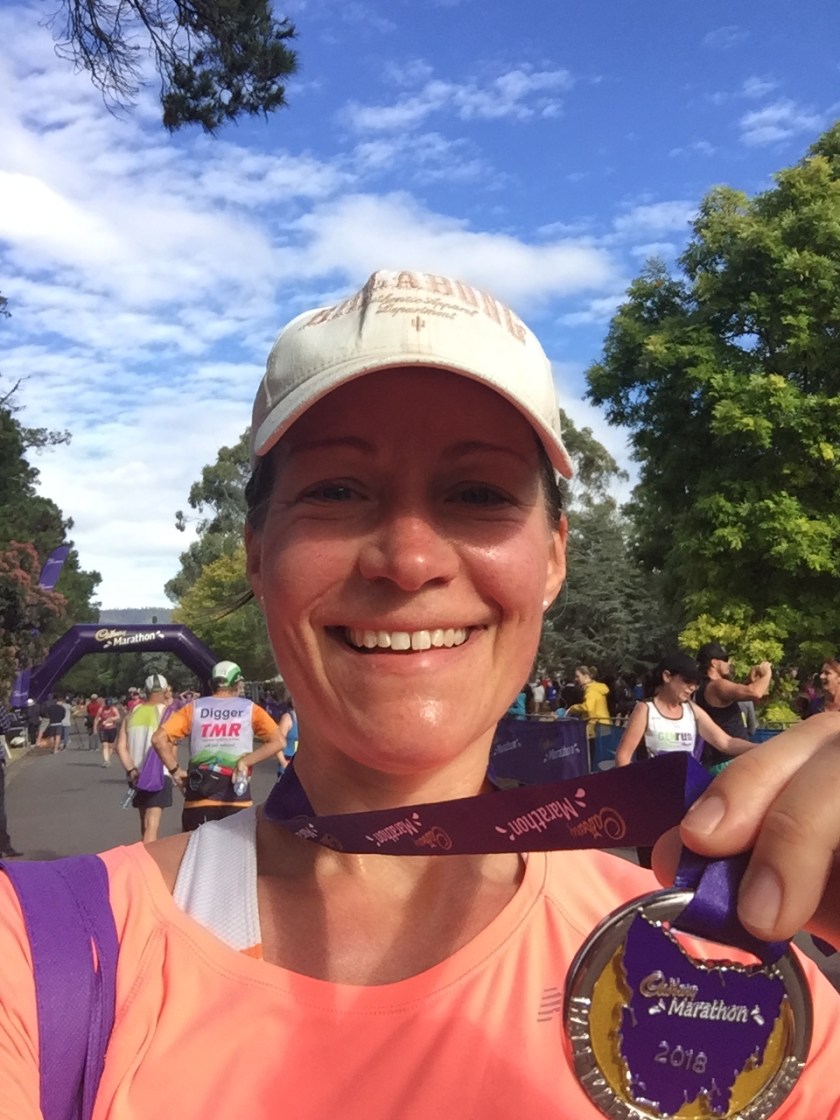
On our second day the weather was pleasant, which was especially nice since I was running the Cadbury Half Marathon early Sunday morning. I must admit that I was asking myself several times why I would bother getting up at 4.30 on a Sunday morning, only to be freezing for the next hour waiting for the shuttle bus to take me and lots of other crazy people to the start. But once running, with the sun in my face and feeling the spirit, it was a great experience!Cadbury Marathon 2018

We could easily have spent several more days in Hobart, there’s plenty to see. But there’s many other places we want to visit before leaving Tassie, so Monday morning we drove eastwards to Port Arthur.

One of the 11 Unesco World Heritage Australian Convict Sites, Port Arthur Historic Site on the scenic Tasman Peninsula was a brutal convict prison in the early 1830s. We joined a short guided tour and then wandered around by ourselves, trying to imagine how life must have been here as a convict sent all the way from Europe. The remains of different buildings like the penitentiary, asylum, hospital, cottages for the admirals and church are situated in a beautiful landscape and it wasn’t easy to figure out what a harsh place this must have been.Port Arthur

The next day we booked a three-hour long cruise around Tasman Peninsula. We all got long red coats against the wind and water when entering the small powerful boat. The weather couldn’t have been better and we enjoyed the hours on the sea. The coast is famous for its cliffs, caves and rock formations. At Cape Pillar at the south end, the sea cliffs are 300 metres high! Can you imagine that some people climb on these rocks?! They must be out of their minds… On the way we saw seals, dolphins and all kinds of sea birds. It was really amazing. Check out the little film here https://vimeo.com/130409494 to get a good impression.

Another highlight was our trip to Maria Island, a short ferry ride off the east coast. We rented bikes on the island and had a great time exploring the impressive scenery on well-maintained dirt roads. There are quite a few famous spots on the island, like the Painted Cliffs, absolutely stunning sculpted sandstone cliffs, stained with iron oxide in many colours. White sand beaches and the azure sea reminded us of Greece and we spent an hour or two collecting shells and watching small black crabs. And just before we had to catch the last ferry at 5, we finally saw our first wombats. They look like cuddly big teddy bears and were not shy at all.

The last three days will try to fit in two more famous sights: Wineglass Bay and Bay of Fires. Cradle Mountain we won’t be able to see, so there’s a good reason to come back another time!

Our ferry back to the mainland leaves Sunday morning at 9.

Mining towns in western Tasmania

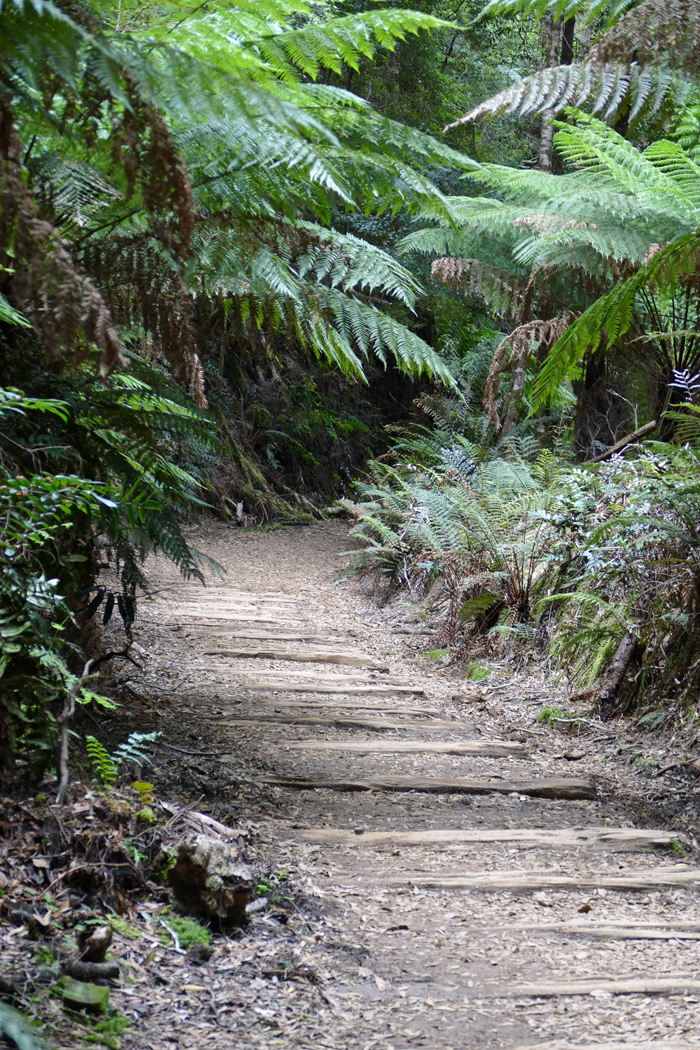
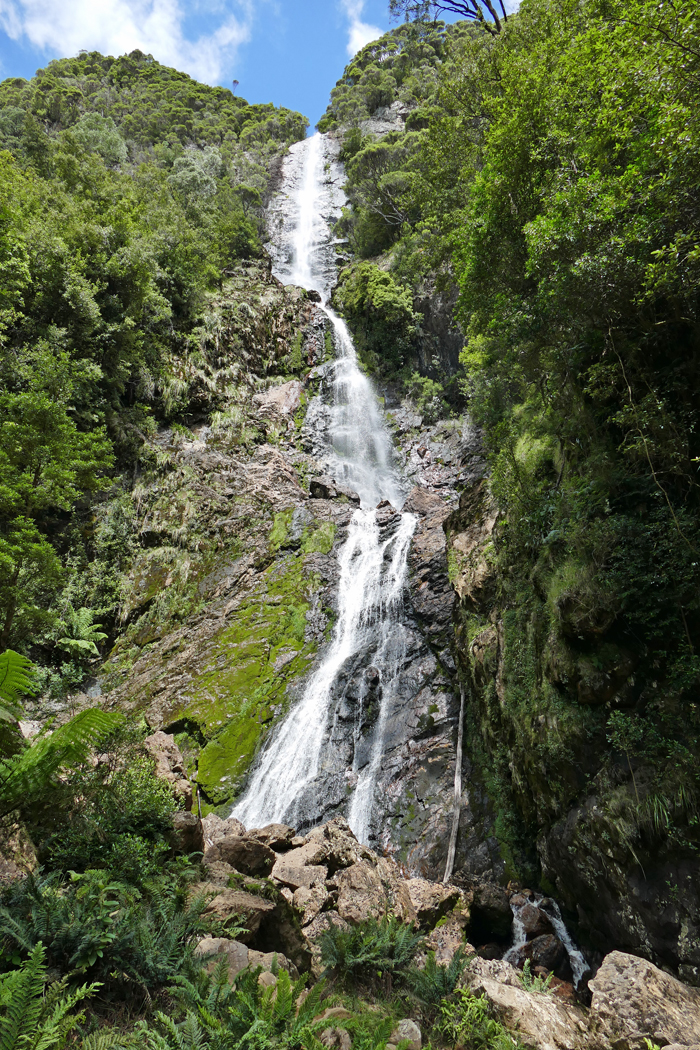
Tasmania is home to dozens of abandoned settlements, shrouded in forests and steeped in history. Where had been booming mining towns, the ruins are barely noticeable today due to lush vegetation. We drove by Williamsford in search of the remains of a town of once 100 inhabitants. The local mine closed as late as 1986, but there was nothing left except for some foundations for the haulage system. Close by starts a beautiful track to Tasmania’s highest waterfall, the Montezuma Falls. The track follows the route of the tramway from the 1890’s that transported the ore, but also timber down to Zeehan. We walked through the beautiful forest and were amazed about the 104 meters high waterfall.

The old Tramway Track
The old Tramway Track turned into a walking path
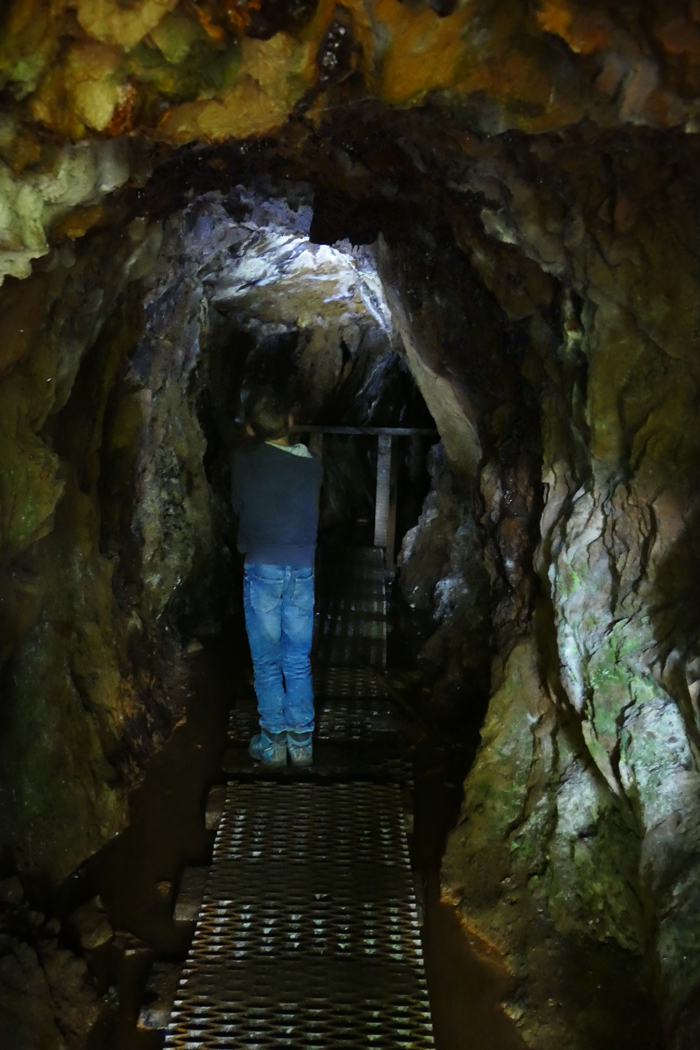
Old Mining Shaft
Robin is fascinated by an old mining shaft
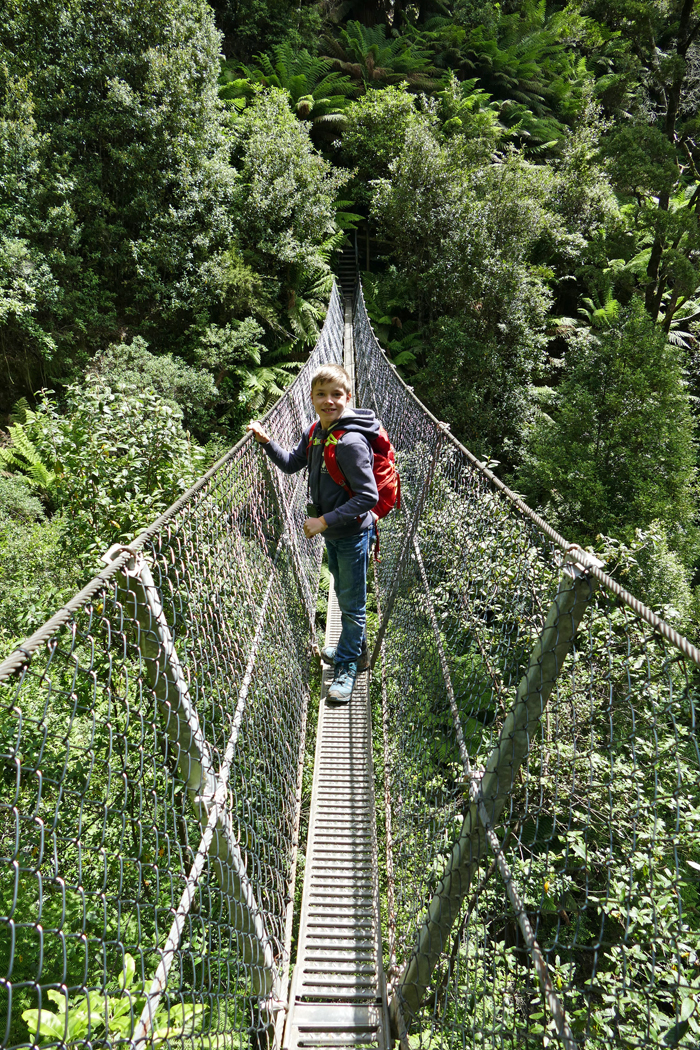
Hanging Bridge at Montezuma Falls
Hanging bridge at Montezuma Falls
Montezuma Falls
Montezuma Falls, 104 m tall and the highest in Tasmania

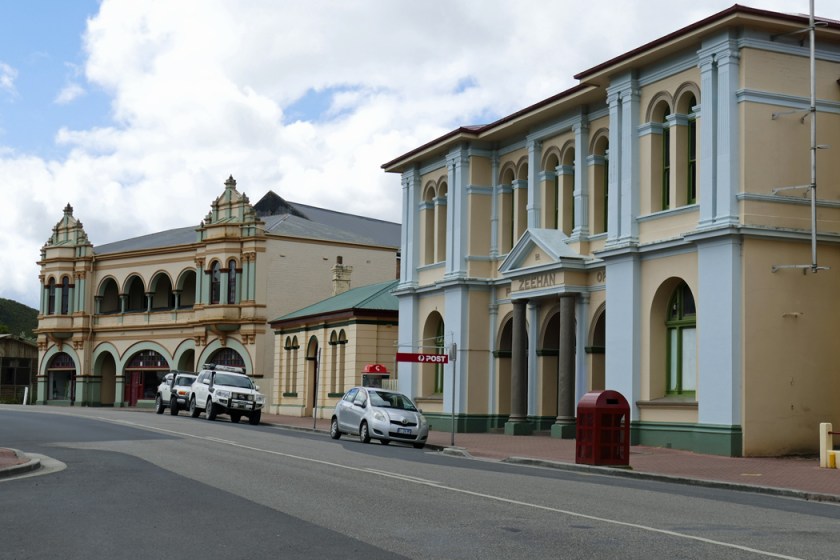
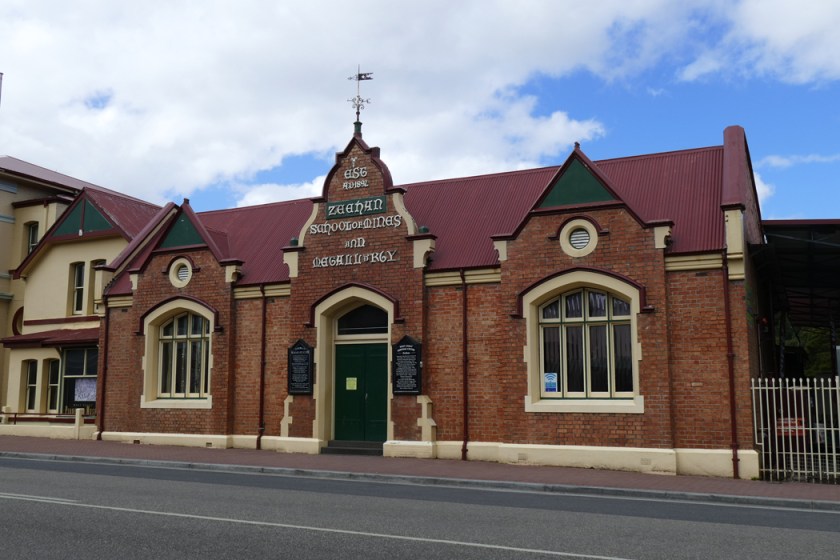
Zeehan, commonly known as the Silver City, has been a town of great prosperity, education and entertainment, and reached a population of 10’000 people, 27 pubs, several hotels, an own stock exchange and the famous Gaiety Grand Theatre seating 1000 people. We were really excited about visiting this place, though got quite disappointed. The main road is deserted, only a handful of shops are still open, the rest closed for good. People live in shabby houses outside of the old town centre, or in monotonous barracks belonging to the mining company. The beautiful buildings of the Gaiety, School of Mines and Metallurgy and Police Station stand there like a scenery of a long-forgotten play. Only passers-by like us visit the excellent museum telling about the fascinating history about the west coast.

Main Street Zeehan
Main street in Zeehan with The Gaiety Theatre on the left
School of Mines Zeehan
School of Mines in Zeehan

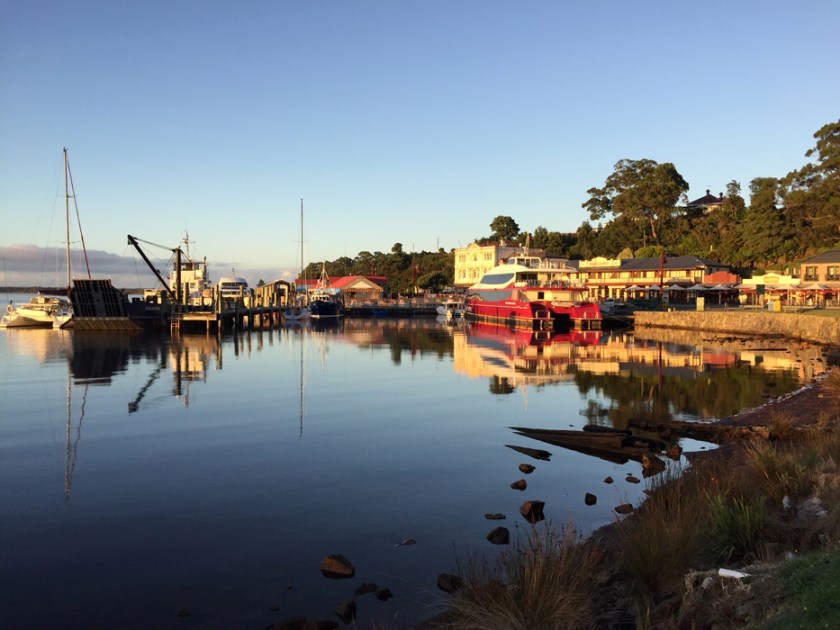
We stayed for a few days in Strahan, a pleasant little town nestled between the waters of Macquarie Harbour and the rainforest. The weather turned sunny and warm and we enjoyed hanging around the campsite and nearby beach doing as little as possible. Robin learned to play cricket with a bunch of Australian kids and had lots of fun with them.

Strahan
Harbour front in Strahan

From here we are driving towards Hobart, where we will be spending the weekend.


Tasmania’s northwest and the Tarkine

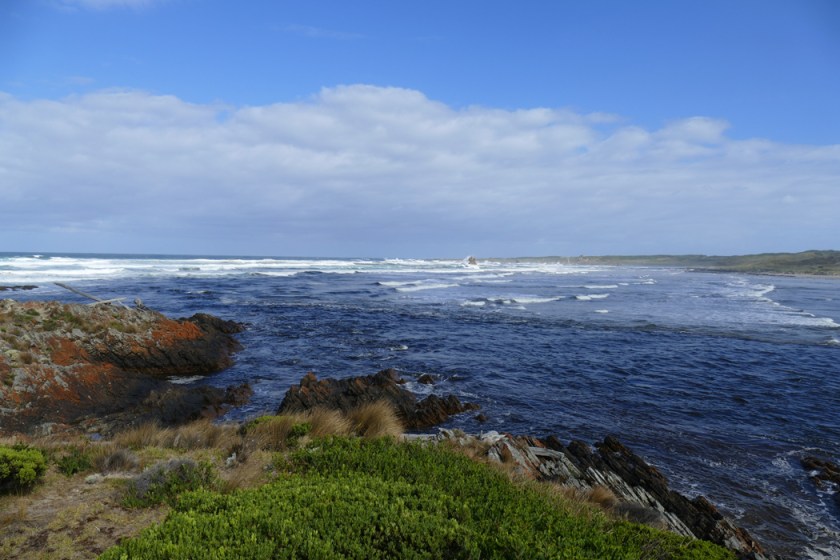
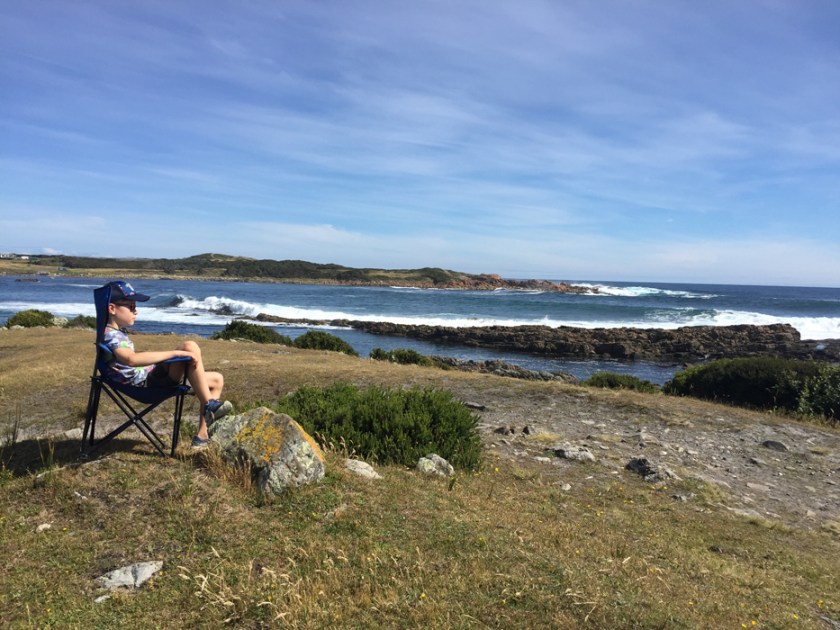
After a couple of days in Stanley we headed west to the very end of Tasmania. There’s quite a few famous surf spots like Green Point and Bluff Hill Point. We saw the waves, wild and powerful, but no surfers in sight. I would hardly dare getting into the water until my knees, so the thought of surfing here is quite frightening for me (apart from the fact that I’m not a surfer at all…). But we loved strolling along the beach, watching the ocean and feeling the remoteness of the place.

Gardiner Point
Gardiner Point

Wild ocean

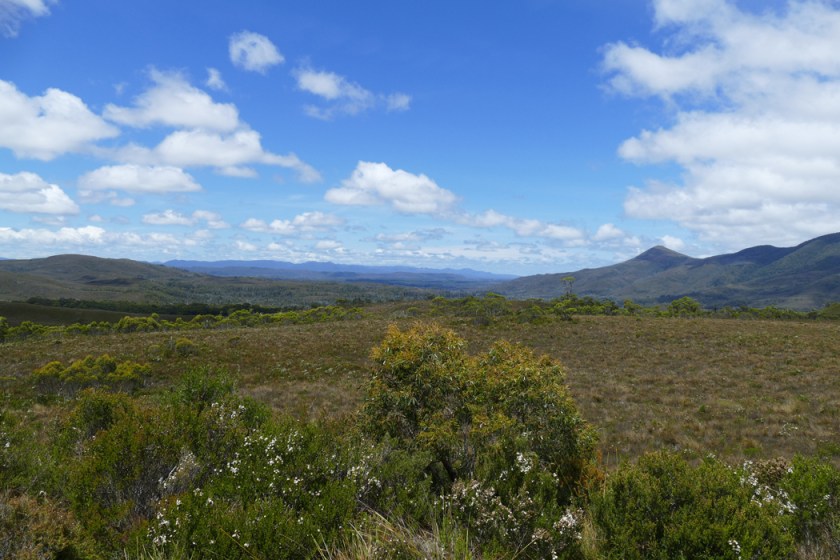
Then we left the coast and drove into the Tarkine. The Tarkine is an ancient landscape of rainforests and rugged button-grass plains, said to be the most diverse wilderness area in Tasmania. It’s a globally significant ecosystem that encompasses the largest intact area of temperate rainforest in the southern hemisphere. We followed the Tarkine Drive to the East, stopped here and there, doing short walks into the forest. Without the marked path, you would be completely lost within a few minutes. The forest is extremely dense, and there is no point for orientation. We loved all the shades of green, all the tree-trunks overgrown with moss, fungus in different shapes and colours, and birds calling. Often, we heard the Kookaburra, an absolutely incredible noise (if you’re not familiar with it, make sure you listen to one on Youtube!).

Bushcamping
Bushcamping

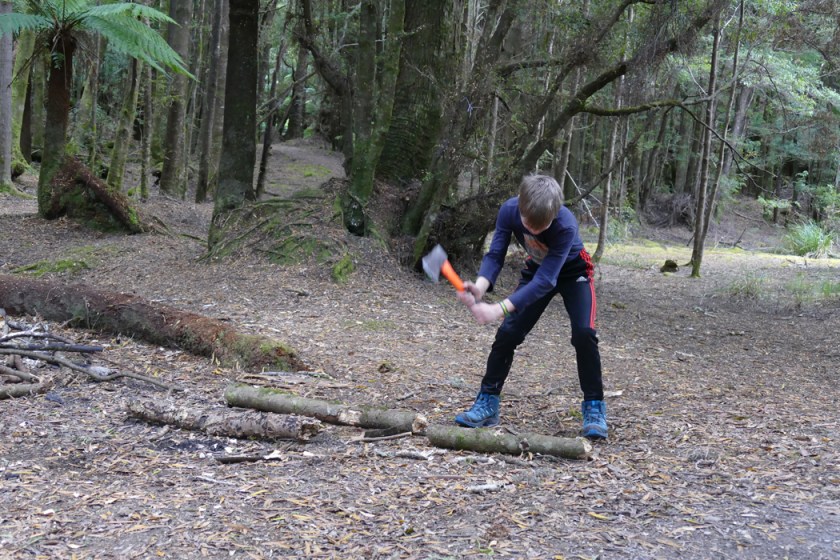
At work

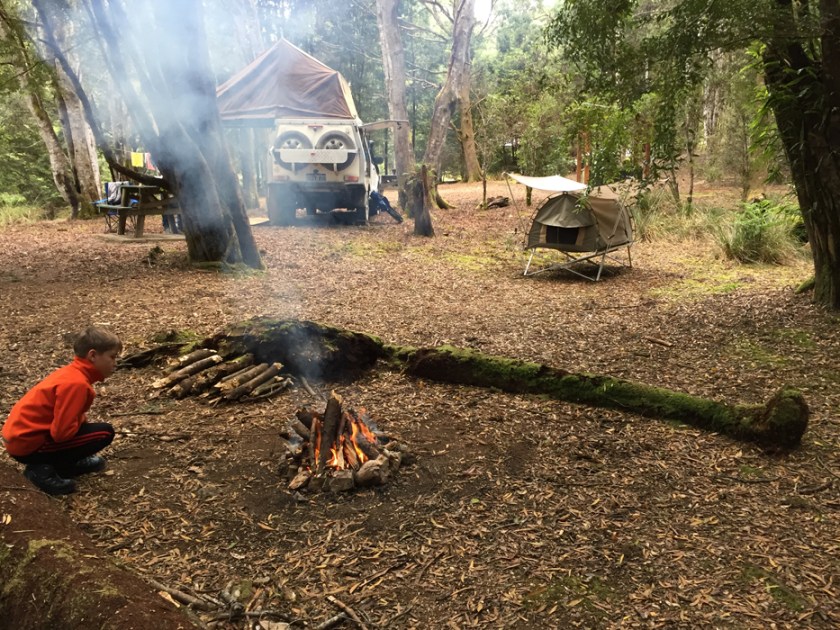
We put up our camp for the night in the wilderness, made a campfire and were so happy being here and experiencing this. It was chilly but the fire warmed us. We didn’t have a bathroom but I could wash myself in the close rivulet (Dag and Robin thought it was too cold). And in the morning it was drizzling, but we have rain jackets. Still it was beautiful, we had all we needed and the warm coffee tasted even better.

Next on our trip we drove along the Western Explorer, or ‘Road to Nowhere’, as it was called before. It is supposed to be Tasmania’s most excitingly remote road journey, though since its upgrading to a wide gravel road its now a well-established means of traversing this rugged part of Tasmania. The views over the buttongrass wilderness of the Arthur Pieman Conservation Area are splendid.Along Western Explorer

One night we spent by the beach in Granville Harbour. The afternoon was warm and the ocean wild with waves up to 4 metres. We made a campfire but were unlucky with the wood we had collected – it smoked more than it burned. After a while we put in our Australian cooking pot filled with meat and cut-up vegetables. It was the first time we tried this – and it turned out that we need some more practice… The meat was good, but the vegetables were pretty black. Not enough liquid I guess. Luckily, we had some other food in reserve.Grandville Harbour

That night turned out to be quite a challenge: at midnight, I woke up for the first time because of the strong wind shaking my swag. The storm got stronger and stronger, and some hours later we decided to take down our roof tent, worried that it could get damaged. Robin and I spent the rest of the night together in the swag, listening to the howling wind. Dag tried to get some sleep in the car. Next time we’ll try to find a spot which is a little less exposed!

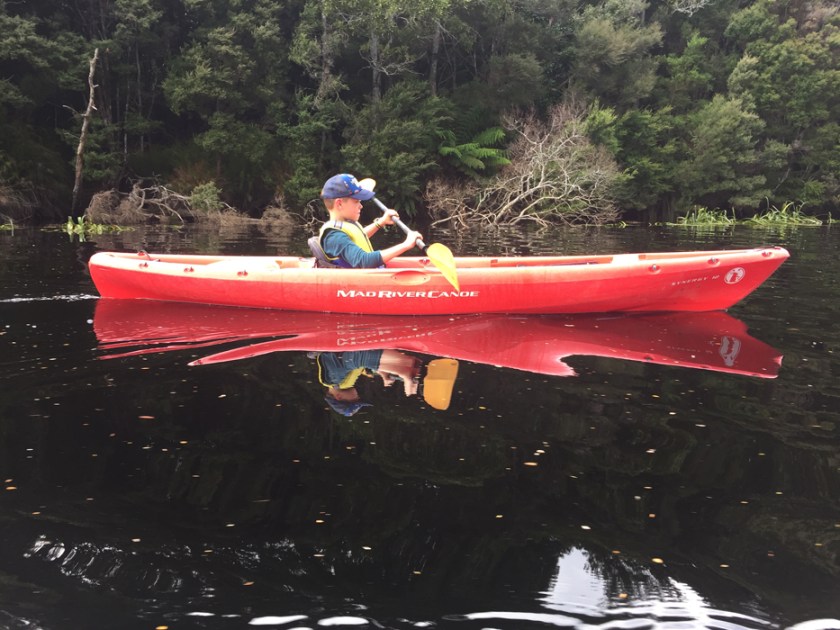
Good thing we had booked the next 2 nights on the little campground in Corinna, a totally remote place on the riverbanks of the Pieman River, a humming town during the gold-rush, now more or less abandoned. Here we didn’t just enjoy a good dinner at the little restaurant, we also learned the following: Corinna means ‘Young Tasmanian Tiger’ in the local Aboriginal language. Pretty cool name I must say!

On Pieman River
Paddling on Pieman River

From here we we’ll continue southwards along the west coast. After many days in remote areas, what we need now is a camping site with washing machines. We’ll find that in Strahan, where we also can stock up with food and diesel and publish this blog post.


From Sydney to Melbourne and over to Tasmania

It’s a 900 km drive from Sydney to Melbourne and we used two days for that distance. Quite coincidentally we spent the night in Gundagai, a small town 390 km southwest of Sydney. The old town was built on the Murrumbidgee flats and therefore often flooded. In 1852 it was destroyed by a flood 4 to 5 metres deep across the flats. After an even bigger flood the year after, the whole town was rebuilt higher up. The historic buildings along the main road might be a little shabby, but we loved its colours and architectural details.

Just outside the town centre we went to see two old bridges over the flood plains, the first one from 1865, the second (railway) from 1903. The construction made of timber and cast iron is beautiful and I hope they manage to fund the sorely needed renovation.

After stopping at the old train station nearby, we drove southwards direction Melbourne.
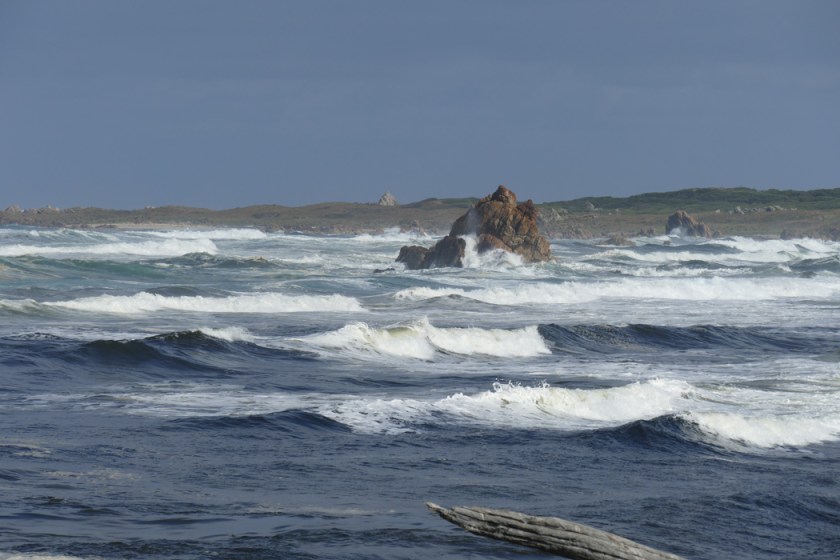
The second night we spent in Seymour where a massive storm passed just as we were shopping at Coles. The roof started leaking after a few minutes, water flooded inn everywhere and the shop had to close soon after. Parts of the town were also under water, which wasn’t a problem for our car. But setting up our tent and swag wasn’t tempting, so we rented a cabin for the night.

Only 100 km away from Melbourne, we arrived there early the next day, parked our car at the ferry terminal and took the tram to the centre. The rest of the afternoon we spent strolling around through central Melbourne, visiting some of the famous street art sights and walking along the Murray river.Street Art Melbourne

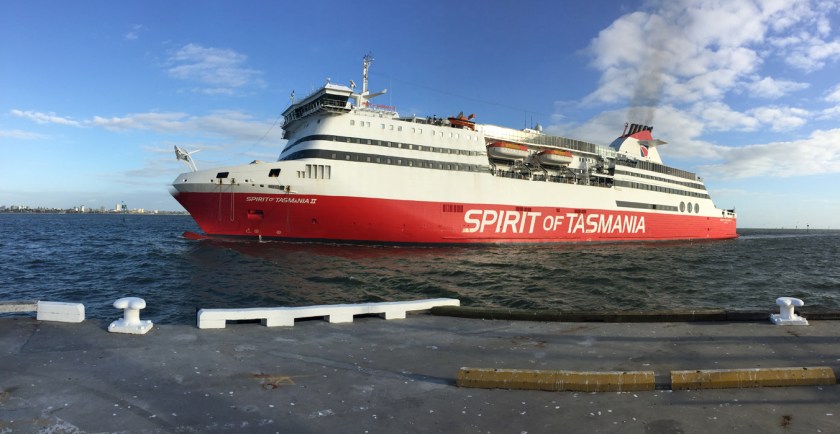
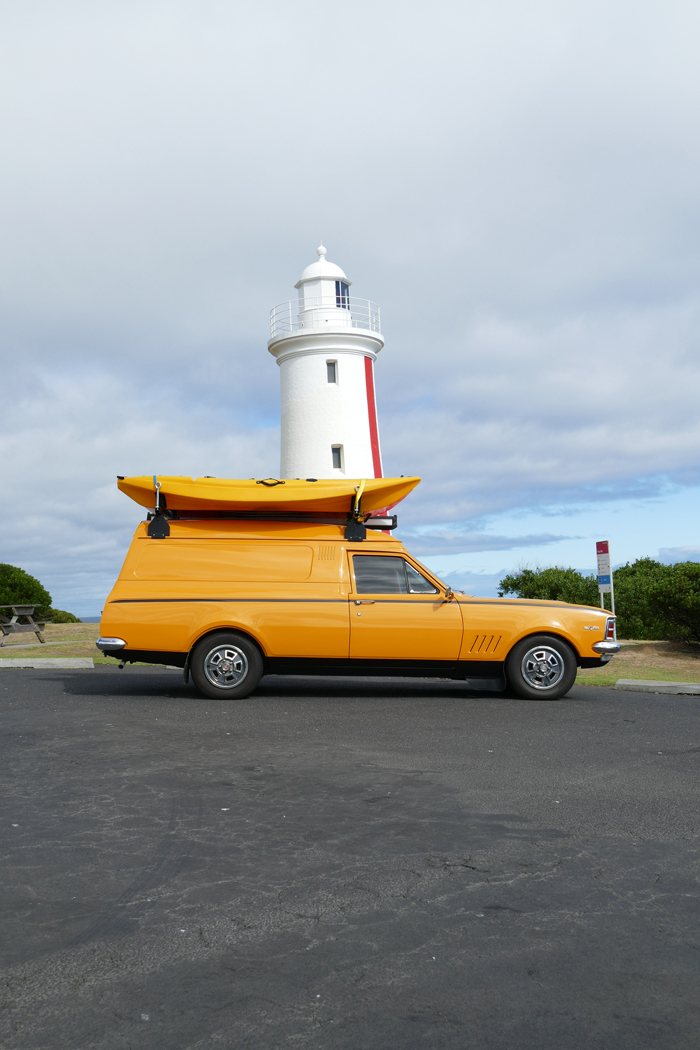
We took the overnight ferry (sleeping well despite stormy weather) arriving Devonport in the North of Tasmania early next morning.Spirit of Tasmania After a great breakfast at Laneway Café we drove west along the coast to Stanley, stopping here and there at viewpoints and small villages. The landscape in Tasmania’s northwest is wild and remote, the beaches white and the water turquoise at places. One could almost forget where you are, hadn’t it been for the weather. One minute the sun is shining, the next it drizzles. And strong wind is blowing constantly.Yellow car at lighthouse

Stanley is as small sleepy town with many brightly painted cottages, sheltering in the lee of an ancient volcano, the Nut. I can recommend the movie The Light Between Oceans, which was filmed here in 2014.

We settled down at the local campsite, celebrated New Year’s Eve with a great dinner at Xander’s restaurant and are now enjoying a quiet day doing as little as possible.Home Sweet Home

Happy New Year everybody!

Christmas in Sydney

Only 4 days spent in Sydney and the Norwegian cold and dark already feels so far away.

After a 26 hours long trip from Oslo to Copenhagen and Singapore, we landed in Sydney Saturday night, 10 hours closer to Christmas than back home. All the luggage arrived, including my beloved swag, that had to be sent as special luggage due to its dimensions. A taxi drove as to Manly, where we have rented a beautiful studio in Kangaroo Street. What better address could we get for the first days down under. 

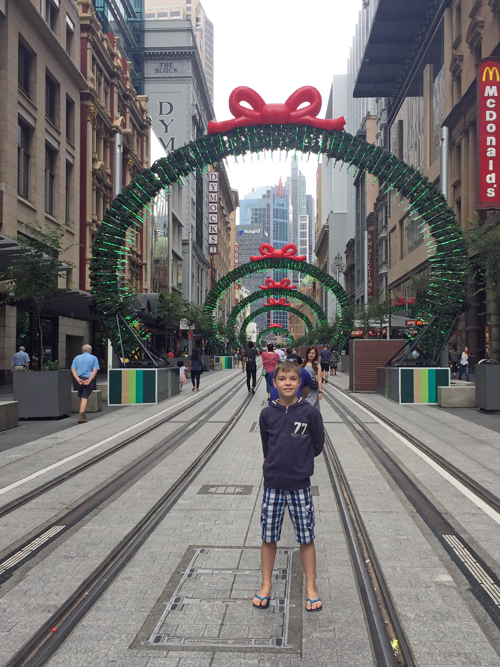
Noisy Rainbow Lorikeets in our small garden woke us up on Christmas Eve. I just love these birds; the colours are fantastic and I can’t get used to having these beautiful birds in the garden instead of sparrows and magpies. After brekkie, as they call it here, we went straight to the beach and enjoyed the waves. Of course, Robin had to get a boogie board later the same day and is having great fun with it. We had to remind ourselves again and again that it was Christmas Eve – everything was so different than home. The Australians prefer to spend the day at the beach, many of them with Santa Clause Hats. Christmas dekoration

The following days we spent both in Manly and downtown Sydney. Weather could have been better to be honest, but it feels wrong to complain. It was just a little too cold and windy to go to the beach, but perfectly fine for other activities, like the Sydney Aquarium.  

Yesterday we spent most of the day picking up our Toyota Hilux. Paperwork, checking the car, and choosing all the camping gear took time. Right now, I have no clue how we ever will manage to store our luggage, food and water supplies and all the other equipment that follows. I guess we’ll use the coming days and weeks to figure out some smart systems how to organize ourselves.   Hilux

So now we’re off, hitting the road towards Melbourne. Our ferry to Tasmania is leaving Saturday evening, which leaves us two and a half days for nearly 900 km.