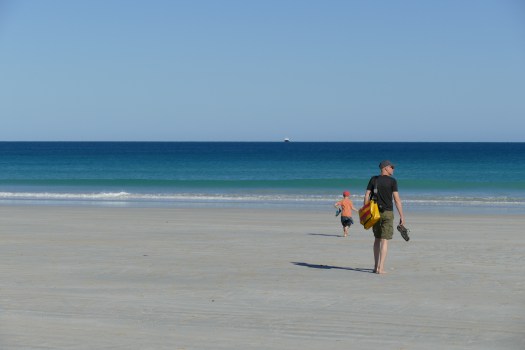
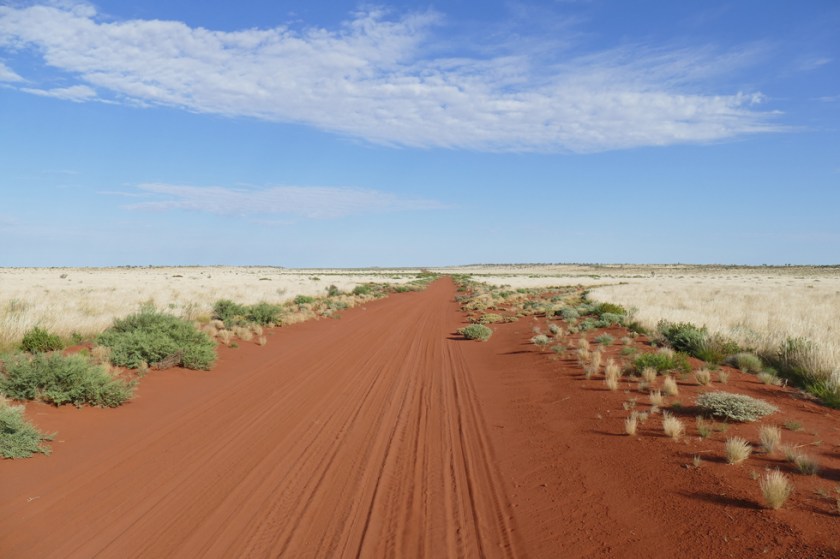
 After the West Coast, the next destination on our trip was the Red Centre and there are two ways of getting there. Either driving further up along the coast to Broome, then inland to Halls Creek and along Tanami Road to Alice Springs. All on pretty good roads, with gas stations, shops and other cars along the way, approximately 2300 kilometres. Or crossing the Gibson Desert from Marble Bar to West MacDonnell National Park. Really remote but only around 1000 kilometres. We chose the shorter way, even if that meant days without seeing many other vehicles, unsealed roads, no comfort like toilet or shower, no mobile phone coverage. It took us some more planning, but we got many good advices from our friends in Melbourne that had done the same trip a year ago. We got the necessary permits to transit Aboriginal Land (one for Western Australia and one for Northern Territory), enough food and water for six days, figured out how far we could drive each day and where to get diesel. We felt well prepared and were looking forward to getting started.
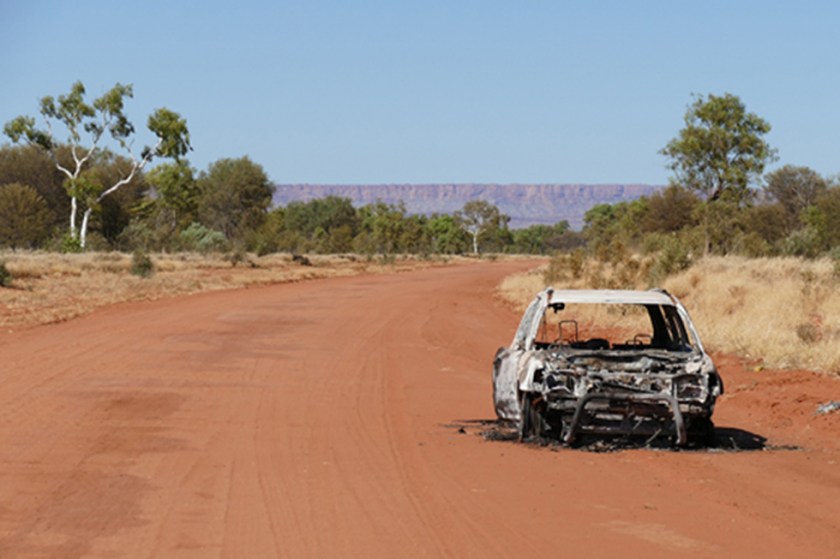
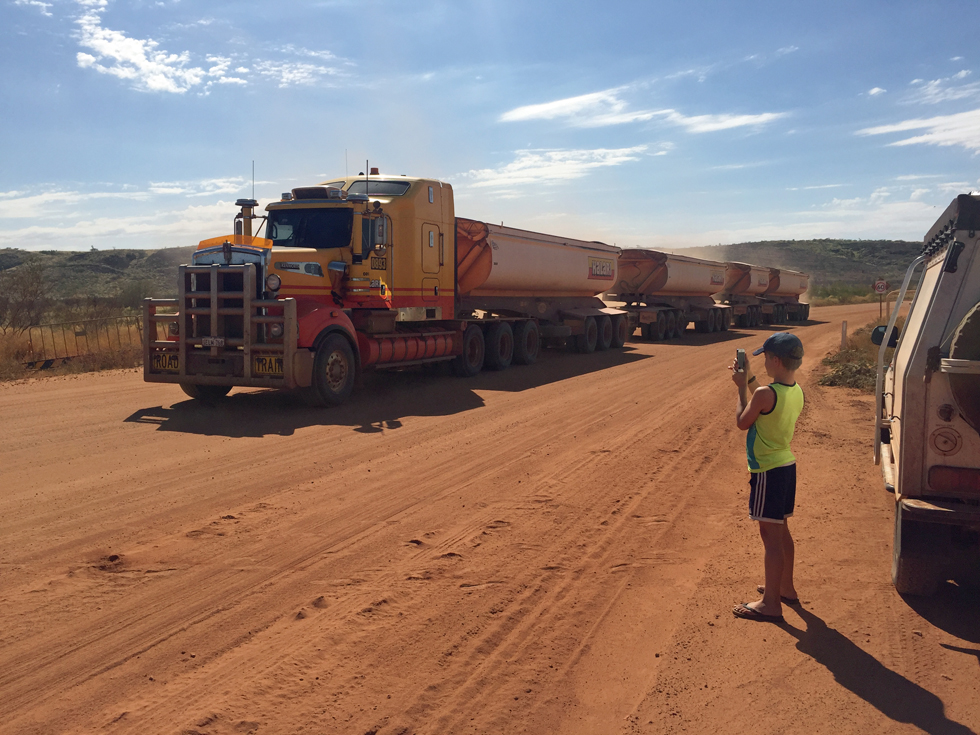 The first part from Marble Bar was on bitumen roads due to mining activities in the area. We met many road trains and service cars, but no other travellers. After passing the last mining site, we continued on a good gravel road until Punmu, our first Aboriginal Community. We didn’t really know what to expect – the map told us that there would be a gas station, shop and possibility to stay overnight. Driving into the village was not a nice sight, garbage and car wrecks everywhere, rundown houses. We found the shop and went in, adults and children were hanging in front of it, curiously looking at us. The lady behind the counter, a white Australian, seemed surprised when she heard that we were planning to spend the night in the area. She sent us over to the office, where her husband, the community’s manager, would get some diesel for us.

He was a talkative guy, telling us about how busy the last couple of weeks had been. There had been many break-ins in houses and cars; he explained it with the fact that it is school holidays at the moment. There are 70 people living in this community and they break in to each other and steal from each other. We couldn’t imagine how it must be to live here. One thing was very clear to us though: we would not stay anywhere near this community for the night. After filling diesel at a locked-up tin shed and driving back to the shop to pay, we drove another 70 kilometres to a nice spot close to Lake Auld, one of several salt lakes in the area.
The coming days we stopped at two other remote communities, Kunawarritji and Kiwirrkurra, and got a better impression there. The procedure of refuelling the car was always the same, first stopping at the office and/or the shop to get in touch with the man with the keys to the pump, driving to the pump and filling, and driving back to the shop to pay.
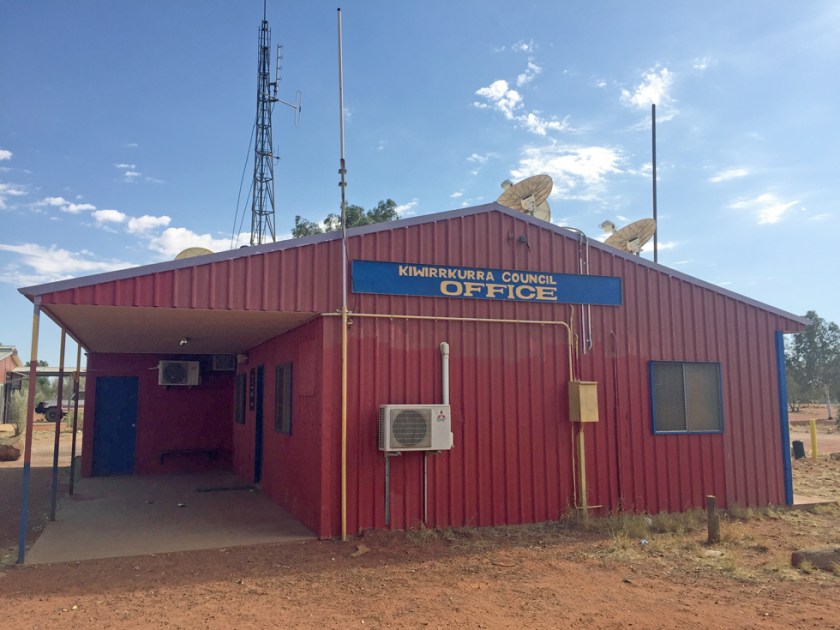
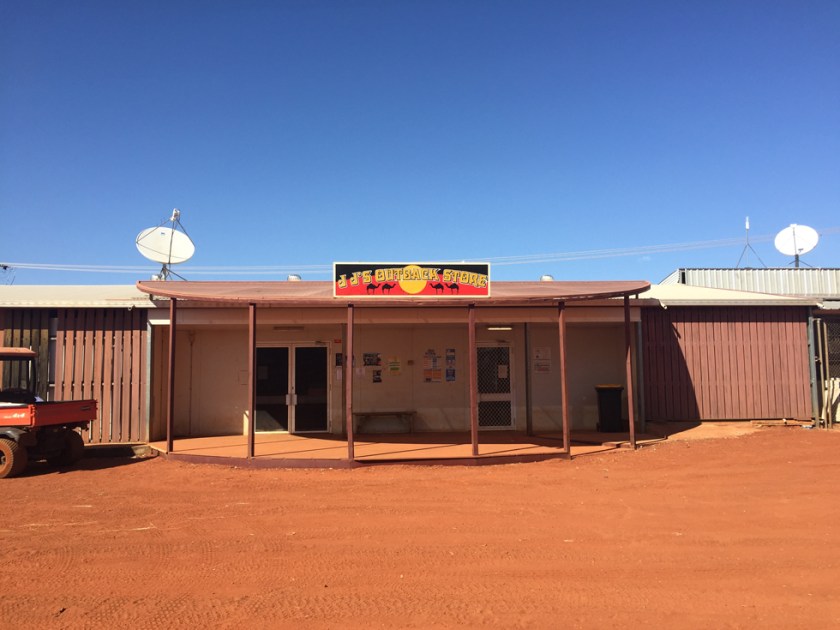

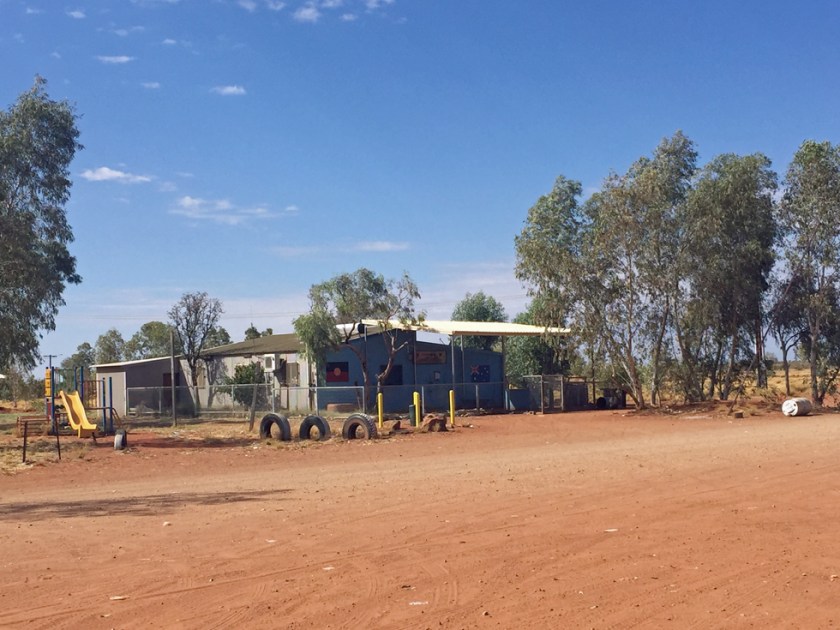
Everything is locked up, there are bars around all the windows at the shop and office, fences everywhere, which is a clear sign that stealing and vandalism is a big problem in the communities. And why is there garbage everywhere, destroyed furniture and car wrecks? We are always advised to respect their country, take all the rubbish with us, which we gladly do! So why are they living like that? I am aware of the fact that this is a huge problem and that it will take many more years, decades probably, until the situation will get better. I am just sad to see how it is now. And I have a lot of questions that won’t be answered. But I’ll leave it at that for now.
The second night we found a nice spot at Jupiter Well surrounded by wonderful desert oaks – together with a million flies…


The third night we stayed close to Mount Liebig on a beautiful site a few hundred metres away from the road. During the nights we heard the dingoes howl, a sound that reminds a lot about wolves.


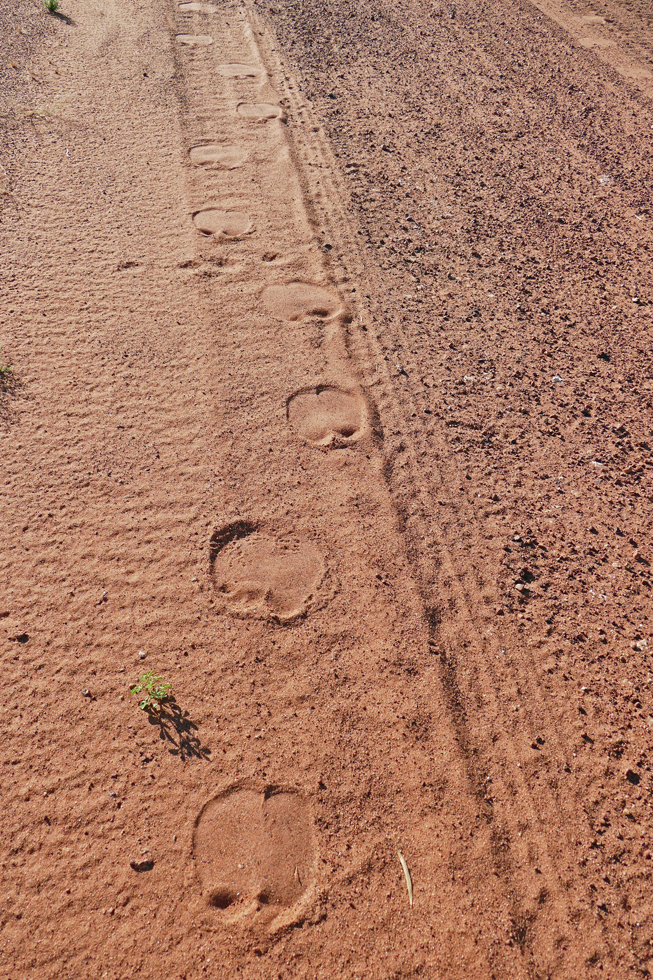
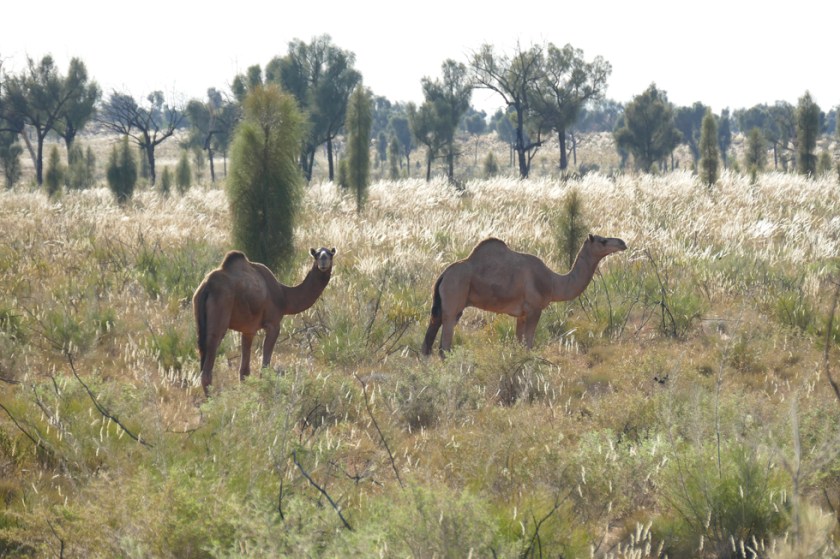
On Gary Junction Road we saw many camel tracks in the sand, and after trying to spot them for a couple of days we finally saw them on the road just in front of us. They’re wild camels descending from the camels once used when railways across Australia where built. After the work was done, the camels were released and since then they live wild in the centre parts of Australia. 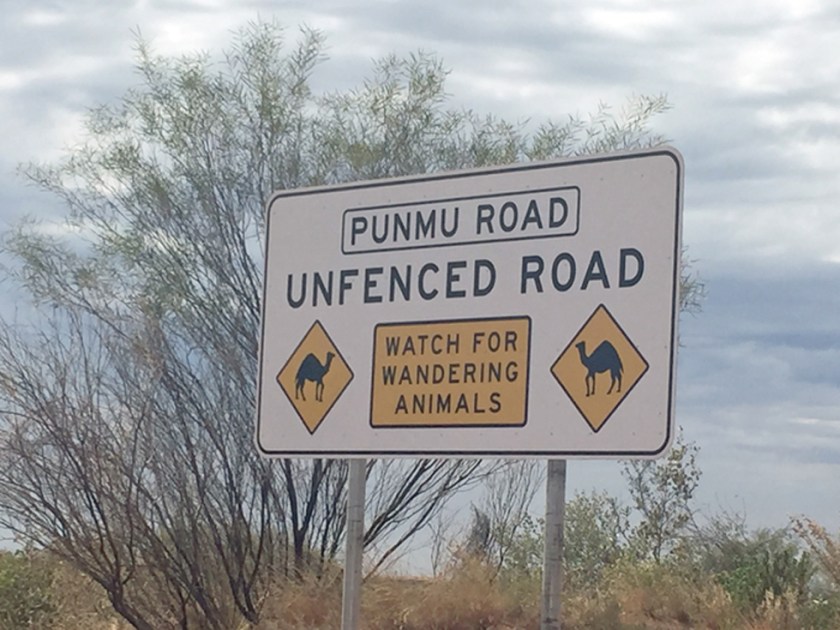

As you can see on the photos, Gibson Desert is quite different from what you first might have in mind when you think about a desert. It is surprisingly green, with low bushes and even trees growing in the red sand. The closer we got to the West MacDonnells, the more scenic became the landscape with mountain range after mountain range dominating the views. Quite beautiful!
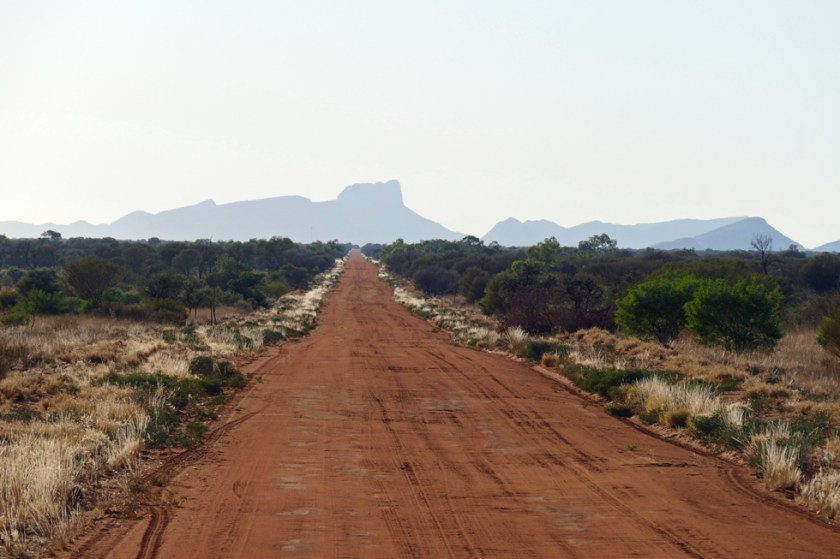
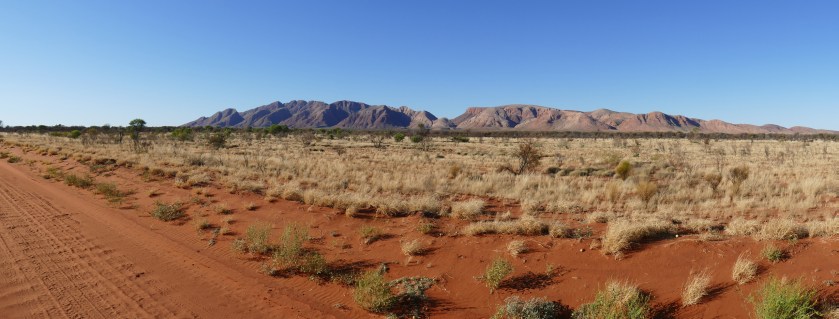
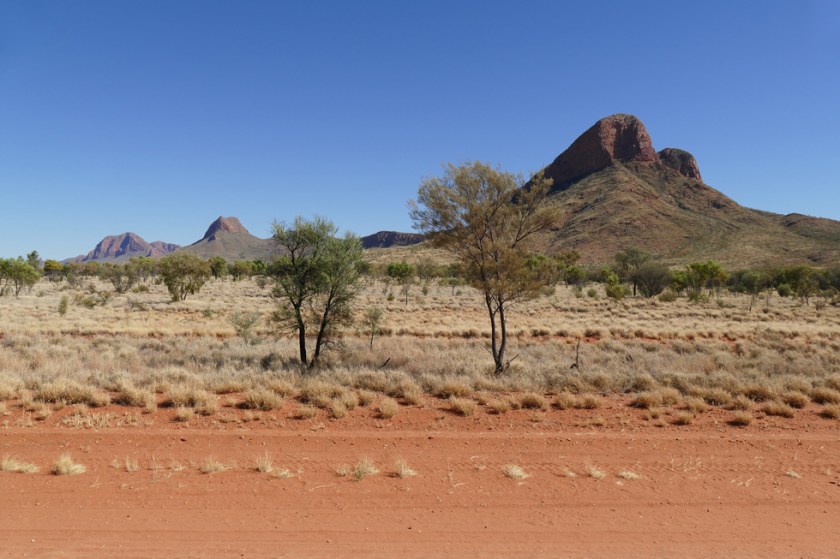
We originally thought that we would spend five nights to get through to Glen Helen in the West MacDonnell Ranges, but the roads were so good, even if it only was gravel or sand, that we reached Glen Helen after three nights.
We were happy when we got there, could go to the toilet without a shovel, take a long shower and wash of the red sand, and enjoy a nice dinner at the restaurant in the homestead. But it was a great experience to cross this remote area, be completely self-sufficient for many days, again pushing our limits a little bit. And we’re relieved that all went fine, that we didn’t have any trouble with the car (only a little bit, but my two car mechanics fixed it easily!) and that we all stayed healthy during these days in the outback. I won’t forget the evenings around the campfire under the desert sky so full of stars…


 RCD on Walkabout